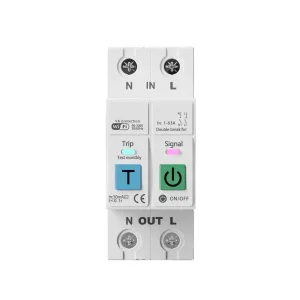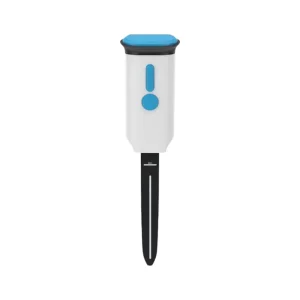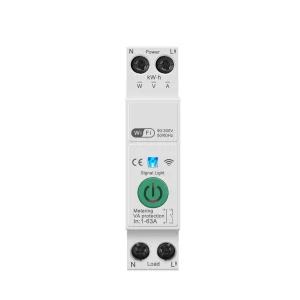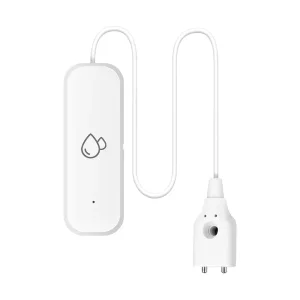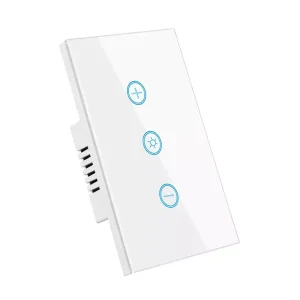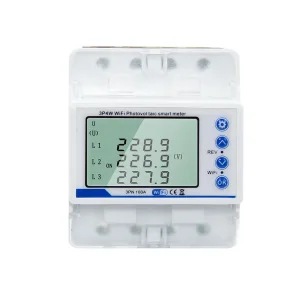
Featured Edge Sensors & Infrastructure Units
Direct-from-factory edge units, sensors, and DIN-rail subassemblies primed for Tasmota, MQTT, and Matter integration.

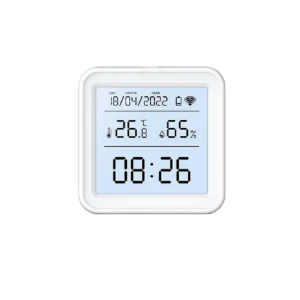
Why Wholesale Tasmota ESP32 Temperature Sensors Dominate Industrial Automation
As enterprise edge deployments pivot away from proprietary cloud silos, the engineering convergence of Espressif’s silicon and open-source Tasmota firmware has established a new paradigm in thermal data governance.
Decoupled Zero-Cloud Architecture
Proprietary smart hubs introduce single points of failure and recurring license overhead. Tasmota-flashed ESP32 nodes stream pure JSON payloads directly across local broker topologies (MQTT, WebSockets, HTTP REST), ensuring complete operational autonomy and air-gapped security compliance.
Silicon Heterogeneity: C2, C3 & S3
Modern wholesale sensor procurement hinges on matching the exact micro-architecture to the environment. Our production lines deploy cost-optimized ESP32-C2 for static probes, RISC-V ESP32-C3 for low-power balancing, and dual-core Xtensa ESP32-S3 for compute-heavy multi-point industrial probes.
Deterministic Telemetry Precision
Integrating high-accuracy sensing elements (Sensirion SHT4x, Dallas DS18B20, or Bosch BME280) alongside onboard hardware filtering guarantees delta-T precision of ±0.1°C, resilient against electrical transients, EMI, and industrial high-voltage induction.
Shenzhen Advanced Cleanroom Manufacturing & Supply Chain Resilience
Rooted in Bao’an District, Shenzhen, our 1,400 m² Class 100 dust-free facility integrates automated high-speed SMT lines, in-line automated optical inspection (AOI), and automated flashing rigs designed for high-mix, large-volume execution.
Precision Automated SMT
High-precision surface mount assembly placing 0201 passives and ultra-fine pitch QFN/BGA modules with zero thermal bridging.
Automated Flashing Rigs
Bed-of-nails test fixtures flash standardized or custom Tasmota builds, burn physical eFuses, and calibrate RF offset channels simultaneously.
Environmental Burn-In
Every thermal monitoring board undergoes 100% full-load thermal stress cycling in climate test chambers to eliminate infant mortality.
BoM Risk Mitigation
Strategic vendor reserves in Shenzhen’s core silicon corridor secure multi-year component sourcing, protecting projects from price surges.
Global Enterprise Sourcing Demands & Architectural Matrix
Purchasing directors face critical trade-offs between physical constraints, polling latency, protocol overhead, and regulatory approvals. The comparative matrix below outlines enterprise configurations.
| Architecture Variant | Silicon Core | Supported Probes | Native Ingress / Rating | Primary Industrial Use Case |
|---|---|---|---|---|
| ESP32 Compact Ambient | Dual-Core Xtensa LX6 (240MHz) | Sensirion SHT30/SHT40 (I2C) | IP20 V0 Flame-Retardant PC | Enterprise HVAC, Server Racks, Commercial Offices |
| ESP32-C3 Industrial Node | Single-Core RISC-V (160MHz) | Dallas DS18B20 (1-Wire Waterproof) | IP67 Enclosure with Gland Connectors | Cold Chain Logistics, Chemical Processing, Boilers |
| ESP32-C2 Micro Telemetry | Cost-Down RISC-V (120MHz) | AHT20 / DHT22 (Digital Single-Bus) | IP30 Enclosed PCB Module | Volume Consumer Electronics, Smart Agriculture Sheds |
| DIN-Rail Multi-Sensor Switch | Dual-Core Xtensa + Metering IC | PT100/PT1000 RTD via SPI Amplifier | 35mm DIN Rail Mount (UL94-V0) | Main Electrical Distribution, Solar Inverter Protection |
Macro-Industry Solutions Powered by Open Firmware
Our wholesale Tasmota ESP32 temperature nodes serve as the physical sensing bridge across diverse enterprise environments, eliminating protocol translation friction.
Cold Chain & Pharmaceutical Storage
Continuous temperature tracking is mandatory under 21 CFR Part 11 and GDP directives. Our ESP32 units log data directly to local timeseries databases (InfluxDB/Prometheus) via MQTT, remaining immune to external broadband outages.
Data Center Thermal Optimization
Granular micro-climate monitoring at intake and exhaust perforated tiles. Dynamic delta-T feeds automate variable fan speeds and CRAC compressor cooling loops without vendor ecosystem lock-in.
Precision Smart Agriculture
Coupling ESP32 Tasmota firmware with soil moisture, leaf wetness, and ambient humidity probes enables automated misting and ventilation schedules driven directly by edge-computed Rule engines.
Global Compliance, Certification & Localization Safeguards
Exporting hardware across 80+ nations demands stringent adherence to international wireless, electrical safety, and environmental standards. We mitigate regulatory exposure at the factory gate.
Safety Standards
Full alignment with CE LVD (EN 62368-1), UKCA, ETL, and UL specifications, incorporating flame-retardant housings (UL94-V0) and thermal fuses.
RF Spectrum Certification
Certified under FCC Part 15C, RED (ETSI EN 300 328), and SRRC, guaranteeing clean harmonic emissions and certified antenna trace matching.
Environmental Directives
Strict adherence to RoHS 2.0 (2011/65/EU) and REACH restrictions; lead-free solder pastes across all surface-mount lines.
Audited Quality Frameworks
Certified to ISO 9001:2015 quality management and BSCI social compliance protocols, ensuring transparent, ethical manufacturing.
Engineering the Next-Gen Edge: Matter over Thread & On-Chip AI
While standard Wi-Fi Tasmota remains the enterprise workhorse, our R&D team is standardizing forward-compatible hardware designed for next-generation communication layers.
Matter over Thread Interoperability
Leveraging the IEEE 802.15.4 transceivers inside the ESP32-C6 and ESP32-H2 modules, our upcoming sensor chassis enable seamless cross-ecosystem bridging natively into Apple Home, Home Assistant, and Google Home simultaneously.
TinyML Anomaly Detection
Embedding quantized machine-learning models onto ESP32-S3 vector instruction registers allows predictive maintenance at the sensor head, identifying bearing vibration and thermal runaway curves before critical equipment thresholds trigger.
Ultra-Low Energy Deep Sleep
Architecting sub-15µA ULP (Ultra-Low Power) coprocessor wake cycles to read environmental ADCs, permitting 5+ year maintenance-free battery lifespans on standard industrial lithium-thionyl chloride cells.
Frequently Asked Engineering & Sourcing Questions
Clear, definitive technical answers to assist procurement engineers and systems architects evaluating factory-direct hardware.
How do Tasmota ESP32 temperature sensors mitigate Wi-Fi power draw and self-heating?
Can Corunsmart pre-flash custom Tasmota builds, templates, and Wi-Fi credentials at the factory?
What are the trade-offs between DS18B20, SHT3x/4x, and BME280 sensor elements in wholesale orders?
What minimum order quantities (MOQ) and lead times apply for custom OEM branding?
How does the ESP32 architecture compare against legacy ESP8266 platforms for enterprise telemetry?
Comprehensive Energy, Control & Sensing Ecosystem
Complement your telemetry nodes with our full range of smart circuit breakers, wall controls, and wireless bridges.