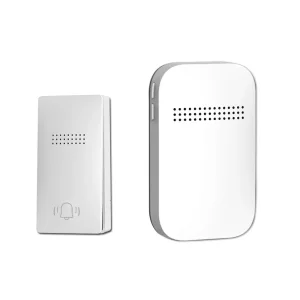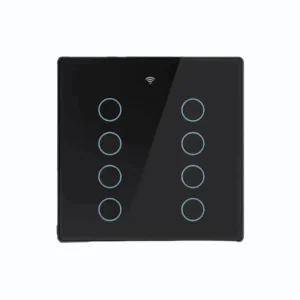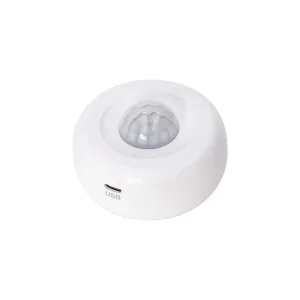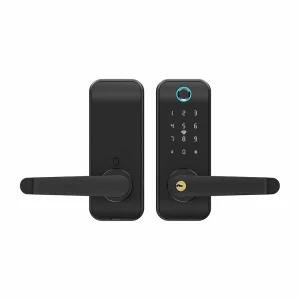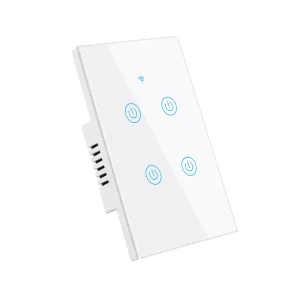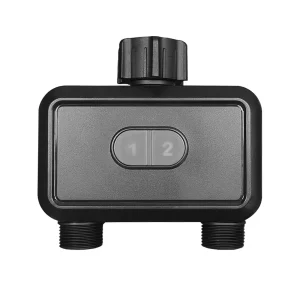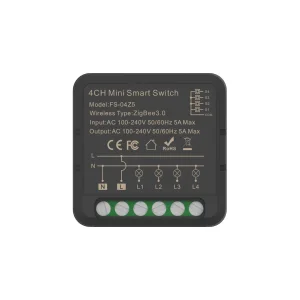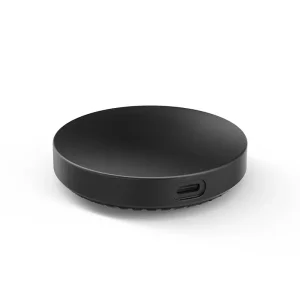
Integrated Ecosystem: Featured Edge Controllers & Endpoints
Explore standard OEM/ODM production hardware ready for edge-computing gateway integration, industrial automation, and end-to-end device orchestration.
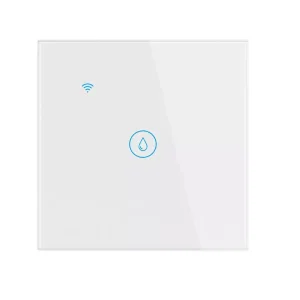
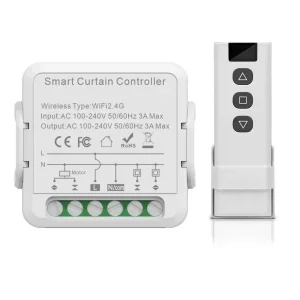
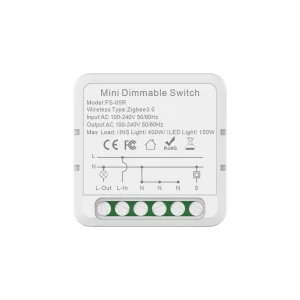
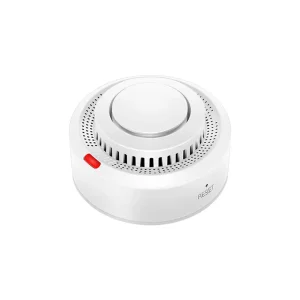
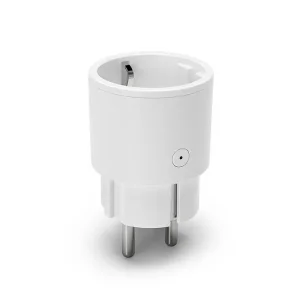
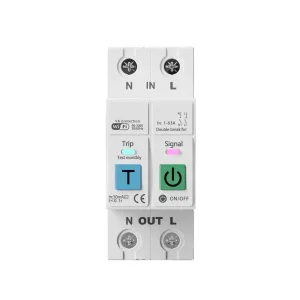
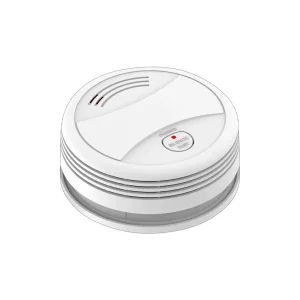
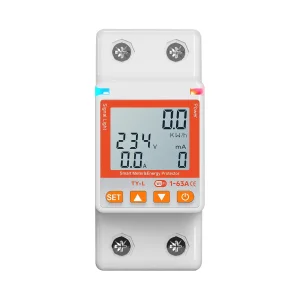
Architecting Next-Generation Gateway Control Systems
In modern IoT and building automation architectures, Gateway Control hardware has transcended its traditional role as a simple data bridge. It now functions as the distributed intelligence hub of edge computing networks.
Deterministic Edge Computing
Traditional cloud-centric architectures suffer from round-trip latency, high bandwidth costs, and network vulnerabilities. Advanced gateway controllers execute local decision engines, running automated scenes and critical safety cut-offs under 15ms without cloud dependency.
Multi-Protocol Translation
Smart buildings operate heterogenous protocols. High-performance gateways seamlessly translate Thread/Matter, Zigbee 3.0, BLE SIG Mesh, Sub-1GHz, and RS-485 Modbus into unified IP frames, breaking device silos across vendors and ecosystems.
Zero-Trust Device Security
Equipped with dedicated cryptographic hardware (e.g., ATECC608 secure elements or ESP32-C3 hardware root of trust), modern gateway nodes enforce AES-128/256 link keys, encrypted Over-The-Air (OTA) firmware signing, and mutual TLS (mTLS) cloud handshakes.
Mission-Critical Localized Applications & Scenarios
From microgrid load balancing in Europe to dense high-rise multi-dwelling units across North America, gateway controllers are tailored to regional infrastructure parameters.
European Microgrids & Dynamic Tariffs
Deployments in Germany, the UK, and Scandinavia link gateways directly to smart electricity meters via P1 or HAN ports. The gateway manages smart circuit breakers and heat pumps, automatically shifting high-drain loads away from peak pricing periods.
North American MDUs & Commercial Real Estate
Designed for US multi-gang back-boxes and BACnet/IP building systems. Gateway controllers orchestrate hundreds of low-power Zigbee sensors and Matter switch panels across multi-family properties, giving managers centralized dashboards via MQTT pipelines.
Latin America Smart Grid Resilience
Engineered for high voltage fluctuation zones (85V–265V tolerances). Gateways deployed in Brazil and Mexico incorporate integrated surge protections, monitoring phase drops and isolating residential distribution panels while logging event diagnostics.
Southeast Asia Hospitality Automation
Optimized for high-density guest room management systems (GRMS). Gateways integrate keycard switches, door locks, and universal IR air-conditioner remotes, executing guest welcome scenes while slashing idle cooling energy by up to 34%.
Comparative Architecture of Gateway Transmission Protocols
A reference engineering matrix for systems integrators, hardware product managers, and enterprise procurement teams selecting core wireless engines.
| Protocol Vector | Network Topology | Typical Edge Latency | Throughput & Bandwidth | Node Scalability | Primary Industrial Application |
|---|---|---|---|---|---|
| Matter over Thread | Self-healing IPv6 Mesh | < 15 ms | 250 kbps (Low payload) | Up to 250 nodes / border router | Cross-ecosystem consumer smart home, Apple/Google interoperability |
| Zigbee 3.0 Standard | Full Mesh (Routers & End Devices) | 15 – 30 ms | 250 kbps | 64 to 200+ sub-devices | Commercial lighting arrays, security sensors, residential panels |
| BLE SIG Mesh | Flooding Mesh | 20 – 50 ms | 1 Mbps – 2 Mbps | Up to 1,000+ local nodes | Large-scale office lighting, beacon localization, localized asset tracking |
| Wi-Fi 6 (802.11ax Target Wake Time) | Star Topology | < 5 ms | Up to 9.6 Gbps | 50 – 128 devices / AP channel | High-throughput video edge nodes, energy metering aggregation hubs |
| RS-485 Modbus RTU / IP | Differential Wired Bus | < 2 ms | Up to 10 Mbps | 32 – 256 physical transceivers | Heavy industrial breakers, factory floor telemetry, sub-station metering |
Shenzhen Supply Chain Resilience & Factory Efficiency
Operating from the global epicenter of electronic engineering in Bao'an District, Shenzhen, our manufacturing facilities translate complex ODM schematics into certified, mass-produced hardware with speed and precision.
Class 100 Dust-Free Cleanrooms
Our 1,400 m² cleanroom environment guarantees zero-particle contamination during high-density SMT mounting, chip placement, and optical sensor assembly, ensuring baseline failure rates < 0.12% across initial 10,000-hour operational cycles.
Tier-1 Component Ecosystem
Located in the heart of the Pearl River Delta electronics cluster, our direct supply pipelines with Espressif, Realtek, Nordic Semiconductor, and Silicon Labs enable agile engineering spins, rapid bill-of-materials sourcing, and resilient lead times.
Rigorous In-Line Testing & QA
Every gateway and smart sub-device undergoes 100% automated optical inspection (AOI), RF vector network analysis, simulated continuous RF-packet drop testing, and 72-hour elevated-temperature burn-in cycles prior to packaging.
Engineering Roadmap: The Next Evolution of Control Gateways
A strategic technological blueprint detailing how our R&D team addresses emerging industry standards, silicon platforms, and localized intelligence.
Phase I: TinyML Edge Inference (Present – Q3)
Integrating ultra-low-power micro-NPUs into ESP32-P4 and dual-core RISC-V gateway silicon. Gateways will perform localized acoustic anomaly detection (glass-break, arcing events) and energy prediction locally without uploading raw waveforms to external servers.
Phase II: Native Matter 1.3 Energy Management
Implementation of the Matter 1.3 specification across all gateway bridges, unlocking unified device profiles for EV chargers, smart leak detectors, solar micro-inverters, and high-amperage breakers across Apple HomeKit, Google Home, and Home Assistant simultaneously.
Phase III: Unified Multi-Band Thread/Wi-Fi 7 Hubs
Developing next-gen gateways equipped with Wi-Fi 7 multi-link operation (MLO) paired with concurrent dual-band Thread radio stacks. This eliminates local RF spectrum contention in dense suburban and high-density industrial warehouse installations.
Global Regulatory Conformity & Localized Support
Bringing smart home and energy gateways to global markets demands rigorous testing protocols and adherence to diverse electrical and cyber regulations.
Radio Frequency Compliance (FCC, CE RED, UKCA)
Our dedicated EMC laboratories calibrate antenna trace geometry, harmonic emissions, and receiver sensitivity to pass FCC Part 15B/15C, ETSI EN 300 328, and UK PSTI cybersecurity compliance mandates on the first submission.
High-Voltage Electrical Safety (UL, ETL, IEC)
DIN-rail breakers and smart high-load gateways are engineered to IEC/EN 60947-2, UL 489, and UL 94-V0 flammability criteria. Isolation distances, creepage barriers, and physical air gaps are strictly audited to ensure electrical safety.
Firmware Sovereignty & Privacy
We provide full white-label capabilities: private AWS/Azure/Tuya tenant cloud configurations, local MQTT brokers without remote phone-home hooks, and custom Tasmota / ESPHome binaries that respect user data protection frameworks (GDPR, CCPA).
Frequently Asked Questions: Gateway Engineering & Sourcing
Detailed technical, certification, and commercial insights for sourcing directors, hardware engineers, and brand executives.
End-Node Ecosystem: Complementary Automation Endpoints
Complete your smart facility footprint with smart end-devices engineered to pair effortlessly with our gateway control infrastructure.