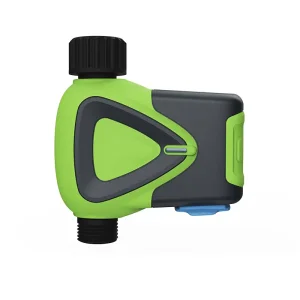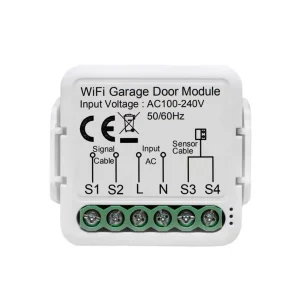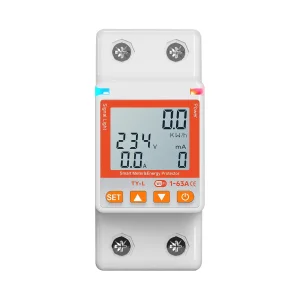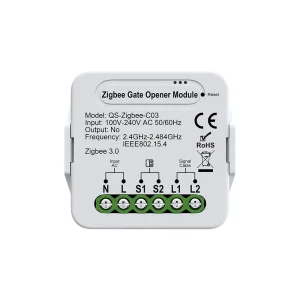
Ecosystem-Engineered IoT Control & Sensing Nodes
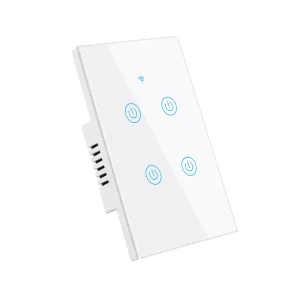
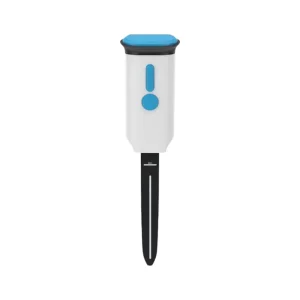
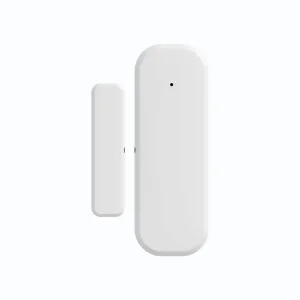
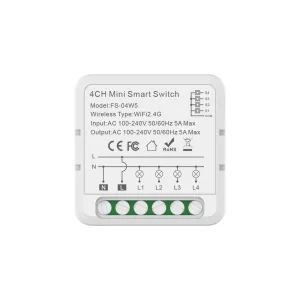
High-performance connected hardware manufactured inside our Bao'an Shenzhen cleanroom. Designed for seamless inter-cluster binding across smart protection, metering, and perimeter safety networks.
The Economics of Enterprise Fluid Mitigation: Why Zigbee 3.0 Is the Global Standard
Water egress and pipe burst disasters generate over $13 billion annually in commercial and residential property claims across North America and Europe alone.
In institutional real estate, commercial facility management, and multi-family dwelling units (MDUs), water damage represents the single greatest recurring non-catastrophic loss mechanism. According to underwriting analytics published by global insurance consortia (including Munich Re, AXA XL, and FM Global), interior hydraulic failures—such as compromised water heater liners, pinhole fractures in pressurized copper risers, leaking HVAC condensate pans, and defective commercial appliance supply lines—outpace structural fire claims by a factor greater than seven to one.
Historically, standard retail-grade water detectors relied on Wi-Fi connectivity. However, modern telecom and facilities engineers consistently identify Wi-Fi as an inappropriate RF transport mechanism for enterprise battery-powered deployments: high RF quiescent current draws rapidly exhaust coin-cell batteries within 9 to 14 months, high router association contention drops offline nodes, and the lack of autonomous device-to-device local clustering prevents deterministic shutoff valve actuation if the cloud link drops.
This paradigm has catalyzed an aggressive shift toward Zigbee 3.0 (IEEE 802.15.4) as the de facto radio layer for institutional OEM and ODM deployments. Leveraging a mesh architecture with ultra-deep sleep current profiles (sub-1.2 µA), low RF collision overhead via CSMA/CA, deterministic IAS Zone cluster profiles (Cluster ID 0x0500), and local direct-binding capabilities, our ODM Zigbee Smart Water Leak Detectors operate with zero human intervention for half a decade while executing sub-second valve shutdowns without active cloud infrastructure.
Ultra-Low Quiescent Current
Operating through highly optimized semiconductor architectures with custom power registers, the sensor remains in deep-sleep mode drawing less than 1.2µA, surging to full transmission status only upon liquid conductivity bridging or programmed periodic heartbeat polling.
Local Zigbee Direct Binding
Sensor nodes bind directly to motorized ball valves and smart circuit breakers at the MAC/Network layer. If water is detected, the sensor broadcasts an emergency close command directly across the mesh network even if the gateway is unplugged or the local WAN is offline.
Gold-Plated Anti-Electrolysis Pins
Equipped with proprietary 24K immersion gold or nickel-palladium surface finishes on dual and quad-probe interfaces. Prevents galvanic corrosion, oxidation passivity, and electrochemical degradation under continuous high-humidity environments.
Silicon Architecture, RF Penetration & Protocol Trade-Offs
Evaluating structural connectivity options for massive commercial IoT deployments across multi-story concrete structures and mechanical rooms.
When specifying commercial hydraulic safety solutions, tier-one smart building developers face strict tradeoffs regarding transmission distance, structural attenuation through reinforced concrete, power budget constraints, and gateway infrastructure costs. Our engineering team at Corunsmart has validated hundreds of field deployments across 80+ countries to map performance across the four dominant IoT protocol stacks:
| Evaluation Parameter | Zigbee 3.0 (Corunsmart Standard) | Wi-Fi (802.11 b/g/n 2.4GHz) | LoRaWAN (Sub-GHz) | Thread (Matter-Ready) |
|---|---|---|---|---|
| Typical Battery Longevity (CR2450) | 5 to 7 Years | 10 to 14 Months | 7 to 10 Years | 4 to 6 Years |
| Direct Peer-to-Peer Binding | Hardware-Native (Cluster 0x0006/0x0500) |
None (Requires Cloud/Broker) | None (Star-of-Stars Gateway) | Native (Matter Bindings) |
| Mesh Network Self-Healing | Dynamic Mesh (via AC Routers/Plugs) | None (Single Point AP Failure) | None (Star Topology) | Native IPv6 Dynamic Mesh |
| Concrete & Mechanical Penetration | Moderate (Relayed by Mesh Nodes) | Poor (High Attenuation) | Superior (Sub-GHz Penetration) | Moderate (Relayed by Mesh) |
| Infrastructure Hardware Unit Cost | Low (Cost-effective Hubs/Gateways) | Zero (Existing Router) | High (Industrial Gateways) | Medium (Border Routers Needed) |
| Ecosystem & White-Label Readiness | Universal (Tuya, eWeLink, ZHA, Z2M) | High (Consumer-oriented) | Low (Proprietary Backends) | Emerging Standard |
Sensing Mechanism Physics: Impedance Mapping vs. Dual-Threshold Resistance
A common failure mode of cheap water sensors is false-triggering induced by airborne humidity, concrete condensation, or minor dust build-up bridging bare copper traces. Corunsmart's ODM hardware mitigates this through a dual-threshold comparator circuit integrated directly into the MCU's analog front-end (AFE).
Rather than relying on basic open-collector digital states, our detector samples liquid resistance over a 20-millisecond window. Ordinary ambient humidity condensation typically exhibits electrical resistance above 450kΩ, whereas liquid tap water, municipal supply water, or antifreeze-treated HVAC fluids fall within the 5kΩ to 120kΩ conductivity window. The microcontroller's internal Schmitt trigger only fires the IAS Zone alert interrupt when impedance drops decisively beneath the programmed calibration threshold, eliminating nuisance alerts while maintaining instantaneous responsiveness to genuine pipe rupture.
Closed-Loop Mitigations: Linking Sensors, Smart Breakers & Motorized Valves
Detection without autonomous physical isolation is only half a solution. True enterprise risk management demands self-orchestrating localized control rings.
In high-density apartment blocks or mission-critical data server environments, receiving an app alert on a property manager’s mobile device at 3:00 AM does not prevent basement flooding if the municipal supply continues charging the burst pipe at 60 psi. Corunsmart's OEM and ODM product engineering centers upon creating integrated multi-node mitigation rings.
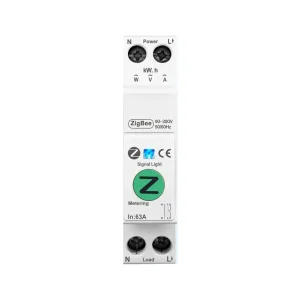
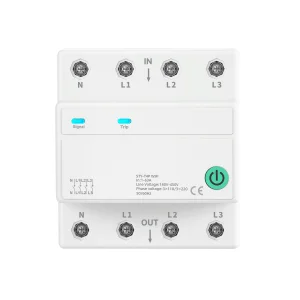
By uniting our Zigbee Smart Water Leak Sensors with our DIN-rail Smart Circuit Breakers (1P, 2P, 3P+N) and smart motorized shutoff valves, we empower global brands to deliver complete turnkey protection packages:
Tier 1: Sensing & Local Annunciation
Liquid makes contact across the baseline immersion probe or external ribbon extension. The internal 85dB piezoelectric buzzer activates immediately, alerting nearby occupants while the Zigbee radio wakes and transmits an IAS Zone Alarm packet within 350 milliseconds.
Tier 2: Direct-Bound Valve Actuation
Without requiring cloud server handshake, the Zigbee message is acknowledged by a matched smart ball valve actuator or smart motorized shutoff. The high-torque valve closes the main water intake in under 8 seconds, isolating the hydraulic breach at the supply manifold.
Tier 3: Electrical Circuit Isolation
Simultaneously, the building’s distribution board DIN-rail smart breaker receives a coordinated cut-off command across the local mesh, automatically severing line and neutral power (L+N double-cut) to sub-floor power sockets, preventing short-circuits and electrical fire risks.
Technology Roadmap: Matter-over-Thread & Multi-Protocol Silicon
Navigating the convergence of Zigbee 3.0, Thread, and Matter 1.3+ specifications to protect brand equity and avoid hardware obsolescence.
As the Connectivity Standards Alliance (CSA) deepens the Matter standard, enterprise buyers require hardware platforms capable of painless transition. Corunsmart's advanced R&D division engineers hardware using multi-protocol, dual-radio system-on-chips (SoCs)—including platforms from Silicon Labs (EFR32MG series), Nordic Semiconductor (nRF52840), and Telink Semiconductor.
This hardware decoupling guarantees that OEM clients ordering Zigbee 3.0 water leak sensors today can leverage identical physical mold toolings, enclosure aesthetics, and probe designs for future Matter-over-Thread product launches with minor SMT bill-of-materials adjustments and firmware flashing:
- Phase 1 (Current Mass Production): Zigbee 3.0 certified stacks supporting Tuya Smart, eWeLink, and open-source platforms (Home Assistant via ZHA and Zigbee2MQTT). Native OTA support enables secure cryptographic key rotation and sleep-cycle parameter updates over-the-air.
- Phase 2 (Matter 1.3+ Migration): Implementation of the standardized Matter Water Freeze and Water Leak Detector Cluster specs. Native cross-ecosystem direct binding with Apple HomeKit, Google Home, Amazon Alexa, and Samsung SmartThings without proprietary hub lock-ins.
- Phase 3 (Ambient Energy Harvesting R&D): Integration of indoor ambient photovoltaic micro-cells and thermal gradient harvesters targeting zero-maintenance 15-year operational lifespans for structural wall-cavity installations.
Shenzhen Cleanroom Manufacturing: Built to Audit-Ready Standards
Precision electronics operating in humid, subterranean, or corrosive environments require zero-tolerance manufacturing hygiene and exhaustive QA verification.
Operating from our state-of-the-art facility in Jintai Industry Park, Bao'an District, Shenzhen, Shenzhen Corunsmart Co., Ltd. (founded in 2014) combines ISO 9001:2015 quality management procedures with BSCI social compliance integrity. Every smart sensor manufactured on our automated surface mount technology (SMT) lines undergoes exhaustive qualification:
Automated Optical Inspection (AOI)
100% of PCBA boards pass 3D AOI analysis to detect microscopic solder bridges, tombstoning, solder volume deficits, and component polarity anomalies prior to RF chamber enclosure sealing.
RF Anechoic Chamber Calibration
Individual transceiver testing inside shielded RF isolation boxes ensures optimal antenna impedance matching, checking transmit power (up to +10 dBm) and receiver sensitivity (-98 dBm) across all 16 channels in the 2.4 GHz band.
Hermetic & Salt-Spray Reliability
Housings constructed of fire-retardant UL94-V0 PC/ABS polymers are subjected to IP66/IP67 pressure vacuum tests and 48-hour ASTM B117 salt fog exposure to prevent electrode passivation in oceanic or acidic installation zones.
Frequently Asked Technical & Sourcing Questions
Direct engineering and procurement answers regarding custom firmware, cluster binding, battery life validation, and international certification.
Can Corunsmart ODM Zigbee Water Sensors be integrated directly with Home Assistant and open-source gateways without Tuya cloud?
How do you validate the 5-year battery life claims in factory quality control?
What customization options are supported under OEM and ODM private label agreements?
ManufacturerName) and model IDs directly in the firmware cluster attributes.
How does the sensor maintain reliable RF connectivity through thick basement concrete slabs?
What certifications are provided for US, European, and Australian electrical/telecom compliance?
Specialized Protection, Metering & Automation Hardware
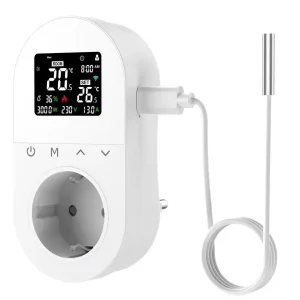
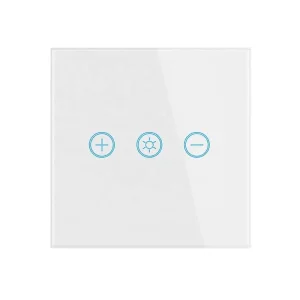
Expand your branded IoT portfolio with volume-manufactured smart thermostats, DIN-rail breakers, motorized irrigation controllers, and energy management panels.