
Industrial Grade Smart Wall Switch & Gateway Portfolio
Explore our high-demand OEM/ODM products engineered in our Shenzhen Class 100 dust-free facility, built with rigorous adherence to global electrical standards.
The No-Neutral Evolution: Overcoming Retrofit Obstacles in Global Smart Lighting
Over 65% of legacy residential infrastructures across Western Europe, North America, the United Kingdom, and older urban clusters in APAC lack neutral wiring inside standard wall boxes. Addressing this vast retrofit market requires advanced 2-wire smart dimmer technology.
Parasitic Energy Harvesting
Traditional smart dimmers continuously require operating power for their microcontrollers and radio chipsets (Wi-Fi, Zigbee, or Matter). In single-live systems, the switch must harvest current in series with the load during both ON and OFF states without exceeding the threshold that triggers ghosting or ghost flashes in high-efficiency LEDs.
Trailing-Edge MOSFET Superiority
While legacy systems relied on bidirectional TRIACs (leading-edge phase cut), modern LED retrofit lamps contain complex internal driver circuits prone to inrush currents and harmonic distortion. Our factory specializes in dual back-to-back MOSFET trailing-edge architectures that ensure smooth decay and virtually eliminate audible coil buzzing.
Bypass Synthesizer Integration
When dealing with ultra-low power LED fixtures (1W to 5W) where driver capacitance is insufficient, our proprietary digital bypass module acts as an active electronic shunt. It maintains the minimum holding current without dissipating unnecessary thermal energy, preventing light flickering and erratic disconnects.
Enterprise Procurement Matrix: Evaluating Smart Dimmer Switch Factories
Tier-1 importers, brand holders, and distribution networks need deep hardware robustness, component longevity, and regulatory compliance. Our ODM engineering approach matches specific procurement demands.
Electrical & Electronic Hardware Benchmarks
Enterprise buyers should never compromise on power stage isolation, PCB trace clearance, and thermals. Corunsmart applies industrial design rules:
- Zero-Crossing Accuracy: Microsecond-precision zero-cross detection IC ensures phase chopping aligns precisely with 50Hz/60Hz AC waveforms.
- Thermal Management: Heavy-copper FR-4 PCB (2oz) combined with thermally conductive silicone encapsulation maintains switch core temperatures <65°C under continuous 300W load.
- Transient Surge Suppression: Built-in metal oxide varistors (MOV) and TVS diodes survive repetitive 2kV ring wave and 1.2/50μs lightning surges per IEC 61000-4-5 standards.
- Relay-Free Phase Control: Solid-state switching eliminates mechanical contact wear, providing MTBF ratings exceeding 100,000 switching operations.
Firmware, Ecosystem Agility & Cloud Flexibility
OEM brands require deep customization flexibility to protect against ecosystem lock-in and optimize user experience:
- Multi-Protocol Support: Native integration on ESP32, Telink, Realtek, and Silicon Labs wireless microcontrollers.
- Matter-Over-Thread Readiness: Next-generation firmware builds enable true cross-platform control across Apple HomeKit, Google Home, Amazon Alexa, and Samsung SmartThings.
- Local Control & Open Source: Flashing support for Tasmota, ESPHome, and standard MQTT firmware for enterprise automation integrators requiring absolute local data privacy.
- OTA Dimming Curve Calibration: Configurable minimum and maximum brightness cutoffs directly stored in non-volatile flash memory to adapt to differing driver loads.
| Architecture Dimension | Leading-Edge TRIAC (Legacy) | Dual MOSFET Trailing-Edge (Corunsmart Standard) | Relay + PWM Digital Switch |
|---|---|---|---|
| Load Compatibility | Incandescent, Halogen, Heavy Resistive | Dimmable LED, Electronic Low Voltage (ELV), CFL, Incandescent | On/Off Only or Auxiliary Controlled Drivers |
| Acoustic Noise (Whine) | Noticeable coil vibration at mid-phase | Acoustically silent (<18 dBA at 10cm) | Relay click sound on state transitions |
| Single-Live Quiescent Draw | High leakage current (>15mA) causing LED glow | Ultra-low leakage (<3.5μA in sleep mode) | Dependent on coil latching mechanisms |
| Phase Cutting Smoothness | Abrupt voltage rise-time (di/dt spikes) | Smooth voltage turn-off, zero back-EMF spikes | Discrete stepped cycles |
| Thermal Footprint | High heat sink requirement (70°C+) | Low on-resistance (RDS(on) < 0.28Ω), minimal heat | Moderate heat during coil actuation |
Overcoming Single-Live Wire Electrical Dilemmas
Single-wire smart dimming is an intersection of power electronics, low-power RF communications, and non-linear loads. Here is how our Shenzhen engineering team solves the toughest field challenges.
Eliminating Phantom LED Glow
High-efficiency modern LED drivers fire up with micro-ampere level leakage. In a 2-wire smart switch, the quiescent current flowing through the lamp circuit can continuously charge the driver's input capacitor until it triggers a periodic flash (ghosting). Our smart dimmers employ a synchronous shunt switch combined with an optional plug-in capacitor bypass. When turned off, the circuit actively bypasses leakage current directly away from the LED diode bridge.
Full-Cycle Phase Stealing
When the dimmer is operating at 99% maximum brightness, the voltage dropped across the switch approaches zero. If the dimmer cannot drop sufficient voltage, its internal DC power supply drops out, causing Wi-Fi disconnection or MCU brownout resets. Our proprietary micro-power regulator conducts phase-angle stealing during the 1% trailing dead-zone window (around 200 microseconds at the end of each AC half-cycle), storing sufficient charge in an array of tantalum capacitors without visible illumination loss.
Radio Energy Optimization
Wi-Fi peak transmission draws up to 280mA at 3.3V, a massive challenge for no-neutral power supplies. Our factory implements dynamic RF power scaling and prioritized Zigbee 3.0 / Matter-over-Thread hardware architectures. For Wi-Fi SKUs, our engineers tune the DCDC switching stage efficiency to over 88%, utilizing fast-recovery storage caps that decouple peak radio burst demands from the mains line.
Form Factors, In-Wall Mechanics and Global Certifications
A single switch standard cannot satisfy global housing electrical codes. We engineer custom junction-box profiles conforming to European, British, North American, and South American mechanical standards.
European & UK Standards (86 Type / Round 60mm)
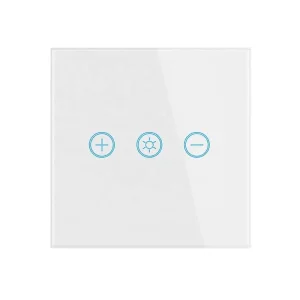
Designed for standard EU 68mm flush-mount boxes and UK 35mm deep back boxes. Featuring flame-retardant PC (UL94-V0) faceplates, tactile push-buttons, precision rotary potentiometers, and capacitive touch glass. Fully compliant with EN 60669-2-1, CE-RED, and UKCA standards.
North American Decorator Standard (1-Gang to 4-Gang)
Engineered for standard NEMA wall boxes. Features interchangeable snap-on wall plates, 3-way virtual multi-location dimming circuits, air-gap disconnection switches for physical servicing safety, and UL 1472 / FCC Part 15 Class B compliance testing.
Mini In-Wall Hidden Dimmer Modules
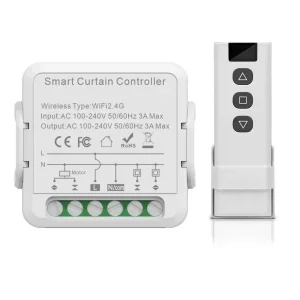
Ultra-compact puck form factor (39 x 39 x 18 mm) designed to fit behind existing mechanical rocker or momentary switches. Allows customers to preserve high-end architectural designer faceplates while modernizing circuits with no-neutral smart dimming.
Shenzhen Precision Manufacturing & Audit-Ready Quality Control
Our facility in Bao'an District, Shenzhen, operates under strict ISO 9001:2015 and BSCI governance to maintain defect rates under 150 PPM (Parts Per Million).
SMT High-Speed Lines
Equipped with Yamaha high-precision placement machines capable of handling 0201 passives and 0.3mm pitch BGA wireless microcontrollers with 3D solder paste inspection (SPI).
Class 100 Cleanroom
A 1,400 m² cleanroom environment protects optical components, touch capacitive films, and rotary encoders from particle contamination and ESD degradation.
100% Dynamic Burn-In
Every single dimmer unit passes through an automated aging rack under real inductive and capacitive LED lighting loads at 50°C ambient for 4 hours minimum.
Automated Test Stations
Custom ICT and functional testing verify phase-angle symmetry, zero-crossing stability, wireless output power (EIRP), and standby leakage current on every batch.
End-to-End OEM/ODM Industrialization Workflow
Engineering Scoping
Voltage range (120V vs 230V), wireless protocol, gang configuration, and switch feel mechanics.
Tooling & PCB Layout
Custom plastic mold tooling, trace routing, surge protection array, and thermal isolation barriers.
Firmware Provisioning
Tuya IoT SDK, Matter bridge profiles, Tasmota / MQTT open clusters, and custom MAC address allocations.
Compliance Testing
Complete EMC/EMI chamber validation, radio certification (FCC ID, CE-RED), and UL safety file support.
Mass Production
Monthly output scalable up to 400,000 units with barcoded batch tracking and custom retail gift boxes.
Next-Generation Technology Roadmap for Smart Dimmers
Sustained competitive advantage in consumer and commercial smart home markets requires continuous anticipation of protocol transitions and semiconductor advancements.
Edge-AI Dynamic Load Profiling
Future Corunsmart firmware integrates real-time current waveform analysis. When a new LED bulb is connected, the switch runs an algorithmic diagnostic sweep to measure power factor, input capacitance, and driver turn-on threshold, automatically adjusting the minimum dimming floor and phase-cut curve to guarantee zero flicker without manual calibration.
Gallium Nitride (GaN) Power Switches
Replacing silicon MOSFETs with wide-bandgap GaN transistors will reduce switching losses by over 70% and reduce on-resistance to near-zero levels. This leap allows the heat sink mass to be cut in half, enabling true ultra-slim in-wall dimmer devices that slide effortlessly into even the shallowest 25mm wall cavities.
Thread-Native Sub-Giga Micro-Radios
Matter-over-Thread hardware using low-voltage sub-gigahertz and 2.4GHz dual-band transceivers will achieve sleep states pulling under 2.5μA. This unlocks the possibility of zero-neutral smart dimmers that function seamlessly on ultra-miniature 0.5W nightlight circuits with completely zero ghosting and zero standby power loss.
Ecosystem Companion Devices: Breakers, Sensors & Rotary Dimmers
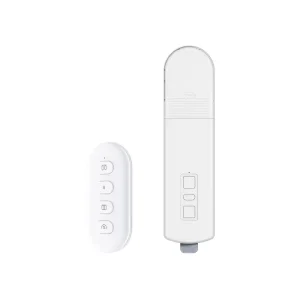
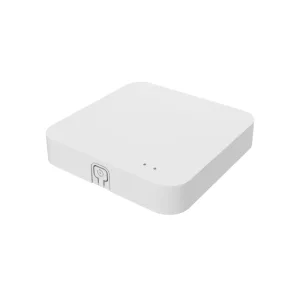
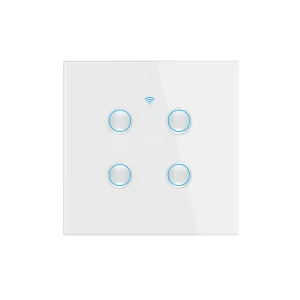
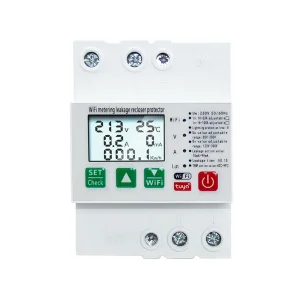
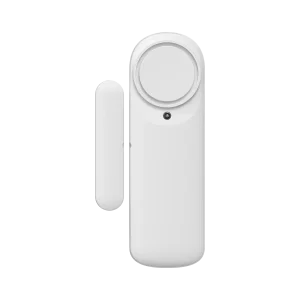
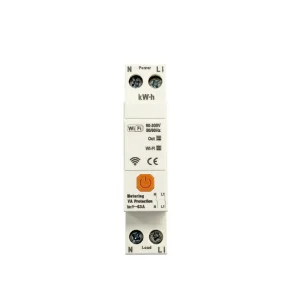
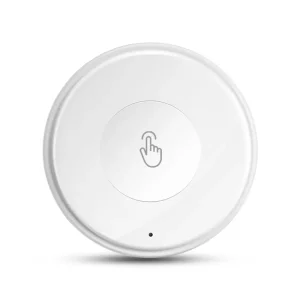
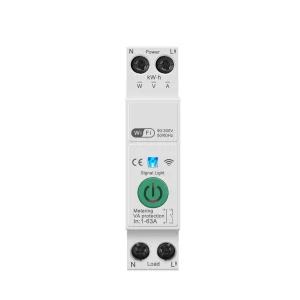
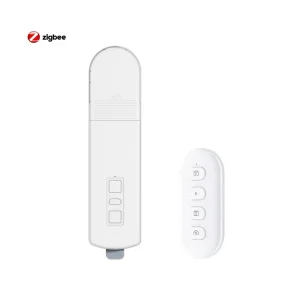
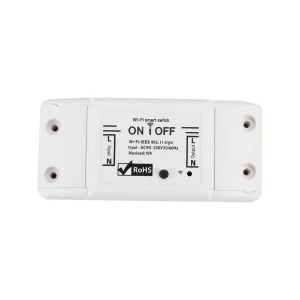
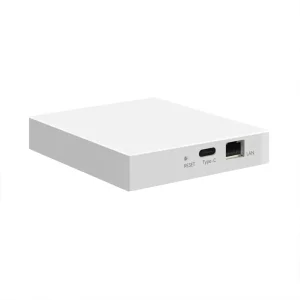
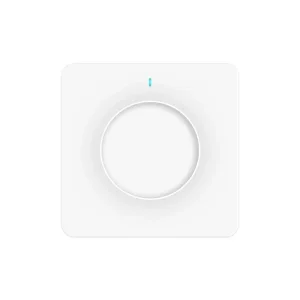
A smart home brand requires cross-category harmony. Explore our complementary OEM products spanning smart circuit breakers, motorized controls, scene switches, and multi-protocol gateways.
Frequently Asked Questions for Sourcing & Engineering Teams
Critical technical, regulatory, and supply chain insights answered directly by our chief hardware engineers and global export managers.
What is the absolute minimum load requirement for your no-neutral smart dimmer switches?
Without an external bypass capacitor, our dual-MOSFET no-neutral smart dimmer switch reliably operates with dimmable LED loads as low as 3 Watts. For ultra-low wattage installations (such as single 1W or 2W decorative LED filament bulbs), we bundle our active electronic bypass module, which is installed in parallel across the lamp fixture to absorb stray capacitance without drawing significant active power.
Why is trailing-edge (reverse phase) dimming preferred over leading-edge TRIAC for no-neutral LED applications?
Trailing-edge dimming uses dual back-to-back power MOSFETs that turn ON softly at the zero-crossing mark and turn OFF smoothly at the designated phase angle. This avoids the instantaneous high-voltage di/dt step characteristic of leading-edge TRIAC switching. Consequently, it prevents inrush current pulses that stress capacitive LED driver circuits, completely suppresses audible mechanical buzzing in light fixtures, and eliminates radio-frequency interference across domestic power lines.
Which wireless communication protocols can be integrated into custom OEM production runs?
Our hardware platform is modular. We mass-produce no-neutral dimmer switches supporting: (1) Zigbee 3.0: Highly recommended for single-live designs due to ultra-low sleep current and stable mesh networks; (2) Matter over Thread: Cross-platform native support for Apple HomeKit, Google Home, and Alexa; (3) Wi-Fi (2.4GHz) + BLE: Based on Espressif ESP32-C2/C3 or Realtek chipsets with tuned switching regulators; (4) Bluetooth Mesh: For commercial hospitality and clustered lighting applications.
Can you supply custom firmware for Home Assistant, Tasmota, or proprietary enterprise clouds?
Yes. Beyond standard Tuya and Tuya-Matter platforms, our dedicated software team provides pre-flashed ESP32/ESP8266 devices running custom open-source firmware (such as Tasmota or ESPHome) configured with your designated GPIO mappings and MQTT clusters. For private enterprise clients, we can integrate custom cryptographic keys, custom cloud endpoint certificates, and proprietary over-the-air (OTA) update URLs during factory automated SMT testing.
What safety certifications and thermal compliance tests do your smart dimmers carry?
Our factory holds ISO 9001:2015 and BSCI social compliance certifications. Depending on target export territories, our dimmer switch designs are fully tested and certified to UL 1472 and FCC Part 15B for the United States and Canada; EN 60669-2-1, EN 300 328 (CE RED), and RoHS/REACH for the European Union; and BS EN standards for UKCA compliance in the United Kingdom.
What are your typical OEM/ODM minimum order quantities (MOQs) and production lead times?
Standard laser-engraved OEM branding on our production-ready housings starts at an MOQ of 500 units, with lead times of approximately 2 to 3 weeks. Full custom ODM developments—incorporating proprietary industrial plastic tooling, bespoke glass panel geometries, customized PCB shapes, and tailored retail packaging—typically require 30 to 45 days for tooling and pilot samples, followed by a mass production lead time of 25 to 30 days.