
High-Priority Global OEM Hardware Lines
Pre-tested IoT-integrated sub-devices and DIN-rail modules optimized for cross-protocol ecosystems and scalable multi-channel architecture.

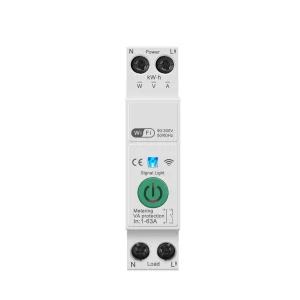
Engineering Paradigms in Tasmota 63A Circuit Breaker Manufacturing
The convergence of open-source firmware ecosystems, local-loop telemetry, and high-amperage switching reliability across modern energy distribution boards.
Sovereign Edge Computing via Tasmota
Traditional cloud-bound breaker units introduce external latency and privacy attack vectors. Wholesale Tasmota-flashed 63A breakers deploy self-contained HTTP web interfaces and lightweight MQTT protocols directly over ESP32/ESP8266 microchips, enabling immediate integration with private Home Assistant instances, openHAB, and enterprise SCADA setups without third-party vendor entrapment.
Bilevel Overcurrent & Arc Dissipation
Switching continuous 63A current under inductive or reactive loads challenges subminiature contacts. Corunsmart's patented magnetic blowout arc chutes and heavy-gauge silver-alloy contactors (AgSnO2) provide arc-quenching within 3.5 milliseconds, offering combined physical protection with dynamic firmware-driven over-voltage, under-voltage, and residual leakage interlocks.
Class 1.0 Bi-Directional Metering
Equipped with high-precision HLW8032 or BL0939 metering ICs, our factory assemblies sample voltage, effective amperage, active real power, and frequency across a true root-mean-square (TRMS) algorithm. Tasmota publishes granular energy telemetry at 1-second intervals, unlocking PV feed-in monitoring and dynamic microgrid balancing directly at DIN-rail switchboards.
Supply Chain Resilience, Factory Precision & Capacity
Operating inside Bao'an's high-tech manufacturing corridor, Shenzhen Corunsmart Co., Ltd. applies rigorous SMT verification, cleanroom protocols, and automated flash-programming to ensure zero-defect distribution across 80+ export territories.
Automated SMT & In-Line AOI
High-speed Yamaha surface-mount placement lines handle ultra-dense ESP32-WROOM/ESP32-C3 controllers alongside isolated power regulation paths. Real-time 3D Automated Optical Inspection (AOI) identifies solder bridge variance, cold solder junctions, and component shifts before conformal coating.
Standard Compliance & Traceability
Certified under ISO 9001:2015 and BSCI frameworks, each Tasmota 63A batch undergoes dielectric breakdown tests (2500V AC), elevated temperature aging at 65°C under continuous 100% rated current, and laser engraving with unique UUID tracking linked to SMT assembly line lots.
Agile Pre-Flashing Architecture
Avoid expensive field re-flashing. Our automated test benches inject custom Tasmota builds, configured templates, static IP routing, and enterprise TLS credentials directly into flash storage during factory programming, eliminating the need to physically unseal devices post-delivery.
Commercial, Energy & Industrial Deployment Blueprints
Engineered for high current delivery and real-time remote telemetry in heavy-use electrical installations.
Solar PV & Storage Sub-Panels
Facilitates bidirectional net-metering telemetry without proprietary gateways, decoupling excess generation reporting from vendor cloud constraints.
EV Charging Infrastructure
Delivers continuous 32A to 63A current ratings while monitoring thermal thresholds to prevent load degradation during prolonged high-demand cycles.
Data Center PDU Aggregation
Facilitates real-time power usage effectiveness (PUE) tracking per server rack through direct local network telemetry streaming into Grafana dashboards.
Smart Agriculture & Irrigation
Switches deep-well multi-horsepower motor pumps under heavy inductive inrush loads via automated scheduled relays and environmental trigger logic.
Engineering & B2B Procurement Q&A
Direct technical responses addressing common procurement, firmware stability, and physical electrical compliance requirements.
How does a factory-flashed Tasmota 63A circuit breaker differ from Tuya-based alternatives?
Can Shenzhen Corunsmart adapt the mechanical breaking capacity (Icu/Ics) to European and American electrical standards?
What thermal protections are integrated to handle prolonged 63A continuous loads?
What OEM/ODM customization services are supported for wholesale procurement?
What quality control procedures guarantee long-term field stability?
High-Efficiency OEM Switch, Dimmer & Sensor Solutions
Complementary smart devices engineered in our Shenzhen facilities, supporting universal back-box compatibility and flexible automation integration.
-
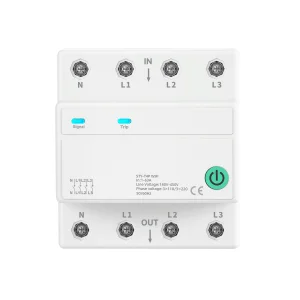
ODM 3 Phase Smart WiFi Circuit Breaker Cut Off L+N Supplier, Factories
-
-
-
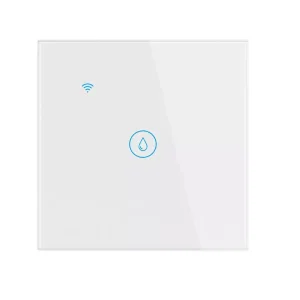
China EU Smart WIFI Touch Water Heater Switch Manufacturers, Supplier
-
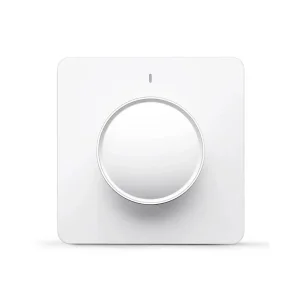
China EU WIFI Smart Rotary Dimmer Switch Manufacturer, Supplier
-
-
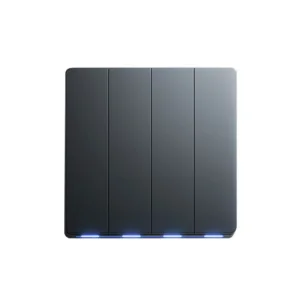
China EU Smart Zigbee Button Light Switch Suppliers, Factory
-
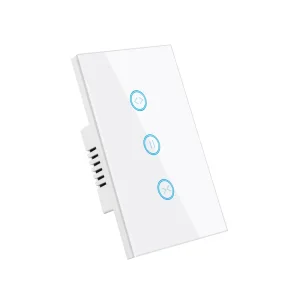
OEM US Smart WIFI Touch Curtain Switch Manufacturer, Factory