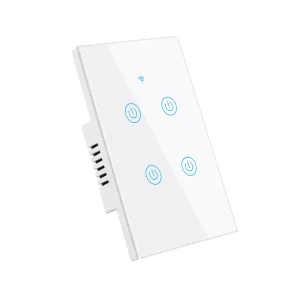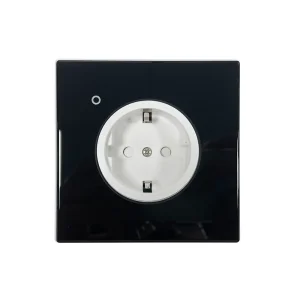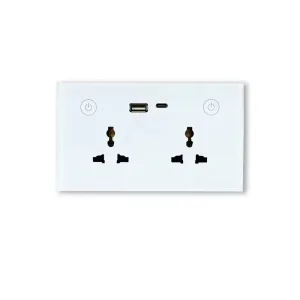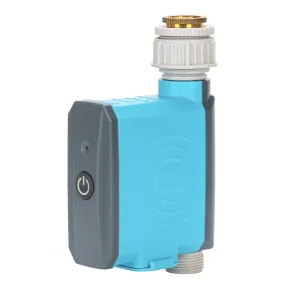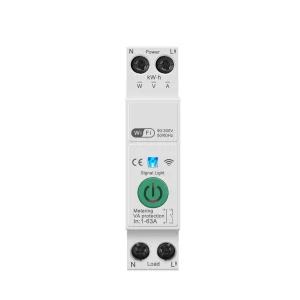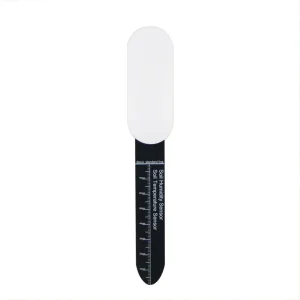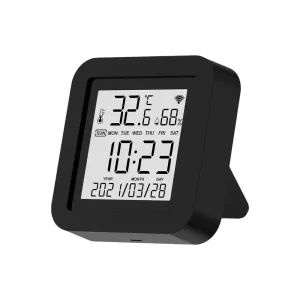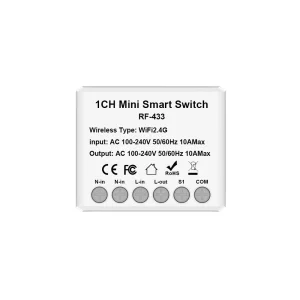
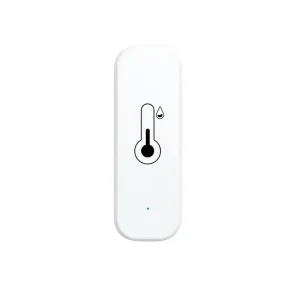
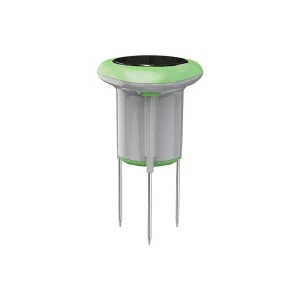
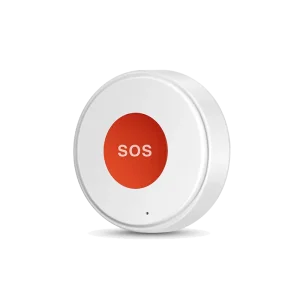
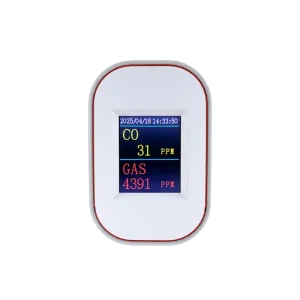
Enterprise Sourcing: Hardware & Multi-Protocol Sensor Lineup
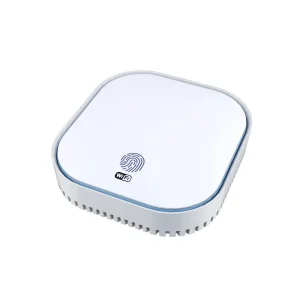
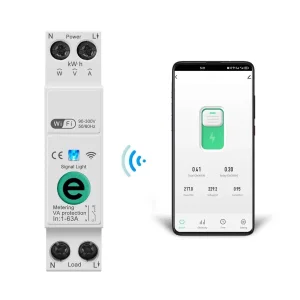
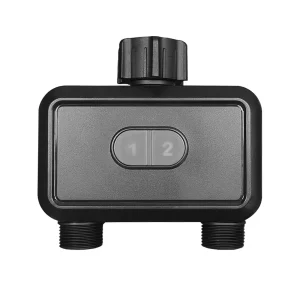
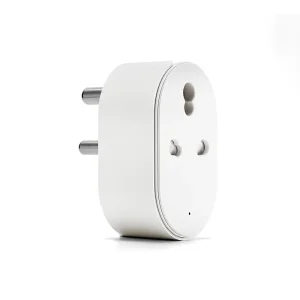
Pre-tested OEM/ODM building blocks designed for seamless integration across Home Assistant, Tuya, MQTT, and local control infrastructures.
The Paradigm Shift to Open Firmware: Why Global Integrators Demand Tasmota
Navigating the global evolution from proprietary cloud silos to local MQTT autonomy, edge reliability, and institutional data privacy.
Data Sovereignty & Zero Cloud Lock-In
In the modern IoT landscape, reliance on public vendor clouds represents an existential vulnerability for enterprise deployments. With shifting API pricing, subscription models, regional network outages, and cloud platform sunsets, institutional procurement teams in North America and the European Union are actively de-risking their IoT hardware supply chains.
Tasmota-powered light switches communicate entirely within local intranet perimeters via standard lightweight MQTT protocols. No command strings, telemetry payloads, or energy consumption logs are routed through foreign servers. This architectural decoupling satisfies stringent enterprise security mandates, including GDPR requirements, California SB-327 IoT safety provisions, and industrial air-gapped compliance.
Sub-Millisecond Edge Latency
Commercial spaces, smart hospitals, luxury multi-dwelling units (MDUs), and high-end hospitality venues cannot tolerate the 300ms to 2000ms latency spikes inherent in round-trip cloud execution. When a wall switch is toggled, lighting feedback must feel instantaneous to occupants.
By utilizing native local brokers (such as Mosquitto, EMQX, or embedded Home Assistant brokers), Tasmota light switches execute relay states with typical actuation delays of under 15 milliseconds. Furthermore, decoupled relay decoupling logic allows switch buttons to send MQTT triggers to scenes without physically dropping relay power, opening up sophisticated software-defined electrical topologies.
Seamless Ecosystem Agnosticism
Unlike proprietary smart switches locked into vendor-branded mobile apps, an ODM Tasmota switch integrates natively into any control middleware. It provides auto-discovery into Home Assistant, OpenHAB, Node-RED, Domoticz, and commercial SCADA systems right out of the box.
Hardware buyers gain maximum operational lifespan: if an enterprise decides to migrate its management software or central building automation server, the underlying electrical switchgear requires zero hardware retrofitting or costly teardown. This longevity dramatically slashes total cost of ownership (TCO) across 10-to-15 year building life cycles.
Industrial-Grade Reliability: How Corunsmart Engineers Resilient Switchgear
From ESP32 silicon qualification to Class 100 cleanroom assembly, examine the hardware protections behind our high-yield ODM manufacturing.
ESP32 / ESP32-C3 Silicon Selection
Corunsmart builds Tasmota-ready hardware utilizing certified Espressif ESP32, ESP32-C3, and ESP8266 system-on-chips with minimum 4MB Flash partitions. This ample memory overhead supports full Tasmota builds with energy monitoring drivers, TLS encryption, and secure Over-The-Air (OTA) firmware upgrade rollback mechanisms without out-of-memory bricking risks.
- Pre-allocated dual-partition OTA partition tables
- Hardware cryptographic accelerators for secure MQTT-over-TLS
- Fine-tuned RF impedance matching with PCB onboard antenna gain optimization
Zero-Cross Switching & Inrush Protection
Modern commercial spaces operate almost exclusively on LED lighting drivers and electronic power supplies, which exhibit massive inrush currents up to 80A during the initial microsecond strike. Traditional relays quickly pit, weld shut, and fail under these capacitive surges.
- Engineered zero-crossing detection circuits triggering relays at AC sine wave 0V
- Custom TVS surge clamping protecting sensitive high-frequency MCU lines
- Silver-tin oxide (AgSnO2) contacts tested to withstand 100,000+ mechanical actuations
Precision Power Metering Calibration
For facility managers requiring load attribution and energy baselining, our smart switch modules feature onboard metering chips (HLW8012 / BL0937 / CSE7766). Each batch undergoes active load calibration on automated testing rigs before leaving the factory.
- Real-time telemetry of RMS Voltage (V), Active Power (W), Current (A), and Power Factor
- Factory-flashed calibration coefficients injected directly into Tasmota settings
- Built-in automated over-current and thermal shutdown thresholds
Global Electrical Standards & Deployment Topologies
Standardizing smart switch retrofits across heterogeneous wiring enclosures and junction boxes worldwide.
European Union (86x86 / Round 60mm)
Engineered with ultra-shallow backbox depths (less than 26mm) to fit seamlessly into standard European flush-mounted circular 60mm wall boxes. Available in both Neutral Required and No-Neutral wire bypass topologies for legacy historic retrofits.
North American Standard (120 Type NEMA)
Decora-style single-gang and multi-gang designs matching US electrical code (UL 94-V0 fire-retardant housings). Features heavy-duty terminal blocks accepting 12-14 AWG solid or stranded copper lines with screw terminals.
United Kingdom & Gulf (BS 4662)
Compliant with British Standard 86mm square plate dimensions and back-depth profiles. Rated for 250V AC operation with safety-shuttered wall sockets and inductive switch load protections.
Brazil & LATAM (4x2 & 4x4 Standard)
Tailored specifically for Brazilian ABNT NBR 14136 and Latin American rectangular junction boxes. Modular inserts allow interchangeable combinations of switches, sockets, and USB high-efficiency chargers.
Smart Switch Firmware & Protocol Comparison Matrix
A technical guide for systems integrators choosing between open-source firmware and managed cloud ecosystems.
| Evaluation Parameter | Corunsmart Tasmota Edition | ESPHome Native | Tuya Standard Firmware | Zigbee 3.0 Standard |
|---|---|---|---|---|
| Primary Network Stack | Wi-Fi (MQTT / HTTP) | Wi-Fi (Native API / MQTT) | Wi-Fi (Tuya Cloud Engine) | 802.15.4 Mesh Network |
| External Cloud Dependency | Zero (Fully Local) | Zero (Fully Local) | High (Vendor Cloud) | Zero (Local Gateway Dependent) |
| Relay Actuation Latency | < 15 ms (Intranet) | < 12 ms (Intranet) | 150 ms - 1200 ms (Cloud RT) | 20 ms - 60 ms |
| Energy Telemetry Integration | Native MQTT Topics (JSON) | Native Home Assistant Sensor | Tuya App / API Quota | Zigbee Cluster Telemetry |
| Enterprise Fleet Provisioning | Web UI, Serial, MQTT OTA, Backlog | YAML compile, Dashboard OTA | Mobile App QR Scanning | Gateway Coordinator Pairing |
| Ideal B2B Application | Commercial, BMS, Air-gapped Sites | Custom Automation Enthusiasts | Turnkey Consumer Retail | Battery-Operated Mesh Nodes |
Frequently Asked Questions: Sourcing & Customization
Direct technical responses regarding firmware flashing, pinout assignments, volume MOQ, and international certifications.
Can Corunsmart ship switchgear with customized Tasmota templates pre-compiled at the factory?
What microcontrollers do you use for your Tasmota-compatible light switches?
How does your factory ensure compliance with CE, FCC, RoHS, and UL safety standards?
Do you support both Neutral and No-Neutral (Single Live Wire) electrical systems?
What is the standard Minimum Order Quantity (MOQ) and lead time for custom ODM orders?
Enterprise Power Measurement & Smart Wall Panels
Complete your deployment ecosystem with high-amperage breakers, precision-metered sockets, and intelligent controllers.