
Featured Smart Socket & Controller Hardware
Direct factory production lines for global enterprise channels, smart building retrofits, and energy aggregation operators.

Smart Plug Architecture Transformation: 2026 Industry Analysis
Global enterprises have shifted from requesting simple Wi-Fi relays to demanding edge-compute energy orchestrators. Sourcing managers must evaluate thermal tolerances, flash partition flexibility, and dynamic grid compatibility.
Sub-Metering & Power Telemetry Precision
Standard consumer plugs utilize coarse resistive dividers with variances upwards of 5%. Modern OEM deployments dictate isolated shunt resistors paired with dedicated BL0942 or HLW8032 metering ASICs, delivering real-time current, active power, and RMS voltage within a calibrated ±1% tolerance margin. This data precision enables automated ESG carbon accounting across smart office fleets.
Dynamic Sampling: 50/60Hz Self-AdaptingInrush Current & Zero-Cross Switching
Inductive loads such as refrigeration compressors, HVAC heat pumps, and switching power supplies draw transient inrush currents exceeding 80A. Without zero-cross detection circuits, relay contacts suffer electrical arcing, contact pitting, and premature welding. Factory-integrated zero-cross micro-controllers synchronize contacts to the AC zero-crossing point, scaling endurance cycles beyond 100,000 operations.
Inrush Absorption: 100A Peak @ 20msMulti-Stack Modular MCU Decoupling
Global sourcing teams struggle with vendor lock-in caused by proprietary cloud modules. Our Shenzhen manufacturing lines implement standardized pin-to-pin modular architectures across Espressif ESP32-C3 (RISC-V), Realtek Ameba, and Telink Zigbee/Thread SoCs. Brands can pivot hardware procurement between Tuya ecosystem deployment, Matter native, or pure Tasmota open-source firmware without redesigning PCB baseboards.
Unified Form-Factor DaughterboardsEdge Autonomy & Offline Logic Execution
Enterprise automation requires absolute operational continuity during WAN link failure. Modern ODM smart plug firmwares house localized scheduler stacks, flash-cached cron configurations, and local sensor-to-socket peering over Matter or Zigbee bindings. This completely decouples core protective functions—such as over-temperature trip and surge cut-off—from cloud latency.
Response Latency: < 15ms On-DeviceMacro-Industry Solutions for Telecoms, Utilities, and Hospitality
Delivering specialized mechanical, electrical, and firmware implementations tailored to vertical market operational challenges.
Virtual Power Plants (VPP) & Grid Balancing
Energy providers demand rapid load-shedding capabilities during peak demand hours. Corunsmart engineers custom smart plug firmwares supporting OpenADR 2.0b and MQTT edge protocols. Integrated high-frequency sampling tracks grid droop frequency deviations, permitting programmatic tripping of non-critical residential loads within 200 milliseconds to stabilize transmission zones.
Multi-Tenant Commercial Real Estate & Co-Living
Facility operators face liability issues regarding tenant appliance safety and equitable sub-billing. We provide 16A continuous-duty wall sockets and in-line smart breaker modules equipped with programmable current-limiting circuit trips. Over-current parameters are locked via cryptographic master keys, preventing unauthorized space heater usage and minimizing commercial fire hazards.
Hospitality PMS & Keycard-Free Occupancy Control
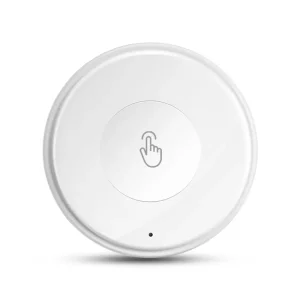
Traditional mechanical keycards fail to mitigate running HVAC equipment in unoccupied rooms. Our multi-mode Zigbee 3.0 smart sockets and button scene panels link directly into property management software (PMS). Paired with millimeter-wave presence sensors, sockets power down high-drain consumer electronics instantly upon guest checkout.
Global Localization, Pin Geometry & Safety Compliance
A smart plug is fundamentally a high-voltage electrical safety component. Structural engineering must account for local back-box geometries, mechanical insertion stress, and flammability parameters.
European Standards: CE, RoHS, RED & VDE
European Schuko (Type F) and French (Type E) outlets undergo strict testing for shutter safety, earthing continuity, and thermal deformation under continuous 16A resistive loading. Housings are injection molded using UL94-V0 high-temperature flame-retardant polycarbonates, capable of passing the 850°C glow-wire test (IEC 60695-2-11).
EN 61058-1 & EN 50525 CompliantNorth American Standards: UL 60730 & FCC Part 15B
Deployments across the US and Canada must conform to UL 60730-1 and ETL electrical safety standards. PCB trace clearances adhere to strict creepage and clearance margins exceeding 3.0mm between primary high-voltage tracks and low-voltage MCU traces. Dielectric isolation withstands surge voltages up to 2,500V.
FCC ID Certified TransceiversLatin America & Emerging Markets: NBR 14136
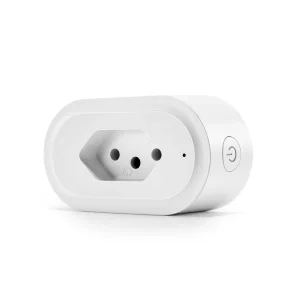
Brazil represents a unique challenge due to concurrent 10A and 20A configurations governed by NBR 14136, alongside dual supply voltages (127V/220V). Corunsmart’s localized smart socket designs provide ruggedized phosphor-bronze terminal clips preventing pin looseness and excessive heat accumulation under 20A heavy-duty cycles.
Dual 10A/20A Modular ToolingBritish Standard: BS 1363 UKCA Directives
UK wall sockets require integrated mechanical safety shutters protecting line and neutral contacts, unlatched only by the insertion of the ground pin. Our UK smart plug series integrates built-in replaceable ceramic thermal fuses (BS 1362) ensuring fail-safe overload shut-down on the physical layer.
UKCA Audit-Ready DocumentationTechnology Roadmap: Matter-over-Thread, GaN & AI Edge
Forward-looking architectural transitions to guide B2B purchasing agents, systems architects, and product managers over the next 24 months.
| Development Vector | Current Production Baseline (2025-2026) | Next-Gen Engineering Pilot (Late 2026) | Future Mass Production Horizon (2027-2028) |
|---|---|---|---|
| RF & Wireless Protocols | Wi-Fi 802.11 b/g/n (2.4GHz) & Zigbee 3.0 Mesh; Tuya Gateway bridging. | Matter-over-Thread native devices; BLE 5.3 fast-provisioning fallback. | Sub-GHz Wi-Fi HaLow for multi-kilometer agricultural and campus smart plugs. |
| Power Switching Components | Electromechanical relays with dedicated zero-crossing control micro-circuits. | Hybrid relays with ceramic snubber networks to quench arc discharge completely. | Solid-state Gallium Nitride (GaN) power switches: zero physical noise, micro-form factor. |
| Energy Disaggregation | Total kWh energy aggregation reported to central cloud application platforms. | On-device Non-Intrusive Load Monitoring (NILM) identifying distinct appliances. | Embedded TinyML micro-models running on-device for appliance anomaly & fire warning. |
| Firmware & Security | Tuya standard secure boot / ESP32 custom firmware with encrypted flash. | Hardware Secure Elements (ATECC608 / PSA Level 2 certified) for key generation. | Post-quantum cryptographic firmware signature verification for critical grids. |
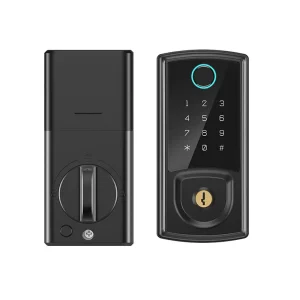
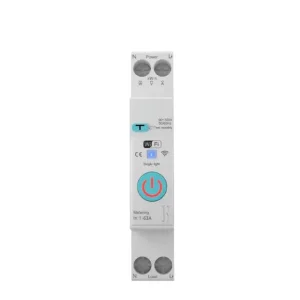
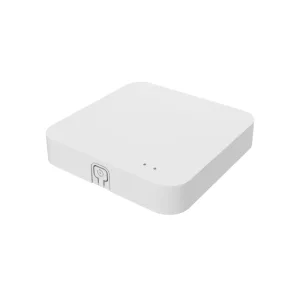
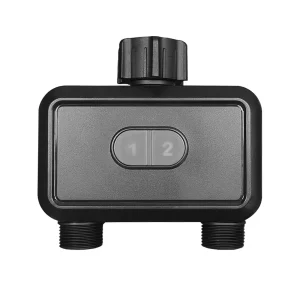
Industrial Gateways, Breakers & Structural Automation
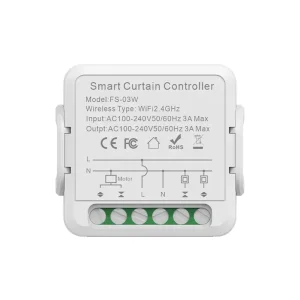
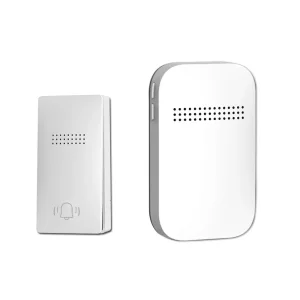
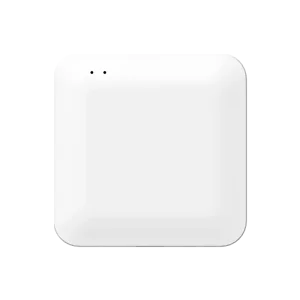
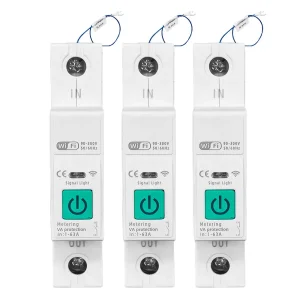
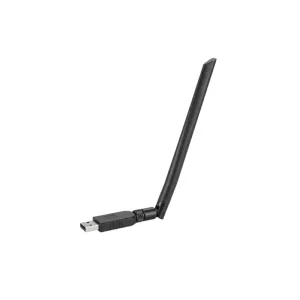
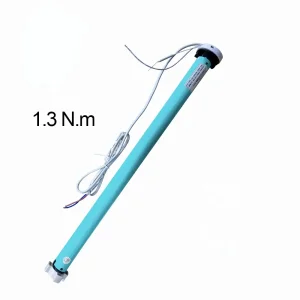
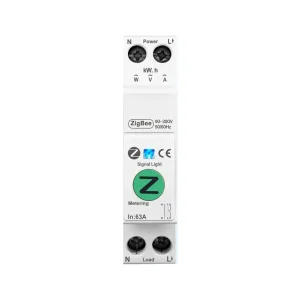
Expanding infrastructure past the wall socket into main DIN-rail distribution panels, RF motorization, and central routing bridges.
Frequently Asked Technical & Sourcing Questions
Clear, authoritative parameters concerning OEM customization, firmware burning, test procedures, and production minimums.
How does your Shenzhen factory prevent calibration drift on power metering smart plugs over multi-year deployments?
Corunsmart uses automated production calibration test benches. During surface-mount assembly, each PCBA is subjected to two fixed resistive reference loads (typically 100W and 2000W pure resistive) using high-precision digital power standards. Calibration constants for voltage, current, and active wattage are flashed directly into the metering ASIC's internal EEPROM/OTP memory registers. Furthermore, we select low-temperature coefficient shunt resistors (TCR < 50 ppm/°C) to prevent thermal self-heating from introducing data drift across high-load operations.
Can you deliver bare-metal or Tasmota/ESPHome pre-flashed plugs without Tuya cloud dependencies?
Yes. While Tuya and Tuya-Matter platforms represent high-volume consumer demand, our factory provides specialized custom flash programming for professional integrators. We assemble boards using Espressif ESP32, ESP32-C2, and ESP32-C3 modules. In-circuit programming fixtures can flash open-source firmware binaries (Tasmota, ESPHome, custom MQTT clients), lock hardware eFuses, and burn proprietary client cryptographic keys during line testing, giving brands complete server autonomy.
What is the standard engineering lead time from tooling verification to mass container shipments?
For existing mechanical enclosures requiring custom branding, color matching, and private-label firmware/packaging, initial pilot validation run (PVT) samples require 7 to 10 business days. Upon sample sign-off, standard batch production takes 25 to 30 days. For completely new ODM projects requiring new injection tooling for bespoke socket pin outs, mold manufacturing and first-shot tooling samples (T0) require 35 to 45 calendar days, followed by laboratory certification submissions (CE, FCC, ETL).
What factory-floor QA gates are enforced within your Class 100 cleanroom facility?
Every smart device manufactured in our 1,400 m² Bao'an facility undergoes four stages of automated verification: First, Automated Optical Inspection (AOI) verifies solder paste volume and surface-mount component positioning. Second, In-Circuit Testing (ICT) probes for trace continuity, shorts, and passive component tolerances. Third, Functional Testing (FCT) applies operational AC mains voltage to verify relay actuation, RF spectrum power (using automated shield boxes), and zero-cross triggering. Finally, 100% of finished devices enter our automated burn-in chamber for dynamic thermal and continuous cycling before packaging.