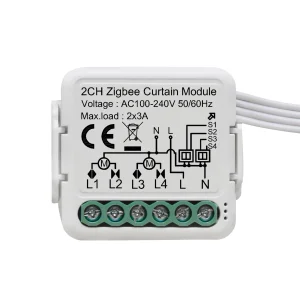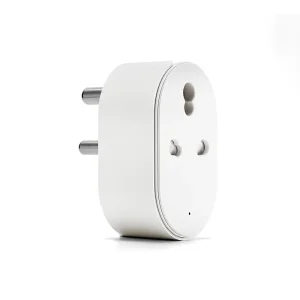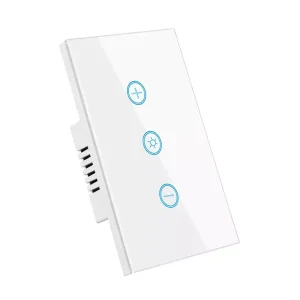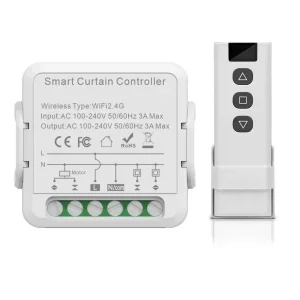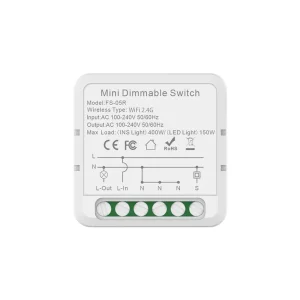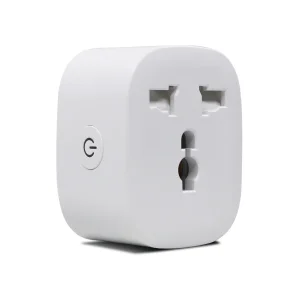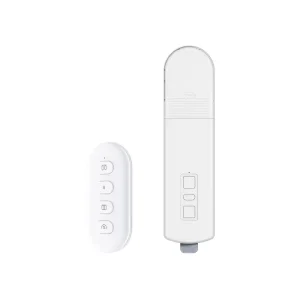
Featured Smart Energy & Protection Hardware
Explore factory-direct OEM/ODM terminal units, smart sub-meters, and integrated micro-switches engineered for global utility grids.
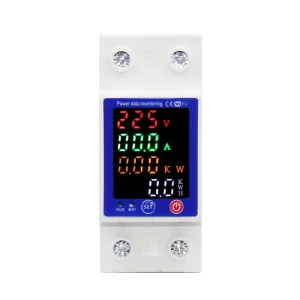
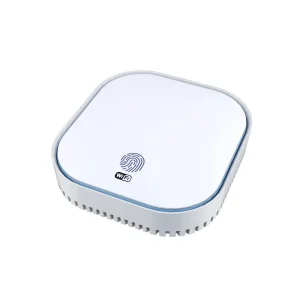
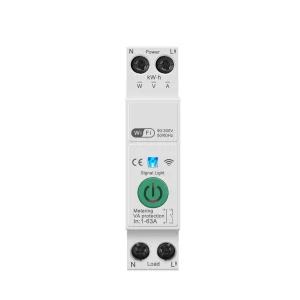
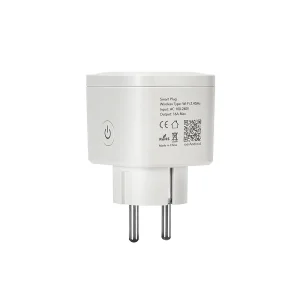

The Global Proliferation of Smart Energy Metering Over Wi-Fi
As distributed energy resources (DERs), microgeneration via rooftop photovoltaics (PV), and EV chargers proliferate, legacy mechanical and static meters can no longer support modern grid dynamics. Selecting an enterprise-grade OEM Smart Energy Meter Wi-Fi manufacturer is a foundational infrastructure decision.
Sub-second Granular Telemetry
Traditional AMR/AMI networks operate on 15-minute polling windows. Modern Wi-Fi meters built on high-performance microcontrollers deliver real-time voltage, current, active power, and harmonics directly to local MQTT brokers or cloud systems.
Grid Resilience & Demand Response
Decentralized energy trading requires edge processing capable of executing load shedding in milliseconds. Integrated smart circuit breakers cut down overcurrent and thermal runaway risks autonomously without upstream server dependencies.
Zero Gateway Architecture
Unlike Zigbee, Z-Wave, or LoRaWAN implementations that require localized concentrators and network gateways, Wi-Fi 2.4GHz infrastructure allows direct-to-cloud handshakes, reducing hardware CAPEX and on-site commissioning friction.
Engineering Architecture: Metrology Front-End & IoT Stack
High-precision smart energy meters require physical isolation between the high-voltage metrology analog front-end (AFE) and low-voltage computational chipsets to guarantee industrial electrical reliability.
| Subsystem Layer | Technical Configuration | OEM Customization Options | Compliance Standards |
|---|---|---|---|
| Metrology AFE | Dedicated 24-bit Sigma-Delta ADC metrology IC (e.g., BL0942 / HLW8032 / ADE7953) | Shunt resistor, Rogowski coil, or Current Transformer (CT) integration | IEC 62053-21, IEC 62053-22 Class 1.0/0.5 |
| Microcontroller (MCU) | Dual-core 32-bit RISC-V or Tensilica Xtensa (ESP32, ESP32-C2, ESP32-C3) | Flash memory expansion (4MB/8MB/16MB), RAM sizing for edge analytics | IEEE 802.11 b/g/n, BLE 5.0 mesh commissioning |
| Switching & Isolation | Bistable magnetic latching relay (63A to 100A threshold), optical isolation | Single Pole (1P), Double Cut (L+N simultaneously), Three-Phase (3P+N) | IEC 60947-2, UL 489, GB 10963.1 |
| Firmware & Protocol | Tuya Smart / Smart Life, Matter-over-Wi-Fi, Tasmota, ESPHome, MQTT native | Custom private cloud SDK, mTLS server verification, Over-The-Air (OTA) updates | ETSI EN 303 645 (Cybersecurity for IoT) |
Localized Application Scenarios Worldwide
Different markets demand distinct firmware logic, enclosure formats, and safety mechanisms. Our factory optimizes electrical protection and data logging profiles to match regional grid conventions.
European Union: Sub-Metering & PV Feed-In
Within DACH and Nordic markets, DIN-rail single-phase and three-phase meters track heat pumps and PV net metering. With bidirectional energy flow calculation, the units quantify imported vs. exported grid power for automated self-consumption tariffs.
Latin America: Prepayment & Grid Protection
In regions with fluctuating distribution infrastructures (such as Brazil and Mexico), our meters operate as integrated over-voltage, under-voltage, and earth-leakage breakers. Prepayment recharge tokens can be sent over Wi-Fi directly to the onboard latching relay.
North America: Split-Phase Tenant Billing
For US multi-family residential setups and accessory dwelling units (ADUs), split-phase (120V/240V) monitoring handles variable electrical loads while providing automated CSV reporting and API webhooks for third-party billing software.
Shenzhen Precision Engineering & Supply Chain Resilience
Operating from the global core of electronics manufacturing, our Shenzhen factory harnesses an integrated vertical ecosystem that lowers lead times and secures bill-of-materials (BOM) redundancy.
Rapid NPI (New Product Introduction)
Iterate from industrial design (ID) and tooling modification to prototype verification in 21 business days. Our in-house SMT lines handle ultra-fine pitch placement, automated optical inspection (AOI), and in-circuit testing (ICT) seamlessly.
Class 100 Dust-Free Cleanroom
Metrological calibration requires absolute environmental control. Our 1,400 m² cleanroom maintains stable temperature and humidity profiles, mitigating sensor drift and securing solder-joint reliability under prolonged thermal stress.
Dual-Sourcing Component Security
We eliminate single-source dependencies. Metrology and communication blocks are engineered with drop-in pin-compatible architectures, shielding brand partners from global silicon allocation shortages and price shocks.
Technology Roadmap: Matter, Wi-Fi 6, and NILM Analytics
The future of smart sub-metering extends beyond basic wattage readouts. Our engineering team actively delivers three frontier capabilities into next-generation production batches:
Native Matter-over-Wi-Fi Compliance
Unify enterprise energy metrics across Apple Home, Amazon Alexa, Google Home, and Samsung SmartThings simultaneously without proprietary bridge hardware. Metering clusters communicate directly via standardized Matter energy schemas.
NILM (Non-Intrusive Load Monitoring)
Edge AI algorithms analyze transient current draw and phase angle distortion signatures at 4kHz sample rates, identifying specific appliance signatures (refrigerators, HVAC compressors, water heaters) from a single electrical panel point.
Wi-Fi 6 (Target Wake Time & OFDMA)
Transitioning to low-power Wi-Fi 6 silicon minimizes network congestion across high-density panel installations (multi-tenant complexes), significantly reducing device idle power draw and expanding multi-device access point limits.
Comprehensive Quality Governance & Factory Standards
Deploying connected high-voltage electrical hardware requires audit-ready certifications to safeguard your brand reputation and clear regional customs hurdles without delays.
Audited Manufacturing System
Our facility runs under audited ISO 9001:2015 quality management procedures and BSCI corporate social responsibility guidelines, fulfilling the strict supplier qualifications required by international electrical distributors.
Electrical Breakdown & Surge Resistance
Every batch undergoes high-potential (Hi-Pot) insulation checks up to 4kV, alongside lightning surge withstand testing (6kV common mode) to prevent dielectric breakdown across challenging electrical grid fluctuations.
Firmware Security & OTA Integrity
Signed bootloaders, AES-128/256 encrypted configuration flash, and differential Over-The-Air update frameworks protect our connected meters from unauthorized modification and brute-force takeover attempts.
Frequently Asked Questions for B2B Importers
Everything you need to know regarding minimum order quantities, certification paths, custom firmware injection, and electrical integration.
What is the standard measurement accuracy class of your smart meters?
Our OEM smart energy meters are calibrated to Class 1.0 (±1.0% error margin) as standard in compliance with IEC 62053-21. For specific commercial sub-metering and billing applications, factory-calibrated Class 0.5S configurations can be delivered upon request.
Can you supply devices without Tuya cloud dependencies?
Yes. While we provide Tuya and Tuya-Matter firmware for app-centric brands, we frequently flash open-source and local-first firmware (such as Tasmota or ESPHome) on ESP32 chipsets, allowing direct communication via JSON over MQTT to private Home Assistant or SCADA instances.
What certifications are available for immediate export?
Standard SKUs come with CE (LVD/EMC/RED), RoHS, and FCC certifications. Depending on target specifications and regional switchgear enclosures, we actively support private-label brand partners through UKCA, ETL, UL, and CB certification pathways.
What is the typical lead time for custom OEM batches?
For private-label branding with custom laser markings, user manuals, and packaging, lead times average 15-20 business days. Full ODM projects requiring custom PCB layouts, metrology recalibrations, or dedicated mold tooling are scheduled within 45-60 days.
Expanded Smart Metering, Sockets & Control Devices
Diversify your portfolio with complementary wireless wall sockets, curtain actuators, dimmers, and environmental sensor hardware.