
OEM/ODM Connected Hardware Deployments
Direct factory supply lines engineered for high-availability access setups, power-metering ecosystems, and intelligent wireless switching infrastructure.
-
-
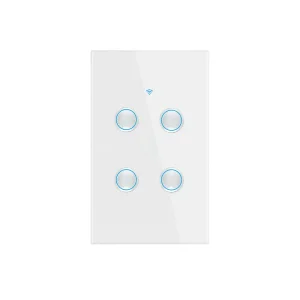
OEM US Smart WIFI Concave Touch Panel Switch Supplier, Suppliers
-
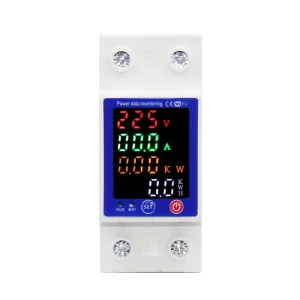
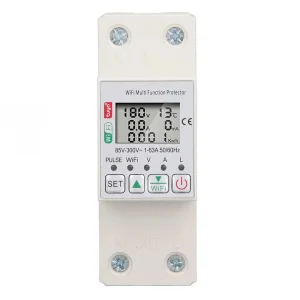
Wholesale Wifi Smart Meter Multi Function Protector Suppliers, Factory
-
-
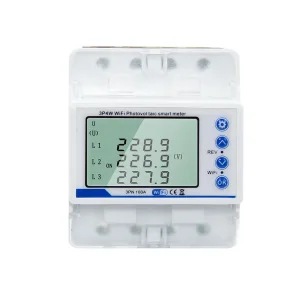
China Three Phase WIFI Energy Meter Protector Manufacturer, Factories
-
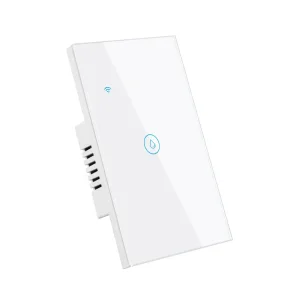
OEM US Smart WIFI Touch Water Heater Switch Manufacturers, Manufacturer
-
Wholesale EU Zigbee Smart Touch Dimmer Switch Manufacturer, Factories
-
China EU Smart WIFI Touch Water Heater Switch Manufacturers, Supplier
The Paradigm Shift in Smart Doorbell Architecture
From passive 433MHz acoustic chimes to edge-computing multi-modal front door gateways: evaluating the macroeconomic and technological drivers reshaping enterprise product development.
Kinetic Energy Harvesting
Micro-energy harvesting mechanics eliminate lithium cells and maintenance dispatches. Piezoelectric and electromagnetic micro-generators produce ~150-280μJ per press, powering sub-GHz radio bursts across 150m open range.
- Zero battery maintenance footprint
- Extended IP67 weather sealing integrity
- Operational lifespan rated past 200,000 cycles
Matter-over-Thread Integration
Next-gen doorbells leverage Matter 1.3+ over Thread mesh backbones. This decouples hardware from closed cloud ecosystems, ensuring simultaneous deterministic signaling to Apple HomeKit, Google Home, Amazon Alexa, and local Home Assistant.
- Sub-80ms low-latency cross-platform chime sync
- No cloud subscription dependencies required
- IPv6 end-to-end security encryption
Edge NPU & Computer Vision
Video doorbell variants (VDB) are transitioning from high-latency cloud streaming to on-device sub-watt neural processing units (NPU), processing PIR, facial detection, and parcel identification locally with ultra-low false trigger rates.
- Local processing saves 90% cloud AWS compute
- Compliant with GDPR & CCPA data governance
- Instantaneous push alerts within 350ms
Engineering Whitepaper Insight: The Sub-GHz vs 2.4GHz Dilemma
While consumer brands often specify dual-band Wi-Fi for video transmissions, acoustic signaling requires high penetration through multi-layer brickwork, Low-E glass, and reinforced concrete. Modern tier-1 ODM designs employ hybrid architectures: FSK/ASK modulation at 433.92MHz or 868/915MHz for zero-drop acoustic chime triggering, linked to 2.4GHz Wi-Fi 6 or Thread modules inside the plug-in receiver for cloud telemetry and integration.
Precision ODM Engineering from Bao'an, Shenzhen
Combining vertically integrated component fabrication, high-speed SMT placement, and ISO 9001 certified cleanroom production to mitigate supply chain volatility for tier-1 importers.
Full-Stack Firmware Customization
We provide enterprise SDK tailoring on ESP32, ESP32-C2, ESP32-C3, and Realtek wireless chips. Direct firmware adaptation supports Tuya IoT, Tuya-Matter, standard Tasmota, and MQTT telemetry streams without proprietary vendor lock-in.
In-House Tooling & Mold Workshop
From initial CMF (Color, Material, Finish) prototyping to steel injection molds, our precision tooling achieves +/-0.02mm tolerances. Supports customized silicone membranes, laser-etched iconography, and UL94-V0 fire-retardant housings.
Comprehensive RF & Aging QA
Every batch undergoes strict automated optical inspection (AOI), RF spectrum verification in shielded anechoic chambers, extreme temperature cycling (-20°C to +60°C), and 100% full-load electrical aging prior to palletization.
Localization, Plug Standards & Regulatory Compliance
Systemic certification management for frictionless import, retail listing, and electrical safety validation across major geographic jurisdictions.
| Target Region | Operating Voltage / Chime Plug | Permissible RF Frequencies | Mandatory Certifications | Key Sourcing Pitfall |
|---|---|---|---|---|
| North America (US/CA) | 110-125V / NEMA 1-15 & 5-15 Plug | 915 MHz, 433.92 MHz, 2.4 GHz Wi-Fi | FCC Part 15B/15C, ETL, UL 62368-1 | Non-UL rated internal capacitors trigger customs seizure and insurer liability rejection. |
| European Union (EU) | 220-240V / CEE 7/4 (Schuko), CEE 7/16 | 868.35 MHz, 433.92 MHz, 2.4 GHz BLE | CE RED (Radio Equipment Directive), RoHS, REACH | Missing WEEE registration or inadequate CE test reports on harmonic emissions. |
| United Kingdom (UK) | 230-240V / BS 1363 (3-pin fused plug) | 868 MHz, 433.92 MHz | UKCA, BSI Kitemark compliance | Uncertified fuse sleeves or unverified creepage distances on chime transformer circuits. |
| Latin America (BR/MX) | 127V / 220V Dual / NBR 14136, Type A/B | 915 MHz, 433 MHz, 2.4 GHz | ANATEL (Brazil), NOM-NYCE (Mexico) | Voltage fluctuation surges destroying linear power supply stages without varistor MOVs. |
| Oceania (AU/NZ) | 230-240V / AS/NZS 3112 (Angled 2/3 pin) | 433.92 MHz, 915 MHz | RCM (Regulatory Compliance Mark), ERAC | Failure to register responsible supplier details in the national EESS database. |
Cybersecurity & GDPR Compliance
For video and smart audio doorbells, firmware aligns with ETSI EN 303 645 and California SB-327 IoT cybersecurity requirements, ensuring hardware root of trust, no default passwords, encrypted TLS 1.3 transport, and automated OTA integrity.
Audited Manufacturing Standards
Shenzhen Corunsmart maintains annual ISO 9001:2015 quality management audits and BSCI social compliance certifications, guaranteeing corporate buyers rigorous labor practices, component traceability, and uncompromised manufacturing ethics.
Flexible Private Label & Packaging
Turnkey packaging options include CMYK high-density retail gift boxes, thermoformed blister trays, localized multi-lingual user guides (EN/FR/DE/ES/IT/PT), and barcode integration (GS1 EAN/UPC) designed specifically for enterprise retail chains.
Specialized Commercial & Residential Applications
Our ODM wireless signaling platforms solve critical operational challenges across diverse building typologies and acoustic environments.
Multi-Story Residential Real Estate
Addressing RF attenuation through structural floor slabs via signal repeating mesh hubs. Multiple wireless transmitters map to distinct chime frequencies or polyphonic melodies to identify front, rear, or patio perimeter entry points.
Healthcare & Assisted Living Systems
Configured as nurse-call or emergency SOS touch-points. Engineered with ultra-high contrast strobe LED indicators, 110dB piezoelectric horns, and wearable IP67 waterproof pendant triggers connecting directly to local staff station receivers.
Commercial Offices & Soundproof Suites
Where acoustic bells cause disturbance or sound isolation booths prevent chime audibility. Integrates optical RGB visual alerting, push notification triggers to enterprise collaboration apps, and dry contact relay outputs for electric door strike releases.
Hospitality & Boutique Guest Accommodations
Custom glass faceplates with integrated "Do Not Disturb" (DND) / "Make Up Room" (MUR) LED backlights. Interfaces with in-room energy management systems (EMS) to disable chime alerts when privacy modes are actively engaged by guests.
Technical & Commercial Clarifications
Transparent engineering answers addressing protocol feasibility, production lead times, and customization boundaries for global procurement officers.
What RF frequency range is recommended for multi-country ODM distribution?
How do kinetic self-powered doorbells compare to battery-powered units in cold climates?
What is your typical ODM turnaround time from CAD review to mass production?
Can Corunsmart flash custom open-source firmware (Tasmota, ESPHome) prior to shipment?
What minimum order quantities (MOQs) apply to private label and ODM tooling projects?
Integrated IoT Smart Controls & Sensor Nodes
Complementary smart modules, multi-mode hub bridges, and safety sensors to complete comprehensive connected home and commercial building installations.
-

Wholesale Multi-mode Smart Gateway For Home Manufacturers, Supplier
-
-
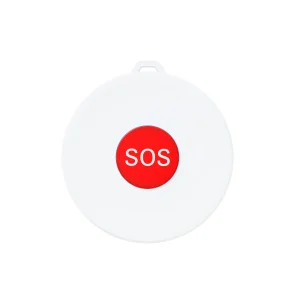
ODM Zigbee Smart SOS Emergency Call Button Manufacturers, Suppliers
-
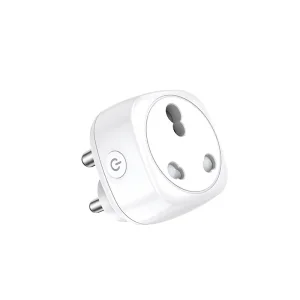
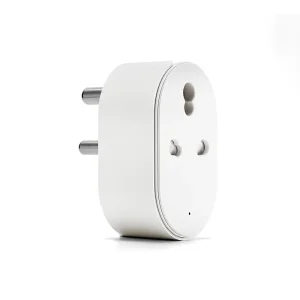
ODM India South Africa Ewelink Wifi Smart Plug Manufacturers, Suppliers
-
-
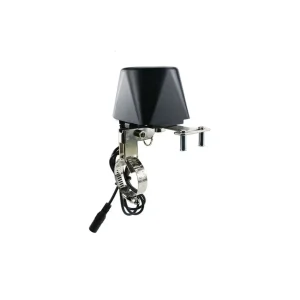
Custom Wifi Smart Gas Water Valve Controller Manufacturer, Supplier
-
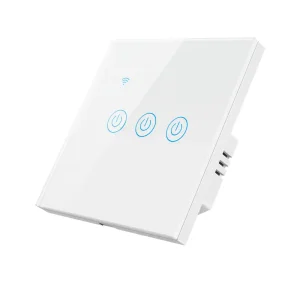
Custom EU Zigbee smart wall Touch Light switch Panel Manufacturers, Factories
-

Wholesale EU Smart WIFI Touch Curtain Switch Factories, Factory