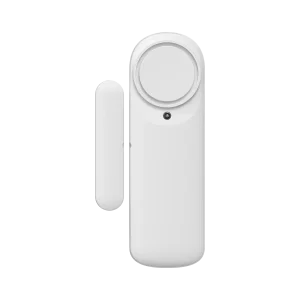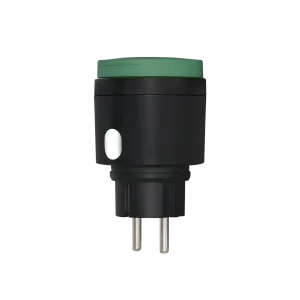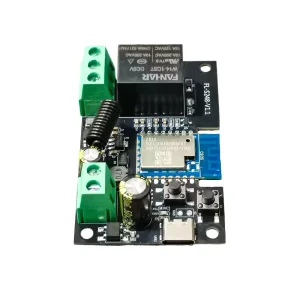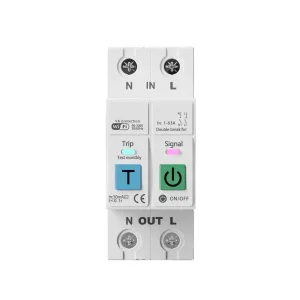
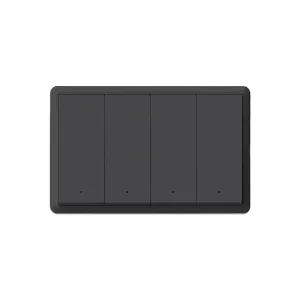
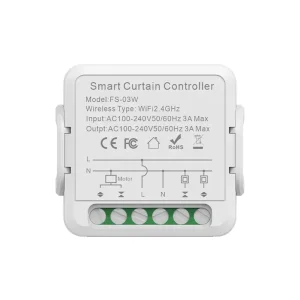
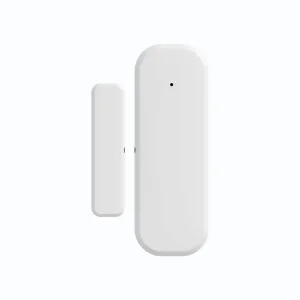
Core Automation & Smart Controller Range
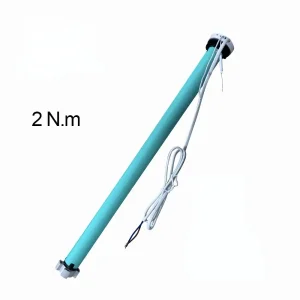
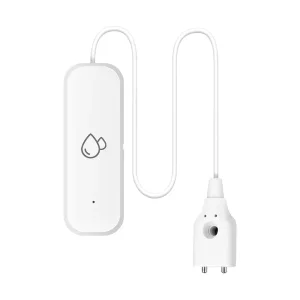
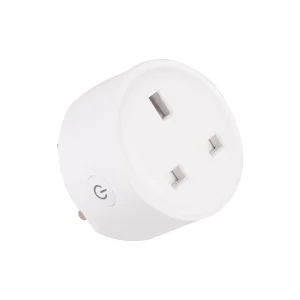
Reliable soil temperature sensing operates in concert with automated valve drivers, smart sub-meters, and wireless gateways. Discover the foundational IoT devices produced in our Shenzhen facility.
Global Commercial & Industrial Landscape of WiFi Soil Sensing
Analyzing the macro shift from calendar-based irrigation to empirical edaphic telemetry across commercial farming, protected agriculture, and urban horticulture.
Across the international agricultural and horticultural industries, soil temperature is recognized as the silent determinant of biological uptake, microbial mineralization, and seed germination viability. While ambient atmospheric monitoring has reached high saturation, edaphic metrics—specifically accurate root-zone temperature coupled with volumetric water content—remain under-instrumented due to the historical expense and wiring complexity of legacy industrial probes. Modern agronomists and commercial greenhouse operators require continuous, high-resolution thermal tracking to anticipate fungal proliferation, calculate exact evapotranspiration (ET) coefficients, and automate root-zone heating circuits.
The global proliferation of WiFi-connected soil temperature sensors has transformed commercial deployments. Leveraging ubiquitous 2.4 GHz IEEE 802.11b/g/n protocols and advanced ESP32-series wireless system-on-chips (SoCs), commercial enterprises can now deploy self-contained, battery-operated probes directly into open-field soil or horticultural substrate slabs without purchasing expensive proprietary radio basestations. Sourcing directly from verified China manufacturing facilities gives international system integrators and private-label distributors a definitive commercial advantage: high-precision digital thermometry (PT100/PT1000 or platinum resistance temperature detectors, DS18B20 digital arrays, and digital thermistors) coupled with direct-to-cloud connectivity at unit economics that enable ubiquitous sensor distribution.
Thermal Stratification Analysis
Modern agtech requires granular profiling across topsoil (0-10 cm), root core (10-30 cm), and subsoil horizons. Continuous thermal tracking isolates root respiration rates, soil freeze-thaw cycles, and thermal conductivity shifts during hydration events.
Direct Cloud Synchronization
Eliminating multi-hop RF gateways, modern WiFi-enabled soil sensors transmit real-time telemetry directly via encrypted TLS 1.3 to Tuya Cloud, AWS IoT Core, or customized MQTT brokers, accelerating automated control loops.
Corrosion-Resistant Metallurgies
Subterranean deployment presents aggressive electrolytic environments. Our factory employs medical-grade 316L stainless steel probes, polyurethane potting compounds, and anti-acid plating to withstand agricultural fertilizers and salinity.
Sensor Physics, Microcontrollers & RF Engineering
A rigorous examination of probe metallurgy, ultra-low-power sleep management, and high-impedance RF antenna design tailored for damp subterranean installations.
The primary engineering bottleneck in WiFi soil instrumentation is the severe RF attenuation caused by water and particulate matter in dense soil, combined with the power consumption profile of 802.11 transceivers. As an authoritative OEM/ODM factory based in Bao'an, Shenzhen, Shenzhen Corunsmart Co., Ltd. resolves these challenges through a modular dual-stage architecture:
1. Transducer Probe Metallurgy & Thermal Coupling: The sensing element consists of a precision calibrated RTD or encapsulated digital sensor hermetically seated inside a 316L stainless steel casing. By utilizing high-thermal-conductivity vacuum grease and ceramic potting around the transducer, the sensor achieves a thermal response time (τ90) of under 15 seconds while remaining completely impervious to hydrostatic moisture ingress up to 1 MPa. The stainless steel alloy resists degradation from organic acids, nitrates, ammonia, and high-salinity drip irrigation solutions.
2. ESP32 Microcontroller Power Profiling: Operating WiFi nodes on field battery power requires aggressive duty cycling. Corunsmart engineers utilize low-power ESP32-C2 and ESP32-C3 RISC-V architectures. During deep-sleep states, the sensor subsystem draws less than 12 µA. The real-time clock (RTC) wakes the microcontroller periodically (e.g., every 15 or 30 minutes); the probe performs an ADC acquisition and thermal equilibrium validation within 120 milliseconds, connects to the pre-authenticated 2.4 GHz wireless access point via fast BSSID handover, transmits the compact JSON/MQTT payload within 1.2 seconds, and returns instantly to deep sleep. This sequence yields an operational battery lifespan exceeding 18 to 24 months on a single LiFePO4 or industrial LiSOCl2 battery pack.
| Engineering Parameter | Corunsmart Industrial Specification | Generic Commercial Probes | Significance for System Integrators |
|---|---|---|---|
| Temperature Measuring Range | -40°C to +85°C (-40°F to 185°F) | -10°C to +50°C | Supports permafrost monitoring and high-heat greenhouse substrate slabs. |
| Measurement Accuracy | ±0.2°C (calibrated 0°C to 50°C) | ±1.0°C to ±2.0°C | Ensures precise thermal modeling for biological threshold calculations. |
| Probe Body Ingress Protection | IP68 hermetic vacuum epoxy potting | IP65 silicone bead seal | Guarantees multi-year subterranean longevity without moisture creeping into the PCB. |
| RF Architecture | External omni-whip or elevated antenna pod | Internal PCB antenna buried in soil | Mitigates RF ground absorption; delivers line-of-sight range up to 120 meters. |
| Firmware Flexibility | Tuya IoT / Matter / Custom ESP32 / Tasmota | Proprietary cloud only (locked) | Enables zero-friction integration with existing cloud or on-premise SCADA setups. |
Inside the Shenzhen Cleanroom: Mass Production & Quality Control
How Shenzhen Corunsmart Co., Ltd. delivers institutional-grade reliability, strict ISO 9001/BSCI compliance, and turnkey OEM/ODM engineering from our Bao'an facility.
Class 100 Purification Assembly
Sensors are mounted and sealed in our 1,400 m² Class 100 dust-free workshop in Bao'an, Shenzhen. Ambient particulate control prevents micro-contamination across SMT pads and optical inspection stages.
Automated Dual-Potting Systems
Hermetic potting utilizes computer-controlled polyurethane degassing and vacuum injection. This eliminates microscopic air pockets around delicate traces, ensuring IP68 water resistance under high continuous pressures.
Multi-Point Thermal Bath Calibration
Every sensor production batch passes through high-precision circulating oil and water thermal calibration chambers. Probes are calibrated at -20°C, 0°C, 25°C, and 60°C against reference laboratory thermistors.
International Compliance Ready
Supported by a workforce of 160 specialists delivering 400,000 units monthly, our production lines conform strictly to ISO 9001:2015 and BSCI standards, with full product certifications across CE, FCC, RoHS, UKCA, ETL, and UL.
Worldwide Industrial & Agricultural Use Scenarios
From high-latitude berry farming to closed-loop Dutch commercial greenhouses, explore real-world installations of our WiFi thermal sensor architectures.
Precision Hydroponic & Coir Slabs
Deployment: Soilless greenhouse tomato and cucumber production across the Netherlands and Spain.
Application: Inserting 316L stainless steel probes directly into rockwool or coco coir slabs. Because root uptake of potassium and calcium stalls when root temperatures dip below 16°C or exceed 26°C, the sensors automate secondary sub-bench hot water circulator loops.
Frost Prediction in High-Value Orchards
Deployment: Viticulture and avocado orchards in California and Southern Australia.
Application: Radiation frost events occur when soil heat flux cannot offset surface radiation. Elevated WiFi soil probes stream ground-heat retention data, giving growers early warnings to activate wind machines and overhead sprinkler frost-protection lines.
Championship Golf Course Turf Management
Deployment: High-end sports facilities, bentgrass putting greens, and turf installations across the UK and UAE.
Application: Bentgrass varieties experience physiological root decline when subterranean temperatures exceed 28°C. Sub-surface WiFi probes alert superintendents to trigger cooling mist pulses and subsurface vacuum ventilation fans.
Industrial Composting & Bio-Remediation
Deployment: Municipal waste management facilities and agricultural composting windrows.
Application: Pathogen reduction requires maintaining temperatures above 55°C for consecutive weeks. Extended-stem probes deliver automated thermal logs, meeting regulatory traceability criteria without manual probe insertion.
Macro Architecture: Linking Soil Telemetry to Edge Control
Sensors are only as effective as the actions they trigger. Here is how Corunsmart integrates sensors with heavy-duty actuators, valves, and circuit protection.
In modern agricultural projects, data collection must directly interface with mechanical execution. Shenzhen Corunsmart Co., Ltd. provides the full hardware chain required to close this loop. When a WiFi soil sensor registers that substrate temperature has fallen below critical thresholds, it does not simply send an alert; it triggers automated edge devices:
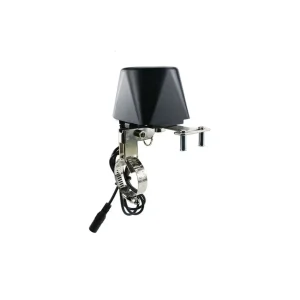
1. Automated Drip & Mist Irrigation: Utilizing our Custom WiFi Smart Gas Water Valve Controller or Smart Irrigation Systems, the telemetry triggers pulsed fertigation cycles. During hot afternoons, thermal spikes trigger localized micro-sprinklers for evaporative cooling, preventing root death.
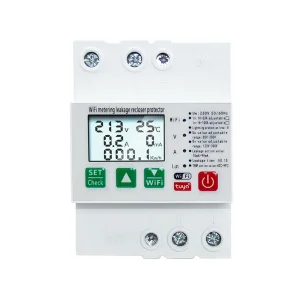
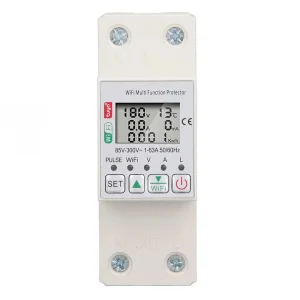
2. Soil Heating Cable Switching via Smart Circuit Breakers: In nurseries and cold-climate glasshouses, root-zone electrical heating cables are powered via our Smart Circuit Breakers with Energy Monitoring. When soil thermistors drop below 18°C, the breaker closes, supplying power while tracking kilowatt-hour consumption for commercial cost-accounting.
3. Open IoT Integration via MQTT & Matter: For agronomic operations utilizing private servers or Home Assistant platforms, our ESP32-based hardware supports native Tasmota or custom MQTT firmware. This bypasses proprietary third-party servers, guaranteeing enterprise data sovereignty and sub-second local automation response times.
Agritech Sensing Roadmap & Next-Gen Developments (2025–2030)
Anticipating next-generation multi-depth probes, Matter-over-Thread edaphic sensors, and edge AI evapotranspiration analytics.
Phase 1: Multi-Parameter Array (NPK + EC + Temp)
Transitioning from single-variable thermal measurement to monolithic probes incorporating Frequency Domain Reflectometry (FDR) for volumetric water content, four-pin AC conductivity electrodes for salinity (EC), and selective ion spectrometry.
Phase 2: Matter-over-Thread Interoperability
Developing ultra-low-power Thread wireless meshes for outdoor and greenhouse deployment. Matter protocol integration will allow soil probes to directly interface with smart valve controllers across diverse brand ecosystems without external cloud bridges.
Phase 3: Subterranean RF Energy Harvesting
Investigating microbial fuel cell (MFC) interfaces and integrated micro-photovoltaic ground collars that eliminate battery replacements entirely, allowing maintenance-free 10-year sensor burial in permanent agricultural acreage.
Frequently Asked Questions: Sourcing & Engineering
Key considerations for international importers, agronomists, and B2B distributors sourcing WiFi soil temperature sensors from China.
Complementary Smart Energy, Actuation & Switching Hardware
Expand your smart facility architecture with our high-demand energy management breakers, outdoor waterproof power sockets, and integrated curtain motor sets.