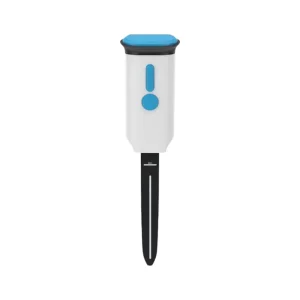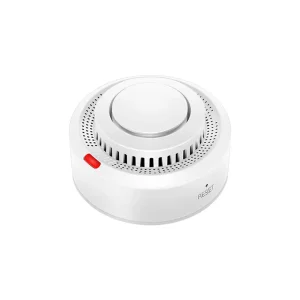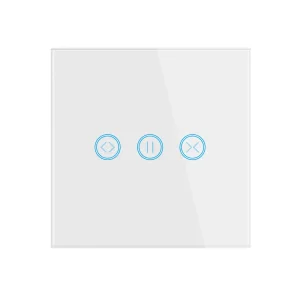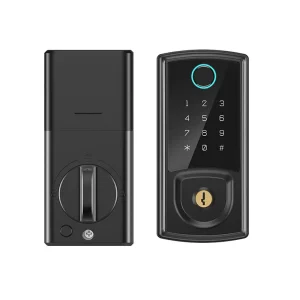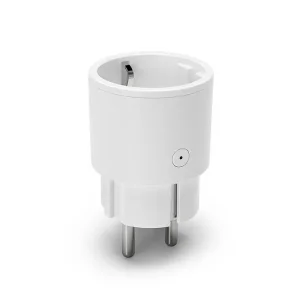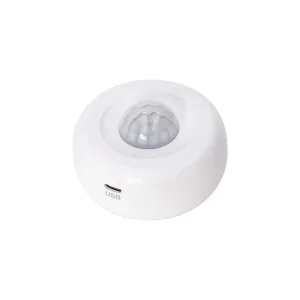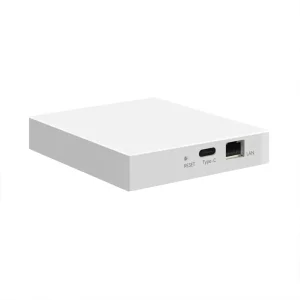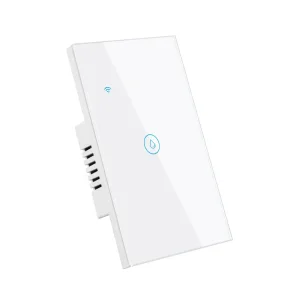
Featured Smart Switch & Automation Hardware
Explore our flagship OEM/ODM products optimized for global export compliance.
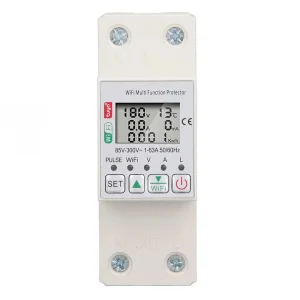
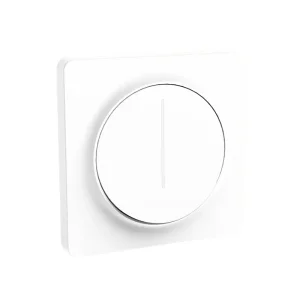
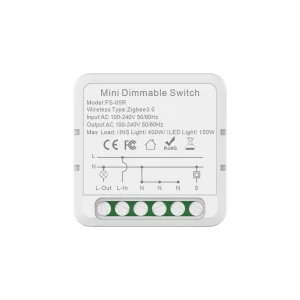
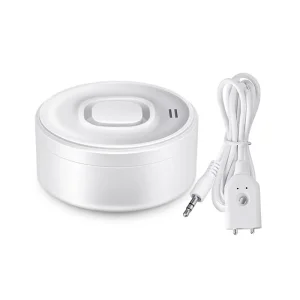
The Architecture of ESP8266 Wi-Fi Light Switches in Industrial Manufacturing
Why the Espressif ESP8266 SoC remains a cornerstone for global B2B smart lighting procurement.
In the realm of global IoT infrastructure, selecting qualified China Esp8266 Wifi Light Switch Manufacturers & Factories requires an exhaustive evaluation of micro-controller architecture, PCB layout engineering, power dissipation dynamics, and firmware adaptability. The Espressif ESP8266 SoC—built on a 32-bit RISC Tensilica L106 ultra-low-power MCU core—revolutionized the smart home hardware landscape by integrating 2.4 GHz Wi-Fi (IEEE 802.11 b/g/n), TR switch, balun, LNA, power amplifier, and matching network directly onto a single silicon die.
For B2B buyers, smart lighting brand owners, and commercial project integrators, partnering directly with a specialized factory in Shenzhen, China ensures that the underlying ESP8266 / ESP8285 (which incorporates 1MB/2MB embedded flash memory inside a compact QFN package) is integrated with high-reliability power supply modules, zero-crossing detection circuits, and flame-retardant enclosures engineered to meet strict international standards such as CE, FCC, RoHS, UKCA, and UL.
SoC & Hardware Integration
Factories leverage the ESP8266EX / ESP8285 microchip connected to high-grade magnetic latching relays or optocoupler-isolated Triac circuits. Hardware engineers optimize antenna trace impedance to 50 ohms, ensuring stable RF transmission through thick concrete walls.
Isolated Power Step-Down
Safety is paramount in AC 100V-240V high-voltage switches. Top Chinese factories utilize AC-DC flyback isolated switching power supplies (typically converting mains voltage down to 5V and 3.3V DC) with surge protection components like metal oxide varistors (MOV) and thermal fuses.
Firmware Openness & Flashing
Unlike proprietary closed modules, OEM factories provide accessible GPIO headers (RX, TX, GPIO0, GND, 3V3) directly on the PCB, allowing commercial procurement teams to flash custom firmware like Tasmota, ESPHome, Tuya MCU, or proprietary MQTT stacks during production.
Why Sourcing ESP8266 Switches from China Factory Hubs Delivers Superior ROI
Unmatched component availability, automated SMT lines, and scalable OEM packaging.
Selecting an OEM/ODM manufacturing partner in China—specifically within the Bao'an District of Shenzhen or surrounding Guangdong tech corridors—gives international buyers a distinct structural advantage. China controls over 85% of the end-to-end smart switch supply chain, encompassing everything from raw PC/ABS flame-retardant plastic resin synthesis, high-precision metal stamping for terminal blocks, surface-mount technology (SMT) assembly, to automated functional testing.
Full Vertical OEM/ODM Integration
From initial ID design and tooling mold fabrication to circuit design, PCB layout, and final assembly, Chinese factories provide end-to-end customization. Brands can customize touch glass panels, physical button travel, LED backlight color palettes, and retail packaging under one roof.
Rigorous Class 100 Purification Workshops
Leading manufacturers like Shenzhen Corunsmart operate cleanroom facilities equipped with automated SMT pick-and-place machines, Solder Paste Inspection (SPI), Automated Optical Inspection (AOI), and 100% full-load aging test bays to eliminate early-life electronic failures.
Economies of Scale & Raw Material Pricing
Direct factory relationships yield competitive unit costs without compromising component quality. Access to volume discounts on high-grade Omron/Songle relays, anti-surge capacitors, and tempered glass touch plates translates into significantly higher profit margins for importers.
Component Selection Matrix: Factory Tier Comparison
| Spec / Component | Tier-1 China Manufacturers (Corunsmart Standard) | Generic Low-Cost Suppliers |
|---|---|---|
| Wi-Fi Chipset | Original Espressif ESP8266EX / ESP8285 SoC | Unbranded/Refurbished Wi-Fi Chips |
| Relay Specifications | 16A / 10A High Inrush Current Relay (100,000 cycles) | Generic 5A/8A Relays (High Weld/Sticking Risk) |
| Enclosure Material | PC Flame Retardant V-0 (UL94 Standard) | Standard Recycled ABS Plastic (Glow Wire Failures) |
| Isolation Transformer | High-Frequency Transformer with CE/UL Isolation Safety Space | Non-Isolated Capacitive Voltage Dropper (Shock Hazard) |
| Factory Testing | 100% AOI + High-Voltage Withstand + 4-Hour Burning Test | Sample Testing / Manual Inspection Only |
Firmware Freedom: Tasmota, ESPHome, Tuya & Open-Source Cloud Ecosystems
Eliminate cloud lock-in and enable seamless local network execution with tailor-made firmware solutions.
A primary driver for selecting an ESP8266 Wi-Fi light switch over alternative proprietary platforms is the unparalleled firmware flexibility of the Espressif ecosystem. Enterprise buyers, IoT SaaS providers, and home automation installers require choices ranging from plug-and-play turn-key consumer apps to totally local, cloud-free Home Assistant integration.
1. Open-Source Firmware Compatibility (Local MQTT)
Through factory pre-flashing services, OEM switches can ship out of the box running pre-configured Tasmota, ESPHome, or NodeMCU software stacks. This configuration enables immediate integration into local control frameworks via MQTT (Message Queuing Telemetry Transport) without relying on external cloud servers, drastically reducing latency to under 50 milliseconds while providing total privacy compliance (GDPR / CCPA).
esphome:
name: china-esp8266-smart-switch
platform: ESP8266
board: esp01_1m
switch:
- platform: gpio
name: "Wall Light Relay Load 1"
pin: GPIO12
id: relay1
binary_sensor:
- platform: gpio
pin: GPIO0
name: "Touch Switch Push Button"
2. Tuya IoT Ecosystem & White-Label Apps
For brands targeting mainstream retail consumers on Amazon, eBay, or regional e-commerce platforms, Chinese factories provide Turnkey Tuya Wi-Fi module integrations (such as TYWE3S or CB2S modules, or ESP8266 flashed with Tuya MCU communication code). This offers seamless compatibility with Smart Life and Tuya Smart apps, backed by native voice assistant skills for Amazon Alexa, Google Assistant, and Yandex Alice.
3. Over-The-Air (OTA) Updates & Security Flashing
Enterprise procurement specifications require robust OTA firmware update paths to address security vulnerabilities. Reputable Chinese factories implement dual-partition flash memory layouts (A/B partitioning), guaranteeing safe fallback mechanisms if an over-the-air update is interrupted during field deployment.
Regional Electrical Standards, Neutral Wire Variations & International Certifications
Ensuring your smart switch imports align precisely with regional grid physics and legal safety mandates.
One of the most complex challenges in global smart lighting procurement is ensuring localized physical and electrical compatibility. A switch designed for European wall boxes cannot be installed into a standard US gang box, nor will a switch lacking a neutral wire work efficiently without tailored bypass capacitor engineering.
Neutral Required vs. No Neutral Wire
Traditional buildings in Europe and North America often lack a dedicated neutral line inside switch junction boxes. China factories manufacture both Dual-Live-Line (Neutral required) switches and Single-Live-Wire (No Neutral Required) switches utilizing a high-efficiency power harvester bypass and anti-flicker safety capacitors.
Form Factors: US, EU, UK, and BR Formats
Factory production lines operate custom molds for every market:
• US/Italian Standard: 120mm x 72mm rectangular switch panel layout.
• EU/UK Standard: 86mm x 86mm square frame for standard 60mm round wall boxes.
• Brazil/Israel Standard: Customized multi-gang screw mountings.
Global Certification Frameworks
To clear customs legally and avoid liability, products must carry verifiable certification. Leading China manufacturers maintain full test reports:
• CE RED (Radio Equipment Directive) & RoHS: European Union.
• FCC Part 15 Subpart B & C: United States.
• UL 60730-1 / ETL Listed: North American electrical safety.
• UKCA: United Kingdom post-Brexit requirements.
Future Trends: ESP8266 to ESP32-C3 Migration & Matter Over Wi-Fi
Navigating the technological shift towards next-generation IoT silicon and unified smart home connectivity.
While the ESP8266 has proven itself as an unbeatable cost-to-performance champion over the last decade, smart home technology is undergoing a massive shift. Chinese manufacturers are actively leading the transition towards advanced silicon platforms while preserving full backward firmware compatibility for B2B client bases.
ESP32-C3 & ESP32-S3 Migration
The RISC-V based ESP32-C3 offers a drop-in pin-to-pin replacement for ESP8266 designs. It adds Bluetooth 5 (LE) for seamless out-of-box provisioning, enhanced hardware security (RSA-3072, AES-128/256), and expanded RAM capacity, making app pairing significantly faster for end-users.
Matter Protocol Interoperability
The arrival of Matter (the unified connectivity standard backed by Apple, Google, Amazon, and Connectivity Standards Alliance) requires increased memory footprint and Thread/Wi-Fi dual support. Chinese factories are delivering Matter-over-Wi-Fi smart switch panels that eliminate vendor lock-in completely.
Real-Time Energy Monitoring & Edge AI
Modern commercial deployments demand accurate energy telemetry. Advanced ESP8266/ESP32 switch boards integrate current transformers (CT) or shunt resistors paired with dedicated metering ICs (e.g., HLW8012 / BL0937) to measure voltage, current, and total kWh usage with under 1% error margins.
Real-World B2B Applications for ESP8266 Wi-Fi Light Switches
From residential smart housing to massive commercial office retrofit projects.
1. Smart Residential Retrofitting
In residential modernization projects, replacing legacy mechanical toggles with glass-touch or tactile button Wi-Fi switches allows homeowners to gain app scheduling, voice control, and automation scenes without rewiring entire electrical runs.
2. Hospitality & Guest Room Management Systems (GRMS)
Hotels leverage custom-flashed Tasmota or MQTT ESP8266 switches to link lighting, curtain controllers, and room status indicators directly to local PMS (Property Management Systems), ensuring instant response times without dependent internet connectivity.
3. Commercial Real Estate & Smart Offices
Commercial building operators install energy-monitoring Wi-Fi switches to automate lighting shutdown outside office hours, track circuit load distributions in real-time, and significantly decrease utility overhead across high-rise facilities.
Shenzhen Corunsmart Co., Ltd. – Your Trusted OEM/ODM Partner
A decade of manufacturing mastery in smart circuit breakers, switches, sockets, and IoT sensors.
Founded in 2014 and operating out of Bao'an District, Shenzhen, Shenzhen Corunsmart Co., Ltd. stands as an industry-leading OEM/ODM manufacturer specializing in smart switches, smart circuit breakers, smart sockets, Wi-Fi sensors, and IoT gateways. Operating a state-of-the-art 1,400 square meter Class 100 purification workshop backed by over 160 skilled workers, Corunsmart maintains a monthly capacity exceeding 400,000 units, with over 90% exported to more than 80 countries spanning the US, EU, UK, Russia, Brazil, and Southeast Asia.
Whether your technical specification calls for traditional Tuya Wi-Fi modules, open-source Tasmota ESP8266 micro-controllers, or novel Matter-certified ESP32-C3 platforms, our engineering staff manages every phase of production under strict ISO 9001:2015 quality control systems and BSCI factory audits.
B2B Procurement & Technical FAQ
Essential guidance for buyers, distributors, and engineering teams sourcing ESP8266 switches.
What is the minimum order quantity (MOQ) for custom OEM ESP8266 smart switch projects?
For standard stock products with default packaging, our MOQ starts as low as 100 units. For custom OEM branding (including customized logo printing on glass panels, bespoke user manuals, custom retail gift boxes, and pre-flashed client firmware), the standard MOQ is typically 1,000 units per model.
Can your factory pre-flash Tasmota or ESPHome open-source firmware before shipment?
Yes! We provide complete firmware pre-flashing services directly during automated SMT assembly or final testing. Clients can supply custom compiled .bin files or default Tasmota/ESPHome templates, ensuring devices connect out of the box to local Home Assistant servers via MQTT.
How do Single-Live-Wire (No Neutral Required) ESP8266 switches function without flickering?
Single-live switches operate by harvesting a micro-ampere trickle current through the lighting load even when the switch is in the "OFF" state to keep the ESP8266 module powered. To prevent low-wattage LED lights from flickering, our designs include an anti-flicker safety capacitor installed in parallel across the first light fixture load.
What compliance certifications are available for North American and European imports?
Our product portfolio carries CE, RoHS, FCC, UKCA, ETL, and UL test reports. When commissioning new ODM hardware shapes, our team manages testing procedures directly with accredited third-party laboratories such as SGS, TÜV, and Intertek.
Explore Connected Smart Sensors & Power Controllers
Complete your ecosystem procurement with our certified smart hardware options.