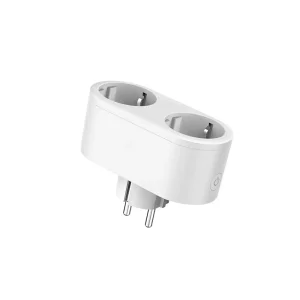
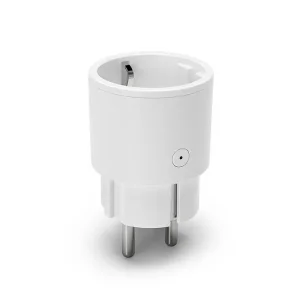
B2B White Paper & Sourcing Directive

OEM EU Smart Socket Factories & Factory in Korea Ecosystem Analysis

A comprehensive technical evaluation of Schuko Type F & C standards, South Korea's K-IoT interoperability, and China's Industry 4.0 high-yield manufacturing supply chain.

Send Inquiry Now

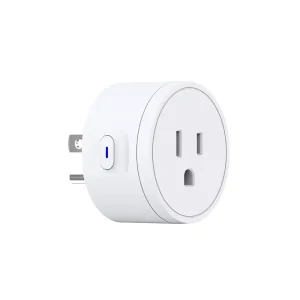
Enterprise Flagship: Type-F & Korean-Market Smart Sockets

Direct OEM/ODM certified power endpoints engineered for bilateral compatibility across European Schuko grids and the Korean electrical framework.

The Dual Grid Synergy: EU Smart Sockets in South Korea’s Industrial Landscape

Deconstructing the technical cross-over between European CEE 7/4 (Schuko) and South Korean KC 60884-1 standards.

Physical Form Factor & Pin Alignment

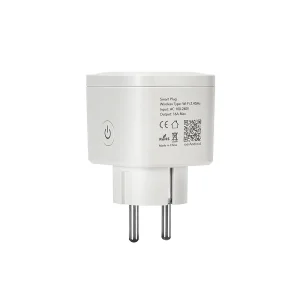
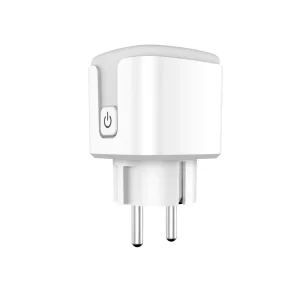
South Korea’s domestic power framework employs the Type F (CEE 7/4) and Type C (CEE 7/16) architectural geometry operating at 220V/60Hz. While European standard grids run on 230V/50Hz, the physical pin layout (4.8mm diameter pins spaced 19mm apart with bilateral earth clips) presents an exact form-factor correlation. For global OEM brands and Korean system integrators, this technical overlap presents unique engineering advantages alongside specific electrical challenges.

Smart socket factories catering to Korea must integrate dual-frequency filtering circuitry. Our OEM production lines integrate dedicated switching-mode power supply (SMPS) controllers capable of dampening the higher inductive reactive load caused by the 60Hz Korean grid, mitigating capacitive coil overheating and ensuring 50,000+ cycle relay longevity.
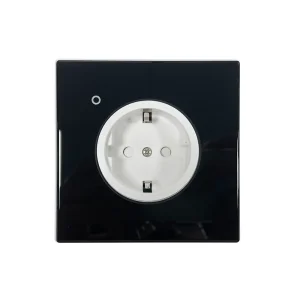
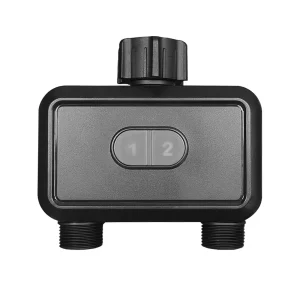
Korean Certification (KC) vs. CE Compliance

Exporting smart sockets into South Korea or setting up co-manufacturing requires strict adherence to KC Safety (Electrical Appliances Safety Control Act) and KC EMC/RF (Radio Waves Act) administered by the National Radio Research Agency (RRA). Although a factory producing EU-standard sockets possesses baseline CE/LVD/RoHS compliance, Korean field application demands severe flame-retardant standard tests.

Corunsmart engineers utilize UL94 V-0 level modified polycarbonate (PC) and phosphor bronze terminal stampings with thick nickel plating. This ensures zero glow-wire ignition at 850°C and maintains dynamic ground fault disconnection times under 30ms, exceeding the baseline criteria for both European harmonized norms (EN 60669-2-1) and Korean industrial frameworks.

The K-IoT Smart City Integration

South Korea’s commercial development—underpinned by aggressive smart city initiatives in Songdo, Pangyo Techno Valley, and Seoul Digital Industrial Complex—mandates sophisticated API and protocol bridges. Unlike Western retail markets focused primarily on isolated smart life applications, Korean industrial deployments require low-latency integration with multi-tenant Home Network systems.

Our OEM firmware configurations allow cross-compilation for local Korean server nodes, Matter-over-Wi-Fi mesh architectures, and customized RS485-to-Wi-Fi gateway integration. We bridge proprietary smart apartment wall-pad systems (such as Commax, Hyundai HT, and Wallpad ecosystems) directly with global cloud clusters including AWS, Azure, and private Tuya-powered tenant clouds.

Global Enterprise Procurement Trends & Procurement Dynamics

The transformation from stand-alone consumer electronics to industrial ESG-compliant asset monitoring hardware.

16A
Standard Rated Current
±1%
Power Metering Precision
<0.5W
Standby Power Draw
400K
Monthly Manufacturing Volume

Global procurement teams across Europe, North America, and East Asia are shifting their B2B sourcing criteria. Standard retail smart sockets characterized by minimal surge protection and basic on/off scheduling no longer meet commercial specifications. Enterprise buyers are procuring hardware built around three fundamental vectors:

1. Revenue-Grade Energy Telemetry (BL0937 / HLW8032 Chipset Integration): Enterprises demand microsecond-accurate data logging covering Active Power (W), Cumulative Energy (kWh), Current (mA), and Line Voltage (V). This data serves corporate ESG tracking and dynamic billing calculations for multi-family apartment communities and shared co-working installations.

2. Interoperability and Local Edge Resilience: Enterprise smart grids cannot tolerate external WAN outages disabling floor-level electrical infrastructure. Procurement managers require Matter-native devices with ESP32-C3 / ESP32-C2 architectures capable of maintaining local mesh control routines via Home Assistant, Tasmota, or direct MQTT broker communication, entirely decoupled from third-party public cloud latency.

3. Heavy-Inductive Inrush Capacity: Modern commercial spaces employ high-draw loads—commercial refrigeration, server racks, heavy display units, and water heating systems. Sourcing managers demand 16A continuous-rated switching relays with TV-8 inrush protection, capable of suppressing startup surges without contact welding.

China Industry 4.0: The Supply Chain Engine for Korean & Global Brands

Combining Shenzhen’s precision electronics cluster with Korean engineering oversight creates a dominant competitive advantage.

Shenzhen Precision Hardware Cluster

While local assembly facilities in South Korea (concentrated in Gyeonggi-do and Incheon) offer geographical proximity for local distribution, domestic manufacturing costs for labor-intensive, multi-component electronics remain restrictive. By leveraging Shenzhen Corunsmart's 1,400 m² Class 100 purification workshop, brands access an end-to-end component ecosystem: high-speed SMT placement, automated laser terminal calibration, and mold fabrication within an 8-kilometer radius.

Full Automated Optical Inspection (AOI)

Our Industry 4.0 manufacturing cells integrate multi-point inline AOI to eliminate cold solder joints on high-amperage traces. Every single PCB undergoes automated ICT testing, functional high-voltage load breakdown tests (3750V AC dielectric withstand), and automated radio-frequency tuning to ensure uniform RF output (Wi-Fi 802.11 b/g/n, Zigbee 3.0, and BLE) across all export batches.

Supply Chain Resilience & Component Traceability

Supply chain stability is critical. Corunsmart utilizes direct silicon foundry allocations from Espressif, Realtek, and Tuya, pairing them with flame-retardant raw plastics sourced under long-term allocation contracts. Every manufactured socket features an engraved 2D Data Matrix code encoding module batch, operator ID, calibration curve, and functional test logs for 100% downstream transparency.

Evaluation Parameter Local Korean Assembly Lines Corunsmart China OEM/ODM Ecosystem Strategic Synergy Benefit
BOM & Production Cost High overhead, import tariffs on raw modules Optimized tier-1 direct component procurement 35-45% reduction in landed manufacturing unit cost
Firmware Adaptability Primarily localized proprietary protocols Universal: Tuya, Matter, Tasmota, MQTT, ESP32 Seamless entry into both Korean & global EU markets
Scalability & Capacity Restricted to 20K - 50K units/month 400,000+ units/month certified capacity Immediate capacity elasticity for tier-1 distributors
Testing Infrastructure Sampling-based bench audits 100% automated burn-in and dielectric screening Under 0.05% RMA rate on critical industrial relays

Localized Applications: South Korean Commercial & Residential Infrastructure

Deploying smart power switches and sockets within advanced architectural environments.

Smart Officetel & High-Density Complexes

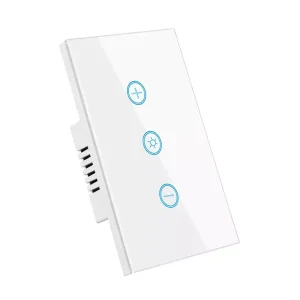
South Korea’s signature urban residential architecture—the Officetel—demands aggressive space saving and automated standby power cutoff (대기전력차단). Corunsmart EU-spec in-wall and plug-in smart sockets allow property management firms to centrally cut phantom loads when residents depart, achieving direct compliance with Korea’s mandatory eco-friendly housing construction guidelines.

Unmanned Retail & PC Bang Infrastructure

The high concentration of unmanned convenience stores and high-performance PC Bangs across Seoul, Busan, and Daegu requires remote reboot capabilities. Our high-amperage smart plugs integrate automated ping-watchdog routines: if a terminal or refrigeration sensor stops responding, the socket automatically cycles DC power, eliminating physical technician dispatches.

Precision Agriculture in Gyeongbuk Smart Farms

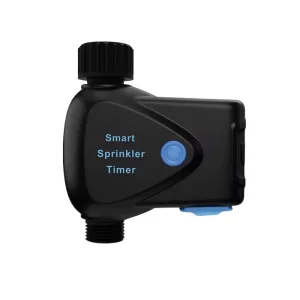
South Korean greenhouse automation utilizes our IP55/IP66 outdoor waterproof smart sockets and bi-directional irrigation timers. Farmers remotely coordinate soil moisture sensors with high-pressure drip misting systems over Zigbee 3.0 mesh nodes, ensuring uninterrupted seasonal output regardless of harsh winter conditions down to -25°C.

Strategic Sourcing & Engineering FAQ

Direct answers for procurement leads, technical directors, and compliance managers evaluating OEM smart socket supply chains.

Can European Type F Schuko smart plugs directly plug into Korean wall outlets?

Yes. The physical dimensions of the European CEE 7/4 (Schuko) standard and the South Korean Type F (KSC 8305) outlet match precisely with 4.8mm pins and dual side ground contacts. However, while European systems operate on 50Hz, Korea utilizes 60Hz. Corunsmart's OEM sockets feature broad-range SMPS modules engineered to perform flawlessly at both 50Hz and 60Hz without timing jitter or capacitor degradation.

What firmware architecture is recommended for enterprise buyers targeting multi-platform ecosystems?

For brand distribution across mixed operating systems, we recommend our Matter-over-Wi-Fi or Matter-over-Thread firmware builds. This allows a single hardware SKU to bind natively with Apple Home, Samsung SmartThings, Google Home, and Amazon Alexa without requiring proprietary bridges. For industrial system integrators, we supply ESP32-C3 series modules pre-flashed with open Tasmota or native MQTT firmware for completely localized, cloudless control.

How does Corunsmart handle private-label OEM branding for Korean and European clients?

We provide full white-glove OEM/ODM customization: laser-etched custom faceplate branding, localized product labeling compliant with both KC and CE marking requirements, custom-molded fireproof packaging, and custom-compiled iOS/Android applications built upon the Tuya SDK or open-source libraries.

What is the minimum lead time and production volume for custom ODM runs?

Standard branded OEM sample batches ship within 7 to 10 days. Mass production runs (up to 50,000 units) are delivered within 25 working days from our Shenzhen facility. We provide low-barrier prototype validation with an initial MOQ starting at 1,000 units for customized laser branding and firmware flashing.

Initiate Your OEM/ODM Smart Socket Project Today

Connect with our technical engineering group in Shenzhen to review circuit schematics, request physical gold samples, or discuss custom firmware tailoring for European and Korean market entry.