Enterprise Hardware Baseline: Precision Sensors & Controllers
Standard OEM/ODM IoT infrastructure hardware engineered in our certified facility, readily scalable for international procurement.
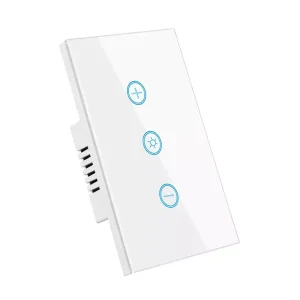
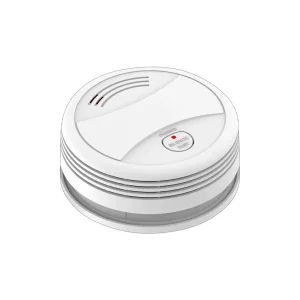
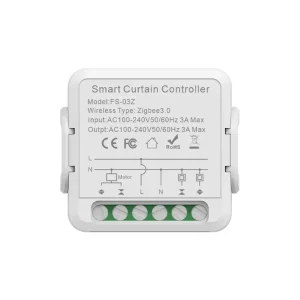
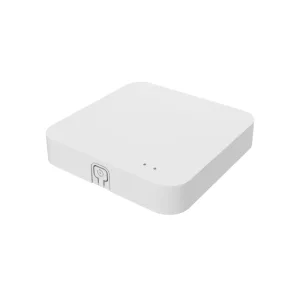
The Paradigm Shift in Soil Moisture Sensing & AgTech IoT Architecture
Transitioning from rudimentary resistive pins to High-Frequency Frequency Domain Reflectometry (FDR) and Time Domain Reflectometry (TDR) telemetry.
Dielectric Capacitance vs. Resistive Probes
Legacy resistive soil sensors suffer from severe electrode oxidation within 90 to 180 days due to soil electrolyte corrosion. Contemporary wholesale manufacturing mandates high-frequency FDR (50–100 MHz) capacitance sensing, where the copper electrodes are fully sealed inside multi-layer FR4 PCBs or medical-grade 316L stainless steel probes, isolating conductive elements from direct oxidation and providing an uninterrupted operational lifespan exceeding 5 to 7 years in acidic and alkaline terrain.
Multi-Parametric Soil Diagnostics
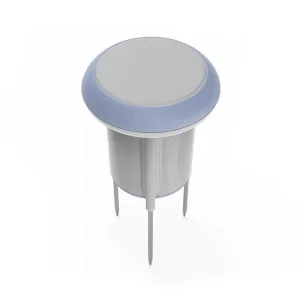
Modern agricultural engineers and municipal managers do not purchase isolated moisture readings. Our state-of-the-art probe designs integrate Volumetric Water Content (VWC), Soil Temperature, and Apparent Electrical Conductivity (EC) telemetry into a unified microcontroller cluster. Monitoring soil temperature allows real-time algorithmic drift compensation, guaranteeing precision across seasonal frost-thaw cycles and intense hyper-arid heat waves.
Telemetry Protocols: LPWAN, Zigbee & Wi-Fi
Deployment topologies dictate radio frequency selection. For residential landscape systems and commercial greenhouse clusters, Zigbee 3.0 mesh and 2.4 GHz Wi-Fi / ESP32 architectures provide rapid responsiveness and effortless integration into local building management frameworks (via MQTT/Home Assistant). For broad-acre pivots, our factory supports LoRaWAN (EU868, US915, AS923) and NB-IoT modems, delivering penetration over 10+ km with ultra-low sleep current consumption under 15 microamps.
China Supply Chain Superiority: The Corunsmart Precision Manufacturing Advantage
How Shenzhen Corunsmart Co., Ltd. delivers institutional-grade component sourcing, SMT automation, and strict reliability governance.
Tier-1 Silicon & Industrial Encapsulation
Operating out of our Bao'an, Shenzhen manufacturing facility, our production line leverages local high-density component clusters. We source directly from premier semiconductor vendors (Espressif ESP32-C2/C3, Nordic, Realtek) alongside industrial-grade resin vacuum degassing chambers. Our proprietary epoxy potting achieves IP68 submersion integrity, preventing capillary water intrusion through cable sleeves, and ensuring resilient sub-surface deployment beneath heavy machinery traffic.
End-to-End OEM/ODM Firmware Control
We eliminate closed-garden vendor dependency. Our in-house engineering team provides deep firmware tailoring across multiple stacks: Tuya Smart / Tuya-Matter for mass-market consumer brands, alongside custom open-source ESP32 firmware configured for Tasmota, ESPHome, and direct TLS-encrypted MQTT pipelines. Clients maintain total ownership of backend routing without forced cloud recurring fees or unwanted server latencies.
Audited Reliability & Production Scalability
Backed by ISO 9001:2015 and BSCI social compliance certifications, our 1,400 m² Class 100 dust-free facility maintains automated multi-point SMT inspection, 100% RF vector network testing, and multi-stage thermal cycling baths (-40°C to +85°C). Producing over 400,000 devices per month, we provide enterprise brand owners with dependable production ramp-up, rapid sample prototyping (10-14 days), and guaranteed Bill-of-Materials (BOM) traceability.
Global Compliance Matrix: Regional Certifications & RF Homologation
Ensuring frictionless market access across European, North American, Latin American, and Asian-Pacific trading jurisdictions.
| Target Region | Key Regulatory Directives | Standardized Frequencies | Critical Safety / Environmental Standards | Factory Compliance Guarantee |
|---|---|---|---|---|
| European Union (EU) | RED (Radio Equipment Directive 2014/53/EU), CE-EMC | 2.4 GHz (Wi-Fi/Zigbee), SRD 868 MHz | RoHS (2011/65/EU), WEEE Directive, REACH SVHC | Full lab test reports (EMC/LVD), DOC declaration, audited CE marks |
| North America (US & CA) | FCC Part 15 Subpart B & C, ISED Canada (RSS-247) | 2.4 GHz, 915 MHz ISM Band | ETL / UL 62368-1, Toxic Substances Control Act (TSCA) | FCC ID granted modules, modular grants for custom OEM industrial probes |
| United Kingdom (UK) | Radio Equipment Regulations 2017 (UKCA) | 2.4 GHz, 868 MHz ISM Band | BS EN 62368-1, UK RoHS statutory instruments | UKCA Declaration of Conformity issued directly via accredited labs |
| Latin America (e.g., Brazil) | ANATEL Resolution 715 (Telecommunication Products) | 2.4 GHz, 902–907.5 MHz / 915–928 MHz | NR-10 Electrical Safety, Environmental Enclosure Seals | Factory support for local representative testing & ANATEL homologation |
| Australia & NZ (APAC) | RCM (Regulatory Compliance Mark), ACMA Radiocommunications | 2.4 GHz, 915–928 MHz (AS923) | AS/NZS CISPR 32, AS/NZS 4268 | Supplier Code of Practice integration and RCM marking files prepared |
Mission-Critical Field Scenarios: From Smart Turfs to Precision Orchards
Architecting tailored IoT telemetry to tackle real-world soil heterogeneity, salinity, and water scarcity.
Commercial Greenhouse Hydroponics & Substrates
Soilless growing media like rockwool, perlite, and coco coir exhibit extremely steep hydraulic release curves. Our high-resolution capacitance sensors measure volumetric moisture shifts within sub-second sampling windows, allowing automated dosing computers to initiate pulse fertigation precisely before substrate moisture drops below hydraulic stress thresholds, maximizing photosynthetic growth cycles without fertilizer runoff.
Municipal Parks, Golf Courses & Smart Turfs
Municipal water conservation ordinances require data-verified landscaping irrigation. Our ruggedized sensors are buried below turf cut lines (flush-mount chassis), communicating wirelessly to centralized smart valve controllers and municipal SCADA platforms. By halting irrigation cycles based on actual root-zone saturation rather than blunt countdown timers, clients slash civic water expenditures by 32% to 45% annually.
Broad-Acre Orchards & Viticulture
High-value viticulture and fruit orchards require Regulated Deficit Irrigation (RDI) to stimulate berry sugar synthesis without inducing vegetative decline. Deploying multi-depth probe arrays (e.g., 20 cm, 40 cm, 80 cm depths) gives agronomists real-time insights into active root zones, deep drainage percolation, and capillary rise, transforming seasonal crop yields into predictable mathematical operations.
Enterprise Procurement Blueprint: How Tier-1 Distributors Source at Scale
A systematic framework for RFQ execution, tooling development, quality inspection criteria, and supply chain hedging.
Phase 1: RFQ & Tooling Specs
Define mechanical enclosure limits, ultrasonic welding requirements, IP rating constraints (IP67/IP68), and exact soil contact geometry. Validate tooling steel grades (e.g., S136 cavity steel) to prevent surface mold abrasion across 500,000+ injection cycles.
Phase 2: Firmware & RF Tuning
Verify antenna matching circuits using passive vector network analyzers within simulated soil media. Complete protocol certification (Zigbee 3.0 Conformance, Tuya IoT Cloud handshake, or open-source MQTT payload verification).
Phase 3: Pilot Batch & Pre-Shipment QC
Pilot run evaluation based on AQL 0.4 / 1.0 (Critical / Minor). Continuous 72-hour burn-in chamber testing, salt-spray corrosion bath audits, and pressure tank immersion checks to verify hermetic resin curing.
Phase 4: Global Logistics & Continuity
Consolidated FOB/CIF maritime and air logistics from Shenzhen and Hong Kong ports. Long-term buffer stock agreements for critical MCUs and passive RF ICs to shield enterprise customers from global semiconductor supply shocks.
Emerging Industry Horizons: The Next 5 Years in Soil IoT Telemetry
Anticipating structural shifts in energy harvesting, satellite LPWAN, and Matter-over-Thread standardizations.
Direct-to-Satellite LPWAN Connectivity
Terrestrial cellular networks fail across massive agricultural acreage in Australia, the Americas, and Africa. Sourcing roadmaps are actively integrating dual-mode 3GPP Rel-17 NTN (Non-Terrestrial Networks) satellite modules, allowing soil telemetry nodes to transmit payloads directly to Low Earth Orbit (LEO) satellite constellations, bypassing the need for terrestrial gateways entirely.
Micro-Energy Harvesting & Solid-State Batteries
Routine primary battery replacement cycles pose prohibitive operational expenditures on vast deployments. The frontier of high-reliability manufacturing combines micro-photovoltaic cells coated in scratch-resistant fluoropolymers with high-cycle Lithium Iron Phosphate (LiFePO4) or solid-state capacitors, achieving an unassisted operational life cycle of 10+ years without landfill waste.
Matter-over-Thread Integration for Residential Landscape
The fragmentation of consumer smart gardens is ending. With Thread's native IPv6 mesh networking and Matter protocol unifying the home ecosystem, our engineering team is actively prototyping next-generation soil and garden sensors that bind natively with Apple HomeKit, Google Home, and Home Assistant simultaneously, eliminating third-party cloud bridges.
Frequently Asked Questions for Wholesale Sourcing Teams
Clear, unvarnished technical insights addressing certification, MOQ, calibration, and firmware engineering.
How does soil salinity affect FDR capacitance measurement, and how does your factory mitigate drift?
Soil salinity (high electrical conductivity) increases dielectric permittivity loss, causing generic capacitive sensors to falsely report high moisture levels in saline soils. Corunsmart mitigates this by integrating dual-frequency high-MHz oscillation circuits alongside simultaneous EC monitoring. Our firmware includes polynomial correction algorithms that automatically normalize the raw ADC capacitance readings against ambient EC and temperature drift.
What is the standard Minimum Order Quantity (MOQ) and lead time for custom OEM brand integration?
For customized logo imprinting and standard Tuya/Zigbee firmware tailoring, our standard entry MOQ is 1,000 units. For complete ODM custom plastic tooling, specialized probe geometry, and proprietary PCB layouts, initial prototype validation takes approximately 25 to 35 business days, with production batch delivery executing within 30 to 40 days post-sample signoff.
Can our engineering team flash custom firmware or connect these devices directly to private MQTT servers?
Yes. We specialize in ESP32, ESP32-C2, and ESP32-C3 hardware designs that allow integrators to bypass public proprietary clouds entirely. We can deliver units pre-flashed with Tasmota, ESPHome, or custom firmware featuring client-specified Wi-Fi provisioning credentials, private TLS broker keys, and structured JSON telemetry formats.
What testing procedures are applied to verify long-term IP68 waterproofing in sub-surface environments?
Every batch undergoes rigorous quality assurance inside our ISO 9001 certified cleanroom workshop. We execute automated pneumatic pressure decay testing to confirm hermetic enclosure seals, followed by submerged thermal cycling tests (water temperature differential to simulate cold sudden rains on hot soil) to guarantee that thermal expansion/contraction does not cause vacuum seal failure.
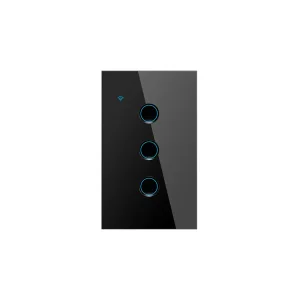
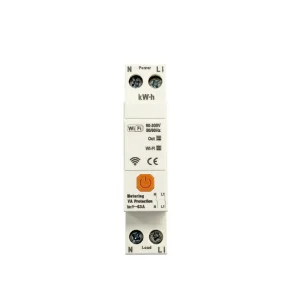
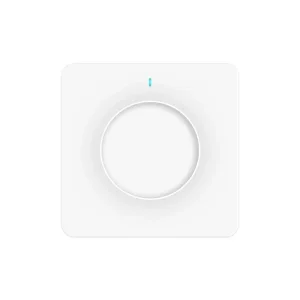
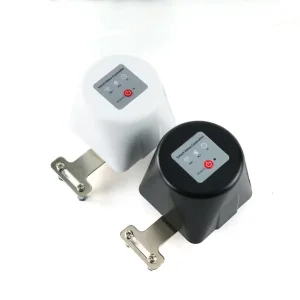
Extended OEM/ODM Smart Automation & Control Portfolio
Complementary wireless components engineered for unified building, lighting, and environmental management deployments.