Direct OEM Catalog
Integrated IoT Control Units & Smart Actuators
Explore our core volume-manufactured smart automation products engineered for enterprise stability, multi-protocol interoperability, and custom open-source firmware compatibility.
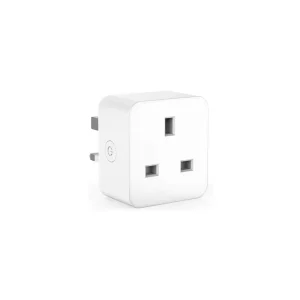
Wholesale Uk Smart Plug With Energy Monitoring Manufacturer, Factories
Configure Spec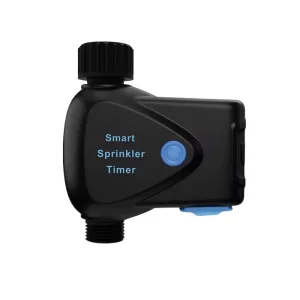
OEM WIFI Smart Sprinkler Timer built-in water meter Manufacturers, Manufacturer
Configure Spec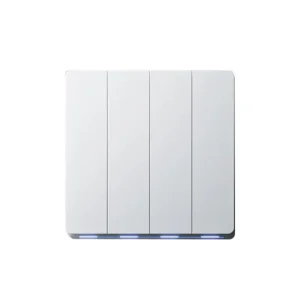
OEM EU Smart WIFI Button Light Switch Factories, Factory
Configure Spec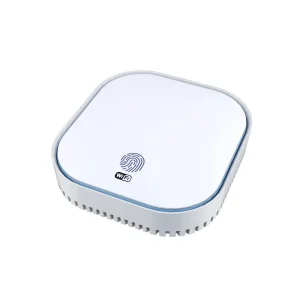
OEM Natural Gas Leakage Detector Sensor Manufacturers, Supplier
Configure Spec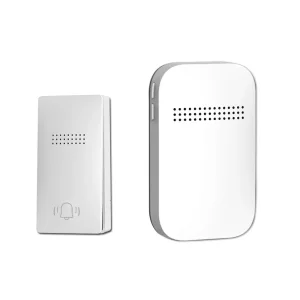
Custom Self Powered Wireless Doorbell Manufacturers, Manufacturer
Configure Spec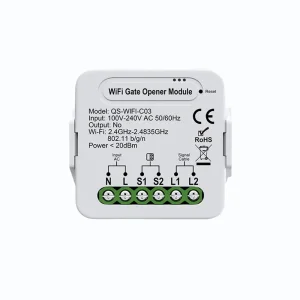
Wholesale Smart Mini WIFI Garage Door Switch Manufacturers, Factory
Configure Spec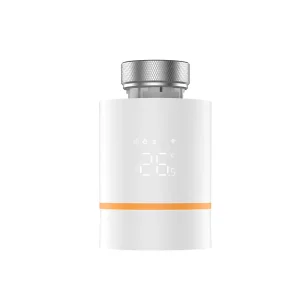
Custom Zigbee Thermostatic Radiator Valve Suppliers, Factory
Configure Spec
Strategic Procurement Intelligence
The Paradigm Shift: From Cloud Lock-In to Open Tasmota Dimming Architecture
Why commercial systems integrators, hospitality operators, and smart grid developers are ditching proprietary cloud-dependent dimmers in favor of localized, air-gapped Tasmota ESP32 hardware.
Over the past decade, high-density installations in Multi-Dwelling Units (MDUs), corporate headquarters, and high-end hospitality suites have exposed severe vulnerabilities in cloud-reliant smart dimmers. Proprietary cloud architectures introduce unpredictable operational risks: sudden API deprecation, forced recurring SaaS fee models, round-trip latency jitter, and severe data privacy compliance violations under GDPR and California SB-327. When an external public server suffers downtime, commercial facility lighting can freeze or fail to trigger automated energy-saving scenes.
To address these mission-critical points of failure, global enterprise buyers are standardizing on Tasmota-preflashed dimmer switches. Built on open source firmware and running directly on Espressif ESP8266, ESP32-C2, and ESP32-C3 microcontrollers, Tasmota empowers facilities to retain complete data sovereignty. All actuation commands, scheduled dimming curves, and high-resolution power consumption metrics flow locally across an internal MQTT broker or Home Assistant server at zero latency, totally isolated from public internet exposure.
Information Gain Insight: Sourcing Tasmota hardware directly from a certified OEM manufacturer eliminates the labor bottleneck of manual disassembling and bench-flashing. By provisioning specialized flash partition schemes, pre-configured GPIO templates, and calibration constants directly on high-speed SMT lines, bulk procurement costs drop by 38% compared to post-market retail modification.
Local Data Sovereignty
Zero dependency on foreign cloud servers. Direct publish-subscribe MQTT payload architecture prevents telemetry leaking and satisfies international corporate cybersecurity compliance.
- mTLS Encrypted
- Zero Cloud Ping
- Air-Gap Ready
Sub-10ms Command Latency
Instantaneous brightness transitions via localized event loops. Ideal for synchronized multi-zone architectural dimming, hotel lobbies, and master scene triggers across enterprise campuses.
- Local Web UI
- RESTful API
- On-Device Timers
Native Hardware Diagnostics
Continuous edge monitoring of mains voltage drop, load current, board thermistor temperatures, and Wi-Fi RSSI signal integrity transmitted via native Tasmota tele/STATE payloads.
- Power Telemetry
- Over-Temp Cutoff
- Self-Healing Wi-Fi
Hardware Level Deep Dive
Trailing-Edge MOSFET vs. Leading-Edge TRIAC: The Engineering Distinction
Understanding the internal electrical topology required for clean phase cutting, zero buzz, and eliminating LED driver capacitive destruction.
The commercial success of an enterprise dimmer installation hinges on the electrical topology utilized inside the wall cavity. Traditional leading-edge TRIAC phase-cut dimmers were engineered primarily for resistive loads such as incandescent bulbs. When applied to modern solid-state capacitive LED drivers, leading-edge dimmers generate massive in-rush currents at the start of each AC half-cycle. This sudden spike causes severe acoustic hum in the fixture, generates significant electromagnetic interference (EMI), and accelerates thermal breakdown in the driver capacitors.
Shenzhen Corunsmart designs its flagship Tasmota dimmers with dual complementary MOSFET trailing-edge (reverse phase-cut) topologies paired with galvanic optocoupler isolation. In a trailing-edge setup, the switch gently conducts power at the AC voltage zero crossing and softly commutates the power off mid-cycle. This eliminates electrical shockwave spikes, producing near-silent dimming down to 1% load thresholds without flickering, ghosting, or shimmering.
| Circuit Parameter | Leading-Edge (TRIAC) Dimmer | Trailing-Edge (Dual MOSFET) Dimmer | Corunsmart Industrial Advantage |
|---|---|---|---|
| Load Compatibility | Resistive & Inductive (Halogen, Motors) | Capacitive & Resistive (LED, CFL, Drivers) | ✓ Universal Adaptive Auto-Detect |
| Acoustic Noise (Hum) | Noticeable coil buzz caused by high di/dt | Completely silent solid-state operation | ✓ < 18 dB Whisper-Quiet Standard |
| In-Rush Current Protection | Poor; prone to contact & gate welding | Active soft-start slew-rate limiting | ✓ 100A Surge Suppression MOV |
| Minimum Load Floor | Requires 25W–40W to maintain holding current | Operates cleanly down to 2W loads | ✓ Built-in Active Micro-Bleeder |
| MCU Control Interface | Single pulse trigger at phase delay | Continuous gate bias modulation via PWM | ✓ Hardware ZCD Interrupt on ESP32 |
Precision timing is achieved through a dedicated hardware Zero-Cross Detection (ZCD) sub-circuit. The AC waveform passes through a high-voltage resistive voltage divider into an ultra-fast optocoupler (such as the Everlight EL817 or Lite-On LTV-356T), generating a microsecond-sharp digital pulse to the ESP32 external interrupt pin (e.g., GPIO 14). Tasmota's dimming driver immediately synchronizes its internal high-resolution hardware timers with the 50Hz/60Hz zero-crossing point, delivering razor-sharp PWM duty cycles with zero phase jitter.
Compliance & Regional Solutions
Meeting Stringent Global Energy Codes: Title 24, ASHRAE, & ENER Lot 26
How our factory builds custom form factors conforming to European DIN-rail, US NEMA wall boxes, and UK BS 4662 standards with verified regulatory certificates.
North American NEMA Standards
Engineered for 120V/277V 60Hz commercial infrastructure. Complies with California Title 24 daylight harvesting, auto-off occupancy sensing thresholds, and UL 1472 standard for solid-state dimmers.
- UL 1472 / ETL
- FCC Part 15 Class B
- Fits 1-4 Gang Boxes
European & UK Form Factors
Ultra-slim 24mm profile depth designed specifically for 60mm round European junction back-boxes and UK BS 4662 back-boxes. Certified according to CE-LVD (EN 60669-2-1) and UKCA electrical safety.
- CE & UKCA Marked
- RoHS 2.0 / REACH
- 230V 50Hz Optimized
Latin American & Universal Spec
Standard 4x2 and 4x4 mounting geometry widely utilized in Brazil, Mexico, and South America. High resistance against fluctuating line voltages from 90V up to 264V AC with over-voltage clamping varistors.
- Wide Range 90-264V
- 4x2 Wall Plate
- Tropicalized PCB
Next-Generation Architecture
Technology Roadmap: Dual-Protocol Tasmota, Thread & Matter 2.0 Bridging
Our OEM roadmap transitions commercial switches from single-band Wi-Fi to hybrid multiprotocol edge silicon while retaining open firmware freedom.
Phase 01: Current Production
ESP32-C3 RISC-V Architecture
- Single-core 32-bit RISC-V at 160 MHz with 4MB embedded SPI flash memory.
- Native Tasmota v13+ preloaded with factory partition tables reserving 1.8MB for OTA safe-rollback.
- Energy metering telemetry via dedicated BL0937 / HLW8012 power measurement ICs.
- Dual-band Wi-Fi 802.11 b/g/n with BLE 5.0 pairing assistance.
Phase 02: 2026 Rollout
ESP32-C6 Multiprotocol (Wi-Fi 6 + Thread)
- Integration of Wi-Fi 6 (Target Wake Time power saving) and IEEE 802.15.4 Thread radio.
- Tasmota-to-Matter bridge running natively on the module, exposing standard Matter Light clusters.
- Simultaneous reporting to local Home Assistant via MQTT while binding to Apple Home over Thread.
- Active harmonic distortion (THD) sensing alerting building operators to failing LED drivers.
Phase 03: Future Outlook
AI Edge Waveform Synthesis
- Integrated micro-neural engine performing real-time load profiling and automatic impedance matching.
- Dynamic switching between leading-edge and trailing-edge based on real-time voltage/current phase angle.
- Predictive maintenance telemetry predicting lamp degradation 500 operating hours prior to failure.
- Sub-mW standby idle power meeting the latest European Ecodesign Directive limits.
Manufacturing Excellence Since 2014
Inside Shenzhen Corunsmart Co., Ltd.
Operating from Bao'an District, Shenzhen, we combine advanced surface mount technology with strict Class 100 cleanroom assembly to ensure zero field-failure rates for global importers.
Founded in 2014, Shenzhen Corunsmart Co., Ltd. has grown to become a preeminent specialist in high-reliability smart home hardware. Our modern manufacturing infrastructure spans a 1,400 m² Class 100 dust-free purification workshop manned by over 160 highly trained technicians and electrical engineers. With six fully automated high-speed Panasonic SMT placement lines and reflow soldering ovens with independent 10-zone temperature curves, our monthly manufacturing capacity consistently exceeds 400,000 finished units, with approximately 90% exported to international enterprise clients.
Quality assurance is backed by certified compliance with ISO 9001:2015 quality management systems and comprehensive BSCI social audits. Every Tasmota dimmer switch undergoes a rigorous 5-stage testing protocol prior to packaging:
1. Automated Optical Inspection (AOI)
Every single PCB undergoes 3D high-resolution optical inspection to identify solder bridging, tombstoning, and component misalignment on 0402 passives and QFN microcontroller packages.
2. In-Circuit Testing (ICT) Fixtures
Bed-of-nails test fixtures physically verify voltage rail tolerances, capacitor ESR, diode drops, and flash programming integrity on the pre-loaded Tasmota bootloader.
3. 100% Thermal Burn-In Under Load
Units are placed into a continuous 50°C heated burn-in chamber operating at 100% inductive and capacitive loads for 4 to 8 hours to eliminate early component mortality.
Technical & Procurement FAQ
Frequently Asked Engineering & Sourcing Inquiries
Detailed technical answers covering flashing workflows, zero-crossing synchronization, flash wear mitigation, and minimum order requirements.
How does Corunsmart handle factory flashing of Tasmota firmware at mass production scale?
Unlike retail modifications where units are hand-soldered or flashed via Tuya-Convert vulnerabilities (which have long been patched by chip vendors), Shenzhen Corunsmart provisions firmware at the gang-programmer stage prior to SMT reflow, or via automated pogo-pin test jigs. We flash a customized Tasmota factory build compiled with your exact project configurations: your dedicated MQTT broker IP, fall-back Wi-Fi AP credentials, customized GPIO template strings, pre-calibrated power monitoring constants, and disabled over-the-air public server endpoints. Each batch receives verified unique MAC addresses and serial credentials.
How do your dimmer switches prevent LED ghosting, flickering, and low-end strobe effects?
LED ghosting (where the LED bulb softly glows even when switched off) occurs due to tiny leakage currents traveling through snubber circuits or no-neutral leakage paths. Our dimmer circuits integrate an active solid-state shunt bleed circuit alongside a low-resistance bypass network. In addition, our Tasmota template includes a programmable
DimmerLow clamp command (allowing integrators to set the minimum conduction angle between 2% and 15% depending on the brand of LED fixture), preventing the driver from dropping below its critical operational threshold voltage.
What is the flash memory partition layout and how is flash longevity protected against frequent MQTT writes?
We utilize 4MB SPI NOR flash memory rated for 100,000 erase/program cycles. The partition table reserves 1,920 KB for the primary application firmware, 1,920 KB for the dual-OTA partition (ensuring brick-proof rollback in case of interrupted wireless updates), and 64 KB for LittleFS/NVS configuration parameters. To prevent flash burn-out caused by real-time telemetry, Tasmota is configured with
SetOption39 128 and SaveData 0 during dynamic dimming, caching transition states in RAM and committing to flash memory only after 10 seconds of brightness stability.
Can the same hardware platform be switched to ESPHome or custom corporate firmware?
Yes. Because our hardware is built on standard, non-locked Espressif silicon (ESP32-C3 / ESP8266) without encrypted bootloader fuses, clients possess 100% hardware ownership. You can seamlessly reflash the modules over-the-air (OTA) to ESPHome, native Matter-over-Wi-Fi SDKs, openHAB, or your proprietary C++/Python embedded firmware using our documented GPIO hardware pin mapping tables.
What are the minimum order quantities (MOQ) and lead times for OEM private labeling?
For standard Corunsmart enclosure designs with customized Tasmota firmware flashing and laser-etched faceplate logos, our MOQ starts at 500 pieces. For complete custom retail packaging and private-label silk-screening, the MOQ is 1,000 pieces. Full custom plastic injection tooling and bespoke PCB geometry (ODM development) carry an MOQ of 3,000 units. Standard mass production lead times run between 20 and 28 business days from sample approval.
Extended Enterprise Portfolio
Complementary Sensors, Power Protection & IoT Relays
Round out your commercial smart facility deployments with our wholesale smart circuit breakers, bidirectional power meters, and environmental protection sensors.
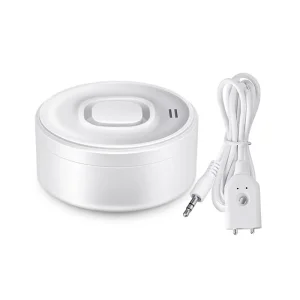
China WIFI Water Leak Detector with Wire Manufacturer, Suppliers
Configure Spec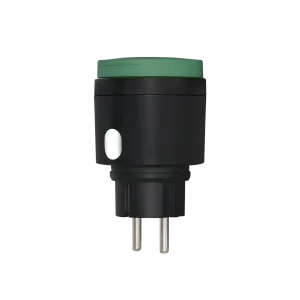
OEM EU Wifi Outdoor Smart Waterproof Socket Manufacturers, Factories
Configure Spec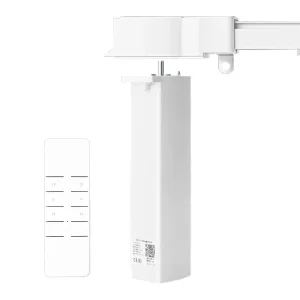
Custom Zigbee Smart Spliced Curtain Track Motor Sets Factories, Factory
Configure Spec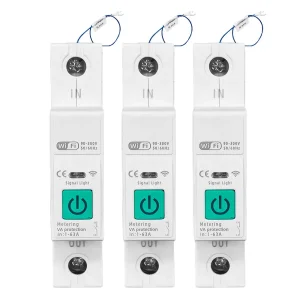
Custom 63A Smart Circuit Breaker With Neutral Supplier, Factory
Configure Spec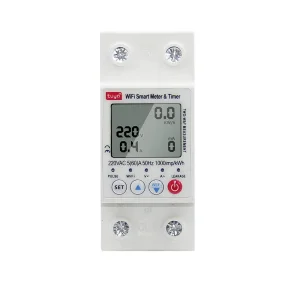
Custom WIFI Bidirectional Energy Power Meter Manufacturer, Supplier
Configure Spec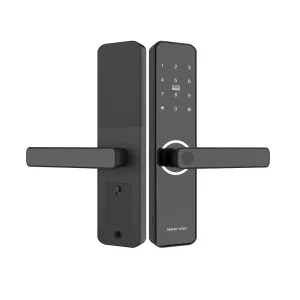
China Smart WIFI Fingerprint Password Door Lock Manufacturer, Supplier
Configure Spec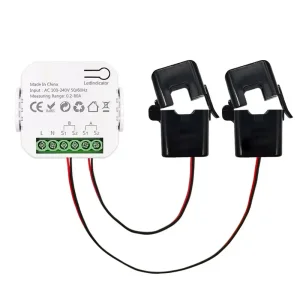
Custom Bidirectional Smart Current Transformer Manufacturers, Manufacturer
Configure Spec