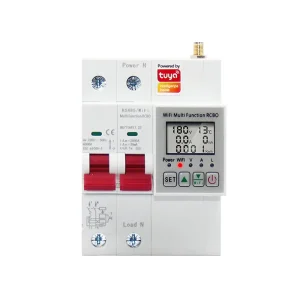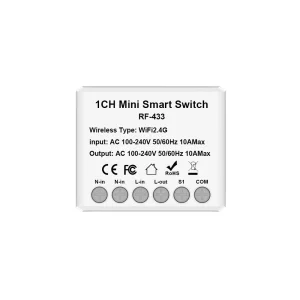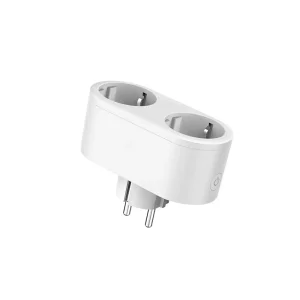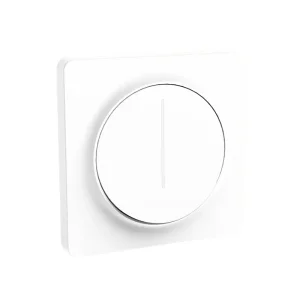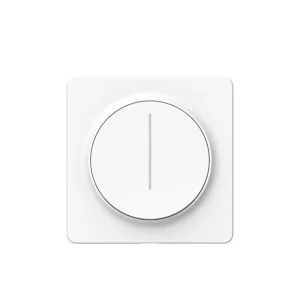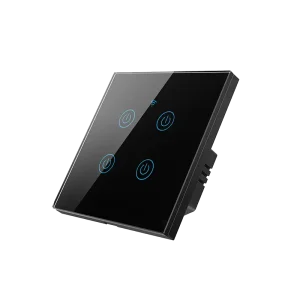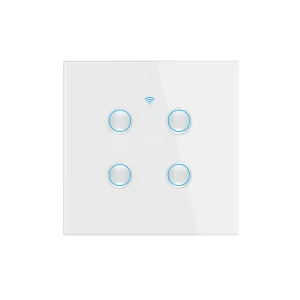
Precision Hardware Series: Primary Showcase
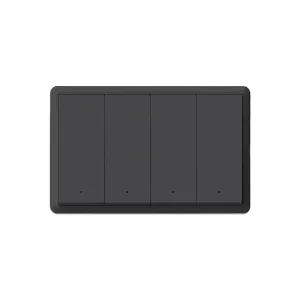
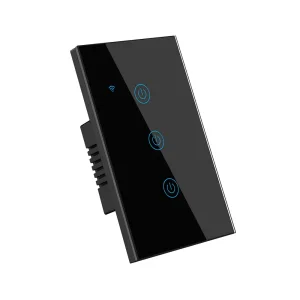
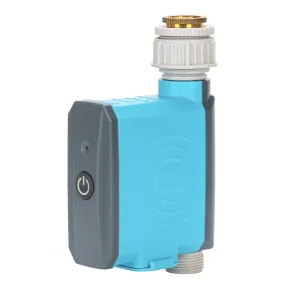
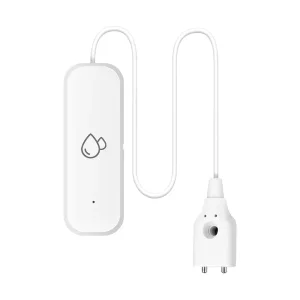
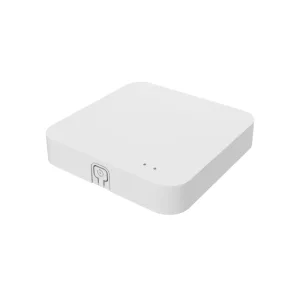
Explore initial hardware modules factory-flashed or engineered for seamless integration with Tasmota, MQTT, and Zigbee/Wi-Fi topologies.

Macro-Level Industrial Shift: Decoupling Smart Hardware from Public Clouds
System integrators, corporate facility managers, and energy aggregators face significant vulnerability with proprietary cloud ecosystems. Transitioning to dedicated OEM Tasmota switch hardware removes SaaS risks, lowers operating latency, and guarantees device longevity.
Zero Vulnerability to Cloud Sunset
Commercial IoT solutions that rely on private servers are vulnerable to unexpected cloud API turn-offs or sudden subscription fees. OEM Tasmota hardware communicates natively via open-source MQTT or HTTP interfaces directly on local networks, guaranteeing complete operational lifecycle continuity regardless of public internet changes.
Deterministic Low Latency Switching
For industrial automation and multi-switch physical facilities, latency spikes over external routing networks cause race conditions and poor user experiences. By utilizing native Tasmota firmware running directly on high-clock-rate Espressif ESP32/C3 chips, local bus commands resolve consistently in sub-10ms windows.
Enterprise-Grade Telemetry
Unlike simplified retail firmware, industrial Tasmota distributions provide fine-grained telemetry through unified JSON payloads. Monitor instantaneous power factor, RMS current, reactive voltage, and cumulative energy consumption with zero external third-party middleware bloat.
Global B2B Landscape: Sourcing Challenges & Manufacturing Nuance
The market has evolved beyond simple consumer DIY modifications. Tier-1 real estate developers, hospitality chains, and distributed energy aggregators now mandate factory-delivered custom firmware.
OTA Flash Vulnerabilities
Modern microcontrollers often come locked with encrypted bootloaders from the manufacturer. Sourcing OEM modules means receiving custom factory-flashed binaries directly via physical UART test pins during assembly, bypassing risky over-the-air exploitation steps.
Supply Chain Resilience
Relying on generic consumer suppliers introduces the risk of unannounced PCB redesigns, pin reassignments, or component downgrades. Corunsmart enforces strict Bill of Materials (BOM) locking to ensure identical pin mappings and continuous driver stability across bulk orders.
Thermal & Arc Mitigation
Real-world industrial installations demand heavy current handling. Our switch circuits feature zero-cross relay switching routines alongside TVS surge protection to stop destructive contact welding during heavy inductive or capacitive electrical loads.
Reduced Total Cost of Ownership
By eliminating cloud API egress fees, recurring white-label cloud licensing costs, and mandatory updates, corporate deployments yield immediate reductions in IT support overhead and long-term operating costs.
Technical Specification & Architectural Comparison
A side-by-side performance review to guide procurement teams, systems architects, and OEM product leads on connectivity options.
| Evaluation Parameter | OEM Tasmota (ESP32-C3) | Proprietary Cloud (Tuya/eWeLink) | Zigbee 3.0 Mesh | Matter Over Wi-Fi |
|---|---|---|---|---|
| Primary Transport Layer | Wi-Fi 802.11 b/g/n (2.4GHz) | Wi-Fi / Proprietary API Gateway | IEEE 802.15.4 Low-Power Mesh | IPv6 / Thread / Wi-Fi Network |
| Cloud Dependency | Absolute Zero (Air-Gapped Ready) | Mandatory External Server Hub | Zero (Local Coordinator Bound) | Zero (Local Fabric Execution) |
| Typical Trigger Latency | 5ms - 15ms (Deterministic) | 120ms - 850ms (Network Dependent) | 15ms - 35ms (Mesh Hop Dependent) | 10ms - 30ms (Local Subnet) |
| Ecosystem Compatibility | Home Assistant, openHAB, Node-RED | Proprietary Vendor Mobile Apps | ZHA, Zigbee2MQTT, Deconz | Apple Home, Google Home, Alexa |
| Firmware Ownership | 100% Open Source / Client-Custom | Vendor Controlled / Closed Binary | Silicon Vendor Specific Stacks | Connectivity Standards Alliance |
| Energy Metering Precision | Real-time RMS (HLW8032 / BL0937) | Aggregated Cloud Buckets (Hourly) | Cluster Reporting Intervals | Cluster Dependent Support |
Localized Support, Safety Baselines & Global Compliance
Corunsmart integrates physical electrical safety engineering with robust open-source code deployment at our ISO 9001:2015-certified manufacturing campus in Shenzhen.
North American Compliance (ETL / UL / FCC)
For US, Canadian, and Mexican markets, switches and breaker modules are designed around 120V/277V grids with robust terminal trace separations. In addition to FCC Title 47 Part 15B certification, we ensure full material trace safety, UL 94 V-0 flame-retardant PC polymers, and compliant junction box fitments.
European Directives (CE / RED / RoHS / UKCA)
EU and UK configurations are rated for 230V AC ±10% at 50Hz, designed to fit round German/French flush mount boxes (DIN 49073) and British BS 4662 patterns. Complete electrical isolation, creepage distance adherence, and full compliance with Low Voltage Directive (LVD) standards are standard across production lines.
Class 100 Dust-Free Cleanroom Assembly
Surface-mount technology (SMT) and final module programming take place inside our 1,400 m² Class 100 cleanroom. Automated optical inspection (AOI), in-circuit programming tests, and 100% full-load burn-in cycles ensure long service lives and stable deployments worldwide.
Engineered for High-Density, Real-World Environments
OEM Tasmota switches provide the precise, reliable control required by complex industrial, commercial, and multi-dwelling projects.
Commercial Real Estate & MDUs
Multi-tenant housing projects avoid privacy issues and recurring vendor costs by deploying local-broker Tasmota switches. Property managers control hallway, HVAC, and service loads without complex per-unit cloud accounts, simplifying maintenance and tenant transitions.
Microgrids & Demand-Response
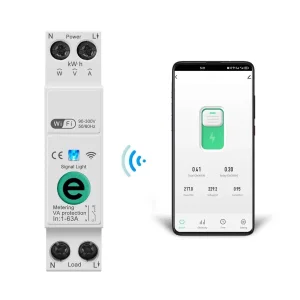
Distributed energy storage systems, rooftop PV arrays, and EV charging sites rely on fast, deterministic switching. Corunsmart's DIN-rail switch series uses local MQTT and rules-engine automations to shed loads in milliseconds during peak grid stress without internet dependencies.
Hospitality & Cleanroom Environments
Hotels need fast, isolated guest room management (GRMS) that doesn't expose internal networks or guest behavior. Our capacitive touch plates and in-wall modules integrate with local building systems over private VLANs, protecting network security and guest privacy.
Engineering Roadmap: Edge AI & Next-Gen Hardware
As IoT demands shift from simple remote on/off toggling toward distributed edge intelligence, Corunsmart is advancing hardware capabilities for the next generation of smart switches.
ESP32-C6 Dual-Radio Integration
We are migrating core architectures toward the ESP32-C6 system-on-chip, bringing native Wi-Fi 6, Thread, and Zigbee radios into standard switch footprints. This ensures smooth bridging between legacy MQTT infrastructure and the emerging Matter-over-Thread standard.
Local Machine Learning Waveform Analytics
Future iterations of our energy-monitoring switches incorporate high-frequency sampling to run tinyML models directly on the ESP32-S3 core. The switch can detect early motor wear, anomalous harmonic distortion, or failing appliance compressors directly at the wall outlet.
Hardware Cryptography & Secure Boot
Addressing tighter global cyber resilience regulations (such as the EU Cyber Resilience Act), new hardware versions implement hardware eFuse crypto-key storage, encrypted flash partitions, and cryptographically verified firmware updates directly out of the factory.
Engineering Questions Importers & Integrators Ask Us
Clear, direct answers regarding flashing pipelines, hardware engineering, customized branding, and logistics.
How does your factory flash custom Tasmota builds during volume manufacturing?
We do not use standard over-the-air (OTA) flashing. Instead, boards are flashed using automated pogo-pin test jigs that connect directly to UART interface pads (TX/RX/GPIO0/GND) on the PCB during sub-assembly testing. We can load your team's compiled binary image, including pre-set Wi-Fi credentials, MQTT host parameters, and custom GPIO templates, so the devices are ready to configure right out of the box.
Can you manufacture units without neutral wires (No-Neutral required)?
Yes. We offer both Neutral-required and No-Neutral configurations. Our No-Neutral switch designs use low-leakage power supplies paired with balanced bypass capacitors. This keeps the ESP32 logic controller powered smoothly below the threshold that causes low-wattage LED lights to flicker.
What is the minimum order quantity (MOQ) for full white-label OEM customization?
Standard white-box hardware with pre-flashed Tasmota images starts at small MOQs of 100 to 500 pieces for project testing. Full OEM branding—including silk-screened logos, custom retail packaging, tailored faceplate molding colors, and specialized regulatory laser engraving—typically starts at 1,000 to 2,000 units per production run.
How are high-voltage safety margins guaranteed on compact wall switch PCBs?
Our PCB engineering teams enforce physical isolation slots (air gaps) routed directly beneath optocouplers and primary-to-secondary boundaries. High-current traces feature thickened 2oz copper profiles and reinforced solder layers, while custom-molded interior plastics isolate internal logic boards from mains AC wiring.
Do you support other open-source firmware platforms like ESPHome or WLED?
Absolutely. Because our hardware is built on official Espressif chips (ESP8266, ESP32, ESP32-C3) with fully documented GPIO mapping, our manufacturing lines can flash and verify ESPHome, WLED, custom FreeRTOS code, or proprietary embedded C code just as easily as Tasmota distributions.
Secondary Showcase: High-Power & Peripheral Switching
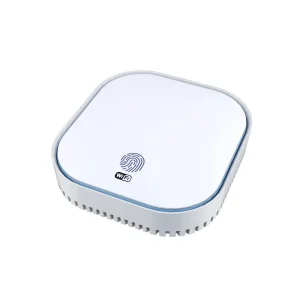
Browse our selection of smart metering breakers, in-wall dimmers, and specialized detection hardware ready for OEM integration and custom firmware flashing.