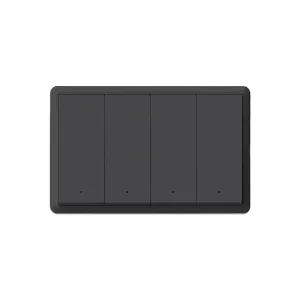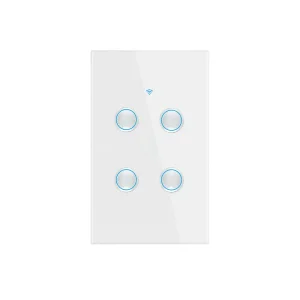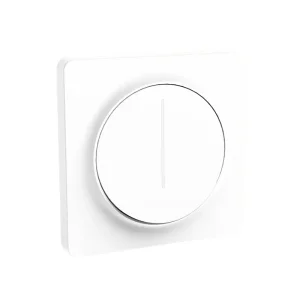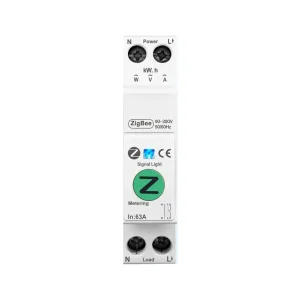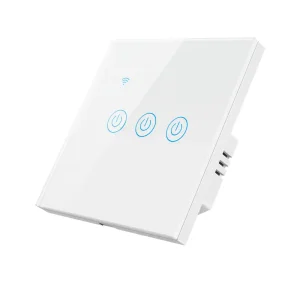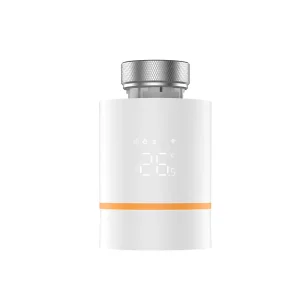
Precision Smart Switching, Protection & Sensor Ecosystem
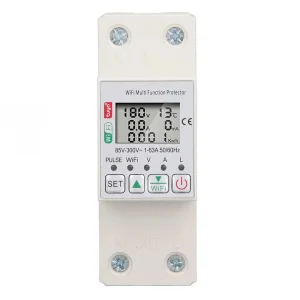
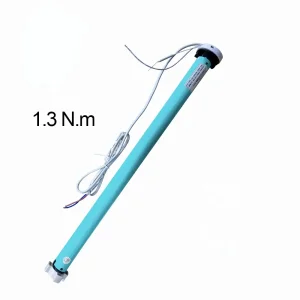
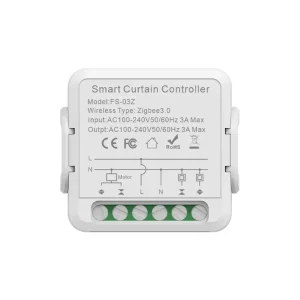
Explore our core export-grade smart infrastructure units, engineered for high-concurrency commercial deployments, industrial control rooms, and smart facilities worldwide.
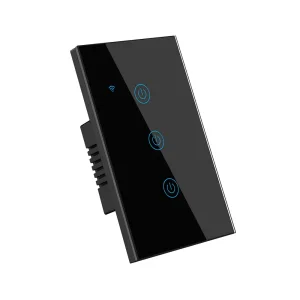
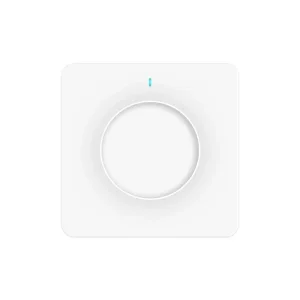
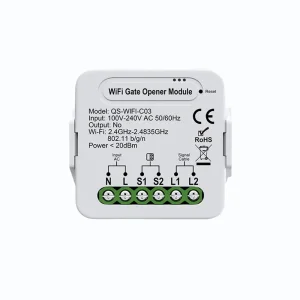
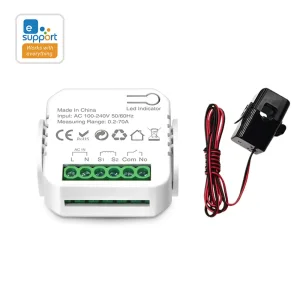
Evolutionary Trends: The Paradigm Shift to Autonomous Predictive Maintenance (PdM)
From passive mechanical thresholds to edge-native Machine Learning algorithms: the smart vibration sensor sector is revolutionizing how global industries preempt structural fatigue and rotating machine failure.
Tri-Axial High-Bandwidth MEMS Sensing
Traditional piezoelectric accelerometers are resource-heavy and lack multi-vector contextualization. Modern OEM smart vibration sensors leverage micro-electro-mechanical systems (MEMS) with simultaneous 3-axis tracking (X, Y, Z), capturing acceleration, peak velocity, and envelope demodulation up to 12 kHz to detect early-stage bearing inner race and outer race defects.
Edge Computing & On-Chip Fast Fourier Transform (FFT)
Transmitting raw vibration time-waveform feeds consumes extreme network bandwidth and drains sensor batteries. Modern OEM nodes integrate low-power Arm Cortex-M4/M33 or RISC-V processors that execute Fast Fourier Transform (FFT), root-mean-square (RMS) velocity, and crest factor calculations directly on the device, uploading only structured telemetry and exception anomalies.
Protocol Agility: LoRaWAN, Zigbee & Matter-over-Thread
Modern commercial procurement demands flexible industrial IoT fabrics. Leading OEM manufacturing plants provide multi-protocol stacks, seamlessly converting sensor telemetry across private LoRaWAN gateways for sprawling petrochemical plants, Zigbee 3.0 mesh for multi-facility HVAC hubs, and low-latency Matter/Thread ecosystems for integrated smart facility automation.
Procurement Insight: Total Cost of Ownership (TCO) vs. Component Unit Cost
Leading system integrators and tier-1 distributor brands no longer evaluate smart vibration sensors merely by bill-of-materials cost. The true index of industrial feasibility lies in field service longevity (IP67/IP68 hermetic ingress sealing, C4-rated corrosion shielding), battery power management curves under fluctuating thermal ranges (-40°C to +85°C), and non-invasive magnetic or stud mounting workflows that minimize system downtime during deployment.
Commercial & Industrial Realities Across Global Sourcing Channels
How procurement directors, enterprise facilities, and original equipment manufacturers structure technical RFQs to ensure compliance, edge intelligence, and supply chain continuity.
ISO 10816 & ISO 20816 Rigorous Alignment
Global industrial purchasers require native firmware mappings to international vibration standards (ISO 10816/20816). Pre-calibrated alarm thresholds for machine zones (A, B, C, D) allow plug-and-play installation for mechanical pumps, industrial centrifugal blowers, gearboxes, and large electrical motors without costly on-site calibration routines.
Private Labeling & Application Layer Portability
Enterprise buyers avoid locked proprietary silos. Modern OEM contracts mandate open API layers (MQTT, JSON payloads, Modbus RTU bridges) and customizable white-label applications. Sourcing factories must provide clean custom enclosures, laser-engraved QR commissioning codes, customized packaging, and direct cloud integration into AWS IoT SiteWise, Azure IoT Central, or custom on-premise SCADA dashboards.
Dual Harsh-Environment & Explosion-Proof Standards
Heavy industry demands hardware that endures corrosive chemical atmospheres, high-pressure washdowns, and explosive vapor risks. B2B procurement demands verified ATEX / IECEx Zone 1 and Zone 2 intrinsically safe designs, UL94-V0 flame-retardant enclosures, and hermetically sealed stainless steel bases capable of sustaining mechanical shock up to 5,000g.
China Factory 4.0: Supply Chain Resilience, Scalability & Agile Engineering
Shenzhen's manufacturing nexus offers an unbeatable combination of precision component ecosystems, automated surface-mount technology (SMT), Class 100 dust-free cleanrooms, and stringent ISO quality governance.
Upstream Component Clustering
Operating within the Pearl River Delta electronics cluster provides instant, uninterrupted access to top-tier semiconductor fabs, ultra-precise crystal resonators, high-density batteries, and advanced tooling facilities, accelerating rapid prototyping iterations to under 14 days.
Class 100 Purification Assembly
Our 1,400 m² Class 100 dust-free workshop ensures that microscopic MEMS sensor cavities, sensitive optical relays, and RF antenna geometries are packaged without airborne contamination, completely eliminating early drift and sensor signal degradation.
Automated AOI & Dynamic Testing
Every single PCB undergoes automated optical inspection (AOI), in-circuit dynamic testing, multi-frequency mechanical shaker table calibration, and 72-hour thermal stress screening before boxing, securing an industry-leading batch qualification rate (>99.85%).
Scalable Economics & Flexibility
Balancing high-volume monthly throughput (400,000+ units) with agile OEM run schedules allows our manufacturing lines to serve both Fortune 500 automation brands and fast-growing vertical IoT startups requiring customizable firmware footprints.
Mission-Critical Field Scenarios: From Smart Buildings to Heavy Industry
Where OEM vibration and condition-monitoring hardware provides immediate Return on Investment (ROI), safeguarding billions of dollars in critical physical assets.
Commercial Building HVAC & Chiller Plants
Continuous monitoring of cooling tower fans, air handling units (AHUs), and chilled water centrifugal pumps. Captures blade aerodynamic imbalance, motor misalignment, and loose structural footings, syncing over Zigbee/Matter to optimize ventilation energy and eliminate surprise tenant disruption.
Wind Power Turbines & Renewable Generation
Mounted inside inaccessible nacelles on main rotor bearings and planetary gearboxes. Low-power wireless architectures continuously gauge structural resonance harmonics, alerting operations teams to micro-fissures and lubrication loss weeks before cataclysmic mechanical failure.
Water Utilities & Chemical Processing
Submersible submersible lift pumps and corrosive liquid dosing agitators require completely isolated, IP68 hermetically welded vibration sensors. Embedded temperature-plus-vibration combined telemetry catches cavitation events and dry-run cavitation spikes instantly via LoRaWAN gateways.
Frequently Asked Questions by OEM & Industrial Systems Buyers
Comprehensive technical clarifications on sensor physics, embedded firmware stacks, global compliance marks, and manufacturing lead times.
What are the definitive advantages of MEMS-based smart vibration sensors over legacy piezoelectric sensors?
Can Corunsmart provide custom firmware configurations such as custom edge FFT thresholds or Tasmota/MQTT stacks?
What international export certifications and testing procedures back your manufacturing facility?
What is your standard OEM/ODM development lead time, tooling turnaround, and monthly capacity?
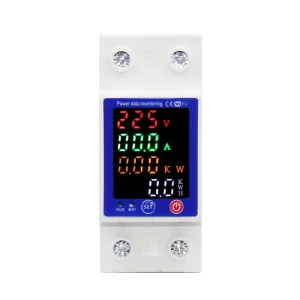
High-Reliability Smart Breakers, Panels & Coordinators
Enhance facility intelligence with our full range of smart metering, high-amperage DIN-rail circuit breakers, and universal protocol controllers.