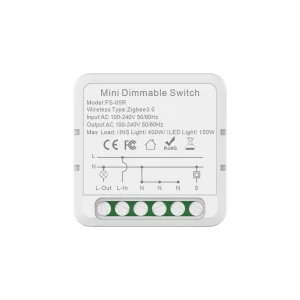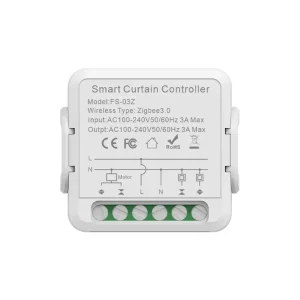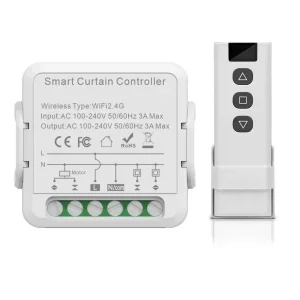
High-Performance Connected Infrastructure
Explore our core engineering line-up designed for low latency, native local protocol connectivity, and robust smart home interoperability.

Executive Whitepaper: The Evolution of Open Firmware in IR Automation
Transforming proprietary black-box transceivers into deterministic, low-latency, privacy-centric nodes through custom hardware manufacturing.
The Demise of Cloud Dependency
Traditional smart IR remotes rely extensively on external servers for payload interpretation and protocol databases. In enterprise installations, this model introduces vendor lock-in, data sovereignty vulnerabilities, and unacceptable latency. Tasmota-flashed hardware operates strictly within local boundaries, executing IR blast commands via MQTT without transmitting payload telemetry across external firewalls.
Industrial Microarchitecture
Our ODM hardware designs leverage Espressif ESP32, ESP32-C2, and ESP32-C3 chipsets, replacing unstable generic controllers. Optimized high-current IR drive transistors, multi-angle array emitters (360-degree radial blast), and wide-band 38kHz-56kHz receiving circuits ensure precise carrier demodulation, broad legacy compatibility, and resilient thermal profiles under sustained load.
Data Sovereignty & Security Compliance
Hospitality, commercial offices, and educational campuses are governed by stringent regulatory frameworks (e.g., GDPR, CCPA, NIS2). Out-of-the-box Tasmota and custom ESP-IDF builds ensure zero unencrypted outward traffic, robust credential protection, and direct access controls, establishing an audit-ready compliance posture for enterprise tenders.
Enterprise Sourcing Demands & ODM Engineering Priorities
B2B system integrators and tier-1 smart appliance distributors enforce stringent engineering benchmarks when qualifying contract manufacturing partners.
Board-Level Hardware Resilience
Procurement teams prioritize PCBA component quality. Our production standard incorporates surface-mount ESD arrays to resist electrostatic discharge, custom optical diffusers for complete spatial beam coverage, and isolated power stages capable of operating continuously in fluctuating electrical environments without logic resets.
Pre-Flashing & Provisioning Workflows
Flash flashing thousands of deployed units in the field is commercially impractical. Corunsmart provisions devices during SMT testing with pre-flashed golden builds of Tasmota, customized GPIO pin assignments, designated template strings, and factory-injected client encryption keys, drastically slashing deployment overhead.
Custom Mechanical & Branding Architecture
We provide full structural industrial design (ID) support, including high-grade injection molds, UV-resistant ABS/PC plastics, customized optical IR transparent windows, laser etching, private-label packaging, and localized power input adaptations tailored to regional electrical standards.
Macro-Industry Deployment Solutions
Engineered to resolve complex retrofitting challenges across massive infrastructure projects through centralized, platform-agnostic automation.
Hospitality Energy Optimization (PMS Bridge)
Commercial hotels often struggle to coordinate non-networked PTAC and split-system HVAC units with Room Energy Management Systems. Our Tasmota IR hardware communicates directly with property management servers over local MQTT, automatically adjusting temperature thresholds upon check-out, slashing energy expenditure up to 28% without requiring expensive mechanical HVAC replacements.
Data Center & Telecom Server Room HVAC Redundancy
Unattended communications closets utilize localized air conditioning units prone to single-point failure. By pairing our ESP32-based IR units with environmental temperature sensors, operators build autonomous failover sequences: should Room Temp cross 28°C, the device issues raw pulse sequences to initiate backup cooling while notifying central NOC dashboards via Syslog/MQTT.
Education & Campus AV Orchestration
Universities manage thousands of multimedia classrooms containing legacy projectors, screens, and amplifiers. Corunsmart ODM controllers integrate seamlessly into open control panels (Home Assistant, OpenHAB), allowing instructors to execute multi-device power and input states through a single wall panel tap, reducing helpdesk ticketing volume.
Standardized SMT & Assembly Lifecycle
Our 1,400 m² Class 100 dust-free facility executes rigorous quality checkpoints across the entire manufacturing pipeline.
High-Precision SMT
Surface-mount assembly of ESP32 modules, 38kHz-56kHz optical receivers, and high-gain driver arrays with automated optical inspection (AOI).
Firmware Flashing
Automated jig-based burning of custom Tasmota configurations, custom board templates, static IP flags, and cryptographic device identifiers.
IR Spectrum Validation
Oscilloscope-calibrated emission and reception analysis to confirm proper carrier-wave suppression, signal purity, and spatial beam dispersion.
Burn-In & Packaging
48-hour continuous thermal cycling stress tests, custom laser casing marking, final retail/bulk packaging, and global export staging.
Localization Support & Regulatory Conformity
Delivering comprehensive certification documentation to mitigate customs clearance delays and fulfill enterprise procurement covenants.
| Target Region | Statutory Certifications | Wireless & RF Standards | Safety & Environmental Directives |
|---|---|---|---|
| European Union (EU) | CE-RED, CE-EMC, CE-LVD | EN 300 328 (2.4GHz Wi-Fi / BLE) | RoHS 2.0 (2011/65/EU), REACH, WEEE |
| North America (US & CA) | FCC Part 15 Subpart B & C, IC (ISED) | FCC Title 47 CFR Part 15.247 | UL 62368-1, ETL Audio/Video & ICT Safety |
| United Kingdom (UK) | UKCA | Radio Equipment Regulations 2017 | RoHS UK, Electrical Equipment Safety |
| Latin America & Global | NOM (Mexico), Anatel (Brazil) | Regional RF Allocations (2.4GHz) | IEC 62368-1 CB Scheme Certification |
Technology Roadmap & Next-Generation Paradigms
Continuous investment in edge computing, unified protocol bridges, and micro-power energy harvesting architectures.
Native Matter-Over-Thread Integration
While Tasmota remains the gold standard for MQTT power users, our R&D roadmap includes ESP32-C6 architectures supporting Matter over Thread alongside custom local open API endpoints. This enables legacy IR blasters to be recognized natively as standard HVAC and media accessories within Apple Home, Google Home, and Home Assistant ecosystems concurrently.
On-Device TinyML IR Signal Recognition
Current IR capture requires extensive matching against fixed code tables. We are implementing lightweight on-device neural network models on ESP32-S3 modules capable of deducing unknown air conditioning protocol bitstreams dynamically, decoding complex multi-byte state packets without needing cloud database synchronization.
Sub-GHz RF Multi-Protocol Convergence
Expanding standard 38kHz infrared transceiver designs to incorporate software-defined CC1101 or SX1262 transceivers, establishing a consolidated controller capable of blasting IR commands and triggering legacy 433MHz/868MHz rolling-code garage doors, motorized screens, and shades from a unified enclosure.
Frequently Asked Questions (FAQ)
Comprehensive engineering clarity regarding ODM minimums, hardware customization, flashing protocols, and ecosystem compatibility.
What is the typical Minimum Order Quantity (MOQ) for custom ODM Tasmota hardware?
Standard white-label projects leveraging existing injection molds require an initial run of 500 to 1,000 units. Full ODM developments requiring customized enclosure designs, dedicated PCB tooling, bespoke optical filtering, and custom packaging lines typically maintain an entry threshold of 3,000 units.
Which Espressif chipsets are recommended for Tasmota IR applications?
While the legacy ESP8266 is supported, we strongly recommend the ESP32-C3 or standard ESP32 for modern deployments. The 32-bit RISC-V core of the ESP32-C3 provides superior memory buffers for extensive HVAC state tables, dedicated hardware cryptographic acceleration, and stable Wi-Fi performance under dense RF saturation.
Can you pre-configure custom Tasmota templates during factory SMT programming?
Yes. Our automated SMT flashing fixtures can flash pre-compiled binaries containing customized default configurations, specific GPIO mapping strings, default MQTT broker endpoints, Wi-Fi fallback provisioning rules, and custom Web UI brand styling directly on the production line.
How does the device handle complex HVAC protocols like Daikin or Mitsubishi?
Unlike simple TV power toggles, air conditioning remotes transmit full environmental states (mode, setpoint, fan speed, vane position) in long packet bursts (often 100+ bits). Our hardware uses precision demodulators with wide memory buffers to accurately receive, decode, and blast complex IR protocols supported by Tasmota's IRremoteESP8266 library.
Can we receive hardware samples for lab testing prior to mass production?
We supply engineering prototype samples configured with designated test templates and raw breakout headers to your technical evaluation team within 7 to 10 working days, ensuring complete verification before cutting high-volume production molds.
What environmental compliance testing is standard across your lines?
Every batch produced in our ISO 9001:2015 and BSCI-certified factory undergoes stringent lead-free RoHS verification, elevated temperature burn-in checks, drop resistance tests, and RF spectrum analyzer evaluation to guarantee field reliability across diverse deployment climates.
Explore Additional Certified Smart Automation Hardware
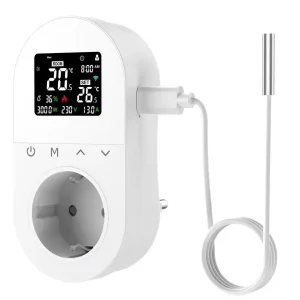
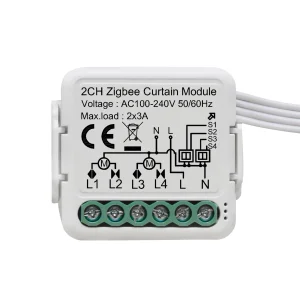
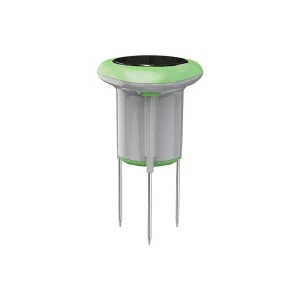
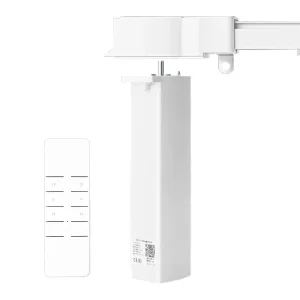
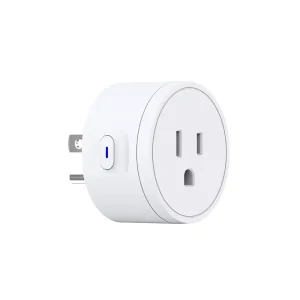
A comprehensive ecosystem of intelligent breakers, high-power sockets, sensors, and low-voltage switches available for turnkey OEM/ODM branding.